Tuesday, December 26, 2023
Advancing Time: The Nature Of Government Bureaucracies Is To Expand
Advancing Time: The Nature Of Government Bureaucracies Is To Expand: Across the world governments are broke and they won't stop spending. Expansion into all sectors of the economy has become a thing. Addin...

The Nature Of Government Bureaucracies Is To Expand

To fulfill the promises they make, governments often get involved in things that harm people, these include war, subsidizing parts of the economy, or steering things, by hook or crook. During the pandemic and years of low-interest rates, this trend accelerated. Still, the cost of fulfilling these promises is outrunning their ability to pay for them, this is evident in the rapid growth of sovereign debt.
With interest rates moving higher the cost for a government to carry its national debt has exploded. The idea we are looking at higher rates for longer as central banks move us to a more sustainable return to normal does not lessen the pain taxpayers face. It also lessens the options governments face to finance their programs going forward.
The role of Government in America has changed, over many years we have seen a shift away from Adam Smith’s idea of limited
government. This has occurred on federal, state, and local levels. Much
of this has been in the form of mandates. Often unfunded they are
fostered upon businesses, organizations, and private citizens. Governments also mask their expansion by outsourcing functions, this reduces the image of growth.
There is a new dance that officials have developed over the years, politicians and bureaucrats, deterred from expanding or funding programs by a few vigilant citizens, wait and find creative ways to reach their objective at a later date. By creating special bonds, attaching fees to needed services, or narrow taxes governments fund new authorities, commissions, and districts. These often unneeded quasi-government organizations then reach out to expand the influence and power of their directors.
Another way governments push forward their expansion is through public–private partnerships. these are long-term arrangements between a government and private sector institutions to perform what is spun to be beneficial to the populace. This area is ripe with both cronyism and corruption. Typically, it involves private capital financing government projects and services up-front often with government guarantees and promises from taxpayers that users will create a profit for the project over time. These often become boondoggles or white elephants.
Instead of focusing on the business of government and simplicity, this proactive movement consisting of “cuteness” cloaked in a veil of flexibility and
diversity continually expanding. Make no mistake, those in government are
proud of their pet projects. They allow bureaucrats to experiment and try
new things without the personal financial risk that a businessman must
take. The problem is that they are being creative on our dime.

The fact is, the government can't be everything to everyone. At what level should we supply those who choose not, to or claim they are unable to carry their share of the burden? Those choosing to describe themselves as victims need to take more personal responsibility. Waiting for the government or someone to do things for you is a recipe for disaster. Claiming entitlements is a form of theft, those who take them do so at the expense of others.
Politicians do have a way of distancing themselves from responsibilities. Former Senator Tom Dashel claimed that business "lobbyists in Washington often blocked change." Someone should remind our elected officials that at the end of the day unless the Constitution has been changed that lobbyists are still not allowed to vote!
I should remind those who are less cynical about government that the House and Senate have placed themselves in the enviable position to receive automatic pay raises unless they specifically vote against the increase. This seldom occurs. Is it any wonder that government grows unchecked in such an environment? The big problem is that spending by governments has a poor history of creating solid economic growth.
So I ask, what is fair? This transfer of wealth from those who work to those who wish to take continues to grow in a political system where a vocal minority has great sway over legislation. If unchecked government grows - it is the nature of bureaucracy to expand. The use of sun-set legislation is underused or the bar set far too low when it comes to extending and renewing government bodies. The best time to kill a monster is when it's small and that time has passed.
(Republishing this article is permitted with reference to Bruce Wilds/AdvancingTime Blog)
Sunday, December 17, 2023
Advancing Time: Market Crosscurrents Pose Massive Danger
Advancing Time: Market Crosscurrents Pose Massive Danger: The recent rally in the stock market flowing from what almost appeared to be a victory lap on the part of Fed Chair Jerome Powell gives the ...
Market Crosscurrents Pose Massive Danger
Adding to the recent confusion of why the markets are moving up is whether liquidity is, or is not being added to the financial system. It appears bank lending is contracting but other things are happening behind the scenes in swap rates and yield curves. While some of us point to the Fed saying it is tightening and reducing its balance sheet some economists point to a back channel inflow of liquidity juicing the system.
A case can be made that recent market action remains more about liquidity than interest rates. A lack of liquidity can be
poisonous. When you need money, whether the amount is small or large,
not
being able to get it can lead to a life-changing or grave outcome. Interestingly, as noted above, the liquidity issue remains unresolved. Central banks are well aware that contagion from one area can spill over into other sectors of the
economy and markets. This is why China continues to inject liquidity into its market. How much of that money is getting out of China is an issue.
So, here we sit, new market highs at a time when many economy watchers are voicing concerns the economy is rapidly slowing and the Fed is already behind the curve in dropping rates. The counterargument being floated is that all is well and we are in the midst of a soft landing or no landing. The latter is the optimistic view that we have entered a Goldilocks moment and the markets are set to go ever higher.
Those taking the stand a quick reversal of Fed policy and looking at rapidly falling rates may be failing to consider trees don't grow to the sky. It could be argued a major pullback is necessary to avoid a much more severe problem or bigger disaster in the future. Inflation is a key component in assessing where things go from here. Again, I point to The Hard Asset Inflation / Paper Asset Deflation Theory
Much of the current market danger stems from the fact the fluid financial and economic
situation is highly leveraged. If something breaks, the amount of money
needed to backstop and halt a collapse of the system will be far larger
than anything we have seen in the past. Remember a massive drop in asset prices and the value of bonds directly impacts pension funds and many other aspects of our financial structure.
A great deal of what we call growth has been, or is now financially engineered by companies buying back their own shares and other companies rather than growing organically. This risk is constantly being downplayed as more and more of the concentration of wealth pushes takes place, into just a few companies. A case and point often raised is the huge market capitalization of what is known as the "magnificent seven."
As usual or maybe even more than usual, we should continue to factor in the idea things could be shaken by another pandemic, massive war including the use of nuclear weapons. The whole idea that stocks climb a wall of worry and fall like a stone underlines the fact that markets are non-linear and do not move in a straight line. People tend to slip into a generally optimistic feeling of complacency and discount this reality.
Lower inflation figures strongly into the euphoria we see in the market. Much of this has been driven by lower gasoline prices which are likely to prove temporary and the idea the costs of "shelter" or keeping a roof over your head will soon decline. These notions brush aside several important facts such as the rising cost of labor and other factors feeding into housing. These include insurance, soaring maintenance costs, and rising taxes. All of these are expected to move higher in the future.
A bond fella recently recently made the case that yields would drop as inflation falls. Several pundits have speculated the Fed must "know something, or be spooked" to have changed course. Pulling on this thread could lead us back to the notion China's economy is in free-fall and it is the main reason rates will be falling everywhere. This has resulted in the notion we will see super strong demand for bonds during a recession even if the supply is huge.
Still, buying long-term bonds to hold is far different than buying them to hold. Long term we have to look at the future of fiat money and inflation from currency debasement. I'm not convinced it is wise for investors to lock themselves into any fiat currency long-term as things could change rapidly.
Consider the possibility that the Fed is yielding to pressure rather than making a policy change based on choice. By prematurely declaring inflation as no longer an issue it takes pressure off government bonds and banks. When we look back at how this plays out it is likely the importance of liquidity and the money supply will prove far more important than minor changes in interest rates.In a recent video delving into inflation in commodities, Daniel Lacalle claimed there are only three ways to halt inflation and inflation is fueled by monetary conditions. Lacalle says the only way to stop inflation is raise interest rates, reduce the amount of money in the system, or to create an aggregate demand reduction of credit.
The public sector, or to qualify, governments are busy thwarting all these factors. As long as governments and central banks continue to overspend and print money the inflation beast will remain a ferocious creature.
(Republishing this article welcomed with reference to Bruce Wilds/AdvancingTime Blog)
Sunday, November 26, 2023
Advancing Time: The Devastating Impact Of Reverse Wealth Effect
Advancing Time: The Devastating Impact Of Reverse Wealth Effect: Most people find the pain of losing wealth exceeds the joy they get from gaining. While consumers feel more financially secure and confident...
The Devastating Impact Of Reverse Wealth Effect
Most people find the pain of losing wealth exceeds the joy they get from gaining. While consumers feel more financially secure and confident they spend more freely, the reverse is also true. Get ready for the "reverse wealth effect" to kick in. If this happens it will be a real ball breaker. The wealth effect is a behavioral economic theory based on people spending more as the value of their assets rise. Even decades after its economic bubble popped, Japan stands as a monument to the devastation the reverse wealth effect can unleash.
The complacency that has developed from years of markets moving ever higher has insulated huge numbers of investors from the reality bad times may be in the cards. In addition to complacency the market is being supported by the idea the moment any bad thing happens the Fed will pivot. In such a situation the expectation is the Fed put will kick in. This translates into it might be better to tough out a drop because it may not be possible to get back in when the market V bottoms out of the drop.
Higher for longer is a force that has yet to play out. The bond markets scream caution. The mixed signals flowing from the debt market have left open the possibility the bond markets could become a wrecking ball. This would result in the FED being forced to intervene and the potential for a debt death spiral. We must not forget that for over a decade, super low or negative
interest rates forced people to invest in stock markets in search of
yield. As this money is pulled out of stocks and returns to safer
alternatives stocks may decline striping people of their paper gains.
Circling back to the crux of this post, much of the rationale behind QE has been that it creates what the Fed calls a “Wealth Effect.” For years this has been a key driver of central bank policy. This view is firmly embedded in the macro-econometric models used by the Fed. The notion, widely adopted by central bankers, is that by inflating asset prices to make the wealthy (the asset holders) even wealthier, these people will spend more of what they see as free money from asset price inflation. The premise is that this additional spending will create additional demand for goods and services thus providing jobs for the masses.
Sadly, several times over the years the wealth effect
formula has slid off the tracks and most likely will again. Consumption
does not create wealth, it creates debt. The example that stands out in
the minds of most people is from back in 2008. By loaning
money against homes with little scrutiny as to the borrower's ability to
repay them the Fed created a financial bubble with broad implications. It
could be argued that since 2008, Fed policy has never really addressed
that mess but attempted to paper over it by printing money and expanding
debt through quantitative easing.
In a world where optimism and hope have dominated the investment landscape for over a decade, we should be prepared for reality to raise its ugly head. This time is not different and debt does matter. As pointed out by many economists over the years, low-interest rates and easy money, do not always result in a strong vibrant economy. Japan's failure to recover from its bubble bursting decades ago remains proof of this.
The problem is that the policy track we have been on may of driven consumer buying, but it also created a lot of debt and waste. This has been great for certain sectors of the economy such as the financial sector but it has failed to generate the kind of growth that makes an economy strong.
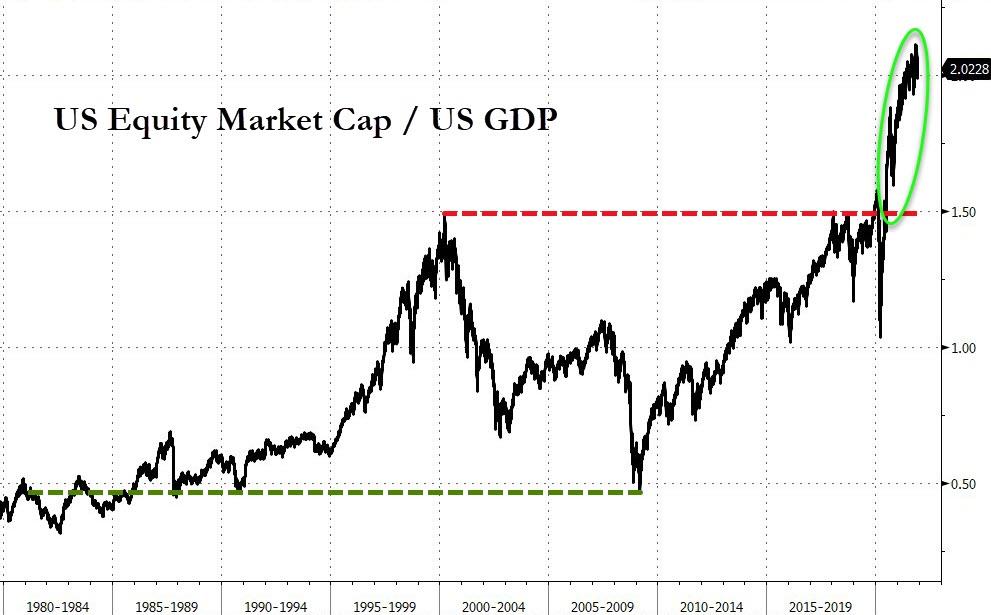 |
| Wealth Effect Policies Have Failed To Generate Enough "Real Growth" |
Looking back throughout history we see the policies that breed the Wealth Effect can slide off track or lose their effectiveness while creating risk. At some point, the combination of easy-to-borrow money at low-interest rates tends to morph into a high-risk environment of increased speculation and leverage. In short, savers and investors seeking a return on their savings are forced out of traditional accounts because such investments get ravaged by inflation.
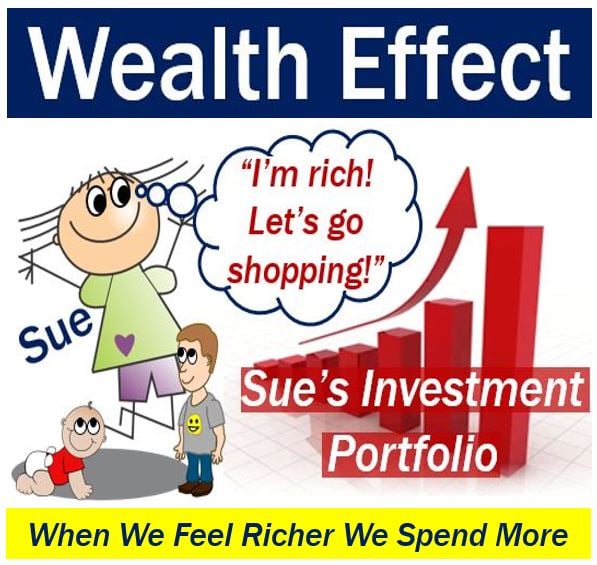 |
| Many Consumers Bought Into This |
We must not forget the 2008 financial crisis resulted in the worst economic disaster since the great depression of 1930. It is also referred to as the global financial crisis (GFC). It should be noted the Fed's response to the GFC has gotten a great deal of well-deserved bad press for driving inequality and fracturing society. Since 2008 it has become apparent the Fed has created an unfair system that is broken, unfair, and corrupt. This has affected different generations in rather specific ways.
The amount of debt generated since 2008 screams that wealth effect policies are not working. Not only have they failed to create a healthy economy but they feeding into a self-feeding loop of more debt. Following the GFC the Federal Reserve and the Bush administration spent hundreds of billions of dollars to add liquidity to the financial markets. They worked hard to avoid a complete collapse. They almost didn't succeed. Today we are spending not billions, but trillions of dollars to keep the same corrupt policy moving forward.
Investors should treat the wealth effect with caution because it is susceptible to harsh reversals. Since the GFC, attempt after attempt has been put forth to change the tide, but still, we have watched the middle class shrink. The elephant in the room when it comes to growing the economy is how "the broken window theory" is spun and interpreted. The gist of this theory is that if a window is broken, the subsequent repair expenditure will have no net benefits for the economy. Still, it is not uncommon to see destruction touted as a good thing because it promotes spending.
In truth, the
broken window idea of destruction is good discounts several
facts. One has to do with where the
money is coming from but whether it is from an insurance company or
someplace else, it still means the money is diverted from being used on
another
purchase. Repairing
a broken window is maintenance spending which doesn’t improve growth
because it doesn’t improve productivity. This expenditure would have
occurred anyway.
The only thing a broken window does is cause maintenance spending
to occur earlier and lower the useful life of the window. Maintenance
spending may keep the economy going it doesn’t provide a
boost. Instead, it is better to invest the money in something which
creates wealth by increasing productivity.
Many people and even economists have real misconceptions as to how
the economy works. Where money flows and who it enriches is a key component of economics. This is a blind spot many people have. Years of being told everything revolves around
spending has diminished the important role savings plays in the scheme
of a balanced economy. Fans of Keynesian economics that encourage government spending to
stabilize the economy during a downturn tend to discount the importance
that where and how money is spent matters a great deal.
 |
| Wealth Effect Policy Has Flaws |
Bubbling up to the surface is the recognition the Fed has to shoulder a huge responsibility in pushing inequality higher. Powell has even gone so far as to claim there was little demand for loans below $1 million. Sadly, the same policies that dump huge money into larger businesses because it is an easier and faster way to bolster the economy give these concerns a huge advantage that devastates its smaller competitors.
The long-term
ramifications of destroying smaller businesses hurts America in the
long run. It eliminates competition, reduces opportunity, and over time
fuels inflation. This drives my angst directed at companies such as
Amazon and big tech. The policy of making people feel better so they
spend more than they can afford is part of voodoo economics. It has sent jobs abroad and increased our consumption of imported goods resulting in massive trade deficits. Good economic policy encourages personal responsibility and is rooted in saving not spending. Consumption does not create wealth, it creates debt.
(Republishing this article is permitted with reference to Bruce Wilds/AdvancingTime Blog)
Thursday, November 9, 2023
Advancing Time: Japan's Future Remains An Issue Of Debate
Advancing Time: Japan's Future Remains An Issue Of Debate: The debate over the future of Japan continues. This is a complicated and interesting issue. Because of its small footprint, we often forget ...
Subscribe to:
Posts (Atom)