
Monday, August 29, 2022

The Narrative Of Housing Shortage Beginning To Crumble

The housing market in America is not one but many markets that generally share a few common threads. In America, the government, coupled with a slew of builder and Realtor associations controls the housing narrative. The truth is what they have been telling and selling us is generally based on their self-interest. Owning your home has pros and cons and is not the best option for everyone.

With mortgage rates rising, it appears we are witnessing a key reversal moment in the housing sector where FOMO vanishes and is replaced with the idea I'm glad I didn't buy. The narrative we have a housing shortage is begging to crumble. It is likely many buyers are shifting into a wait-and-see mode. The false housing narrative of shortages is breaking down. The cheap money flowing from Wall Street has stopped flowing in and in some places has begun to retreat. 

Whether this will be a short-term dip in prices or develop into a situation that lasts for years is difficult to predict. Just a few of the factors feeding into future prices of housing include interest rates, property taxes, insurance costs, maintenance, and the incomes of people living in the area. Incomes and interest rates are huge factors when it comes to affordability. This is where the real problem is and the lack of an easy fix that will make money for the big boys that drive our economy.

Affordability Is A Growing Issue
Housing prices can surge during a bubble but rapidly retreat. It appears we have reached that apex and while cheap or inexpensive housing is difficult to find overall plenty of housing units exist if people are simply willing to clean them up. Often this means lowering their expectations of what they deserve, the reality is not everyone can afford or live in a brand new house.

It is a recent development, meaning just in the last few decades, that young couples and singles think they need or should be living in a several thousand square foot house with all the fixings and three or more baths and bedrooms, an attached garage, and more. Yes, the average size of new homes has grown while the size of families or the number of occupants has declined. 

Population shifts and the media hype have also added to muddying the housing picture. Housing envy, the desire to live like the Jones is driven by images of most families living far better than the average American. Whether it is in a commercial, film, or on the news, few people are put before us that live in a dirty cramped shit hole.

The sad fact that people cause most of their own problems tends to be overlooked. If a person wants a nicer place to live there is a thing called paint and another item called a broom. The number of empty and underutilized houses in older neighborhoods stand as a monument to our government's failed housing policies.

Investor demand and massive building activity in various areas of America will prove to be a destabilizing influence on prices going forward.  Overall, one of the largest factors remains the fact houses are a tangible asset and may prove safer than the paper promises most people consider as having value. We must also remember home-ownership plays directly into the wealth effect. Housing values impact how people feel about the economy and has a huge influence on spending habits.

All the above factors feeding into this important sector of our economy create a murky picture for the future of housing. In an economic downturn of real magnitude, a reduction in household creation where people double or triple up is very likely. Across America, we have a huge number of large houses and the consolidation in the number of households can rapidly reduce demand when people move in together. One thing that is clear, people should take a cautious approach when they decide to make one of the biggest purchases of their lifetime.


Footnote; Below are links to other AdvancingTime articles on housing. Comments are welcome.

https://brucewilds.blogspot.com/2015/11/cookie-cutter-urban-sprawl.html  https://brucewilds.blogspot.com/2018/02/housing-policy-feeds-and-hides-growing.html https://brucewilds.blogspot.com/2019/03/trends-point-to-rents-edging-higher-in.html https://brucewilds.blogspot.com/2019/10/slew-of-new-apartments-pressuring.html https://brucewilds.blogspot.com/2021/05/americas-housing-future-remains-murky.html https://brucewilds.blogspot.com/2021/05/americas-housing-future-is-not-set-in.html


(Republishing of this article welcomed with reference to Bruce Wilds/AdvancingTime Blog)


Thursday, August 25, 2022

Jackson Hole, More, "We Intend To Be Fair But Firm."

Expect more of that same old speech, "We Intend To Be Fair But Firm." These words used to explain policies are used to create an impression of stability and strength rather than detail the way forward. Many variations of this well-worn line exist. examples are, "we will move cautiously in a prudent manner" or "our actions will be data dependent." 

The real question is, where's the beef? Those expecting clarity and transparency to flow out of Jackson Hole, Wyoming will most likely be disappointed. It is likely Powell will use this closely-watched Jackson Hole speech to stress that the central bank is going to bring down the high U.S. inflation rate even if it means a recession. The crux of his message being they will do this even it if means weaker short-term growth. After parsing every word coming out of his mouth do not expect to find any answer for fixing the mess they have created.

Expect No Beef
Staying on message, central banks continue to say the return of inflation to 2% is critical to achieving maximum employment and growth on a sustained basis. The recent minutes of the Fed’s July meeting confirmed this point, but Markets have failed to take to heart what it really means if the Fed embarks on such a course. In truth, more attention will be focused on how he says this and his posturing than anything else, and expect the media to spin his words in a way that reassures us all. 

Yes, they will tell us the Fed will move forward in a "fair but firm" way. Still, as of late, more attention has been focused on the idea when things get tough the Fed will panic and quickly "pivot" and return to quantitative easing. Do not expect Powell to talk about that possibility it simply won't be discussed or confirmed. When all is said and done this will most likely be a nothing burger to which markets may or may not overreact and the world will go on while our public servants suck down their catered dinners and fine wine.  


(Republishing of this article welcomed with reference to Bruce Wilds/AdvancingTime Blog)

Monday, August 22, 2022

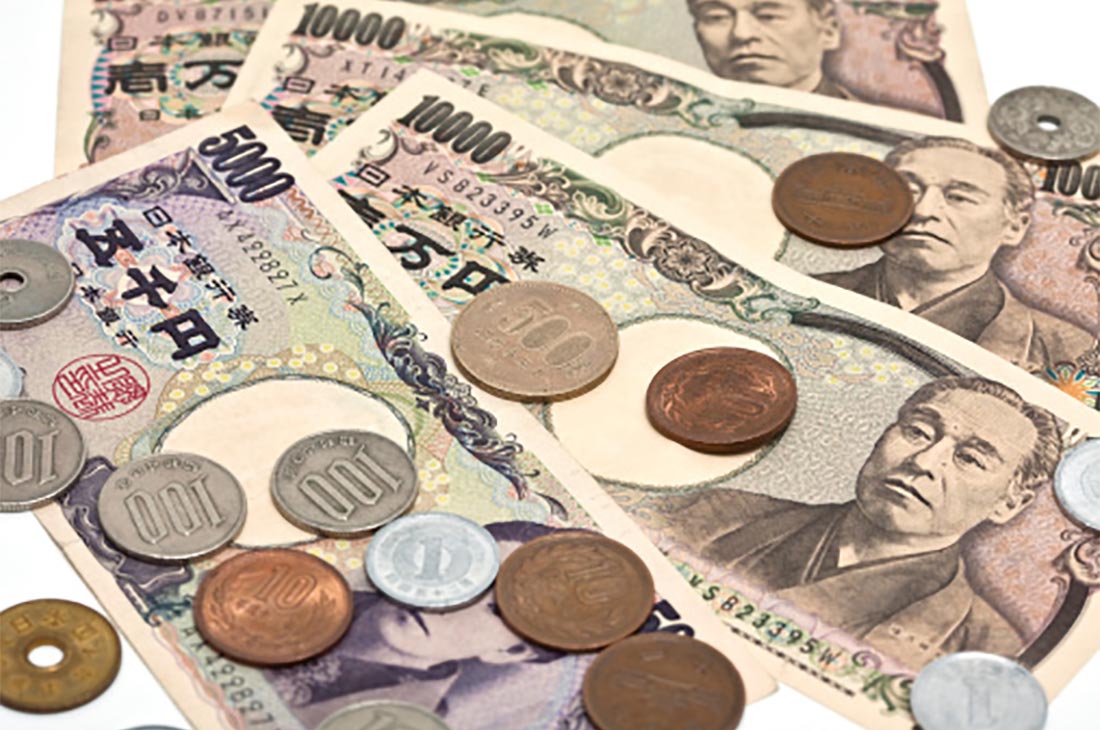
Is The Yen About To Resume Its Path Lower?

Much of the recent strength in the yen can be explained in one word and that is China. While I have seen no other currency watchers espouse this theory, I continue to contend the yen has become a major conduit by which wealth is being transferred out of China. This tight relationship can be seen each time trouble surfaces in China's economy. When this happens the yen rises in value as wealth exits China through business back-channels. 

Let's be frank, most economic watchers think the Chinese economy is in big trouble, this makes it logical many people would want to get their wealth out of the country. This, however, is easier said than done. China has very strict rules related to taking money in and out of the country. These rules regulate the actions of individuals attempting to move money out of China. We can assume, that most people moving large amounts of money would rather go under the radar and avoid running into problems with the Chinese government.

A few other factors feed into the recent bounce in the yen but do not be surprised if this recent strength rapidly fades. One factor playing into the bounce is the decline in the yen's value over the last several months may have been a bit overdone. Another could be related to the fact energy prices have come down reducing the cost of imports needed to fuel the economy. Still, we are again beginning to see the yen slip down towards its lows and should be repaired to see it again slip into new low territory. 

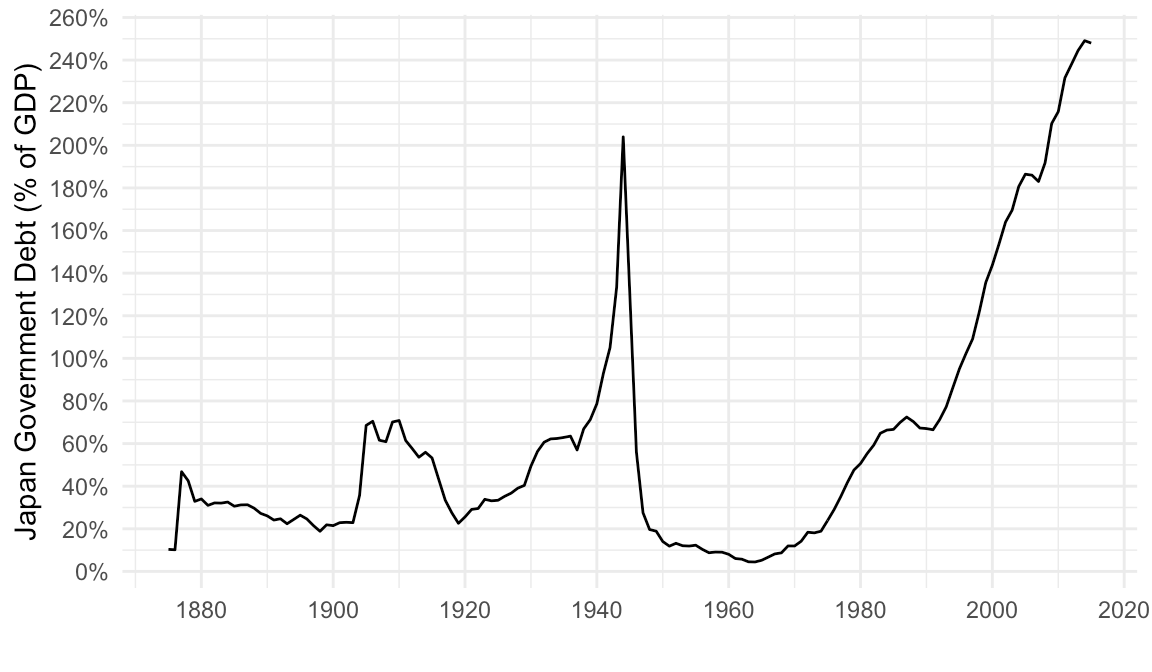
Japan's basic problems still remain. As stated in an earlier post, higher interest rates are toxic to the highly indebted nation. Also, unfavorable demographics will continue to haunt the small island nation. Simply put, the fundamentals for Japan are lousy. Much of the risk of who gets hurt in the case of a falling yen or a default has shifted from the private sector to the Japanese public since the BOJ has continued splurging on JGBs.

 
The Japanese Government Is Heavily In Debt

As Japan continues down this path it is only a matter of time before the credibility of the BOJ is lost and the yen plunges. To support their stock market the BOJ has even gone to buying stock. When investors in Japan's government bonds begin to believe that inflation is about to return it would be logical for owners of  Japanese debt to rush out of the low-yielding securities and buy foreign bonds or equities.

Unlike many other leading economies, Japan has been battling deflation or falling prices for the best part of the past two decades. We may have reached the point where reality has now taken hold. This has been a long time coming. When Japan crumbles it will be felt across the world and add to doubts about the whole fiat currency system.  


(Republishing of this article welcomed with reference to Bruce Wilds/AdvancingTime Blog)
Sunday, August 21, 2022

The Threat Of Liz Cheney As A Tool To Split The Party

Last Sunday morning on Meet The Press in the last few minutes they brought up the subject of Liz Cheney making a run for President in 2024. When it comes to me expressing my opinion of her odds of winning such a bid I will keep my mouth shut. History shows that we can sometimes be very very right, and at other times, very, very wrong. Let the AdvancingTime Article where I dissed, even mocked, Biden when he entered the 2020 Presidential race and his slim odds of getting elected remain buried deep in the archives of this blog.

The greatest threat posed by Liz Cheney may be that she could split the Republican Party and hand the Democrats the next Presidential election. Consider the Ross Perot scenario, years ago he pulled enough votes away from George Bush Senior to hand the election to Bill Clinton. This role as a spoiler still exists and if Trump does run, never Trumpers and Democrats would fund her campaign simply to torpedo the Don.

The polls were correct that neocon Rep. Liz Cheney (R-WY) would lose her congressional seat in the primaries. Her poorly-received crusade against former President Donald Trump proved to be her Waterloo. To say Cheney sparked a conservative backlash in her district where 70% of Wyoming voters chose Trump in 2020 is an understatement. Her participation as vice chair of the January 6th committee, and her stand that there's never been a greater threat to our republic than Donald Trump didn't do Liz any favors.

One of the biggest dangers faced by Republicans is the party will be split by those old-school Republicans that still wish to control its future. So here is Cheney, she is still viewed by many as a "Never Trumper - warmongering - commie hater" extension of her father. Their refusal to concede power and willingness to cut off their nose to spite their face continues to exist. That of course does not imply the Democrats are in great shape going into future elections. 

The Democratic Party also has its demons, not only has it failed to govern since returning to power but they have moved way farther to the left than many Americans. Their abuse of the political system coupled with poor leadership at the top has left many voters underwhelmed. After my bad call on Biden's chance of becoming President, while not a fan, I will not say Liz Cheney has no political future but I will say her next role may be that of a spoiler.


(Republishing of this article welcomed with reference to Bruce Wilds/AdvancingTime Blog)
Saturday, August 20, 2022

The World May Be About To Face A Big Shock

While it is difficult to be ready for change, we should try to be diligent and remain ready. The reality is that when change does occur, it may come fast and furious. The big shock is rooted in the speed things can unravel in our modern world. People tend to discount risk after years of hearing warnings of doom that fail to materialize. An example of this is the resilience of the stock market here in America as the Fed raises interest rates.  

In a recent video Robert Kiyosaki author of “Rich Dad Poor Dad,” and Raoul Pal warn about the great reset of 2022 in the world economy. This includes several scenarios of how things might play out. Many of the references to similar past periods throughout this video, help cultivate a better understanding of today’s macroeconomic environment & trends. The video refers to how the IMF recently painted a picture of a world economy that promised slow or no growth. The IMF implied there was little hope as it stated the world economy is heading into the worst economic headwinds since World War II.


It Is Kinda Like This!
Most people are so busy dealing with the events occurring in their everyday life they take little time to consider how things happening around the world and in the economy will affect them. Other than natural disasters and war, demographics, inflation, shortages, and changing consumption patterns all play into the world we will face in the future. One of the areas where many investors and the public at large could be discounting the risk to the economy as the Fed moves into quantitative tightening.  


As Liquidity Goes, Economy Could Free Fall
The true effect of quantitative tightening has yet to hit most markets or Main Street. When QT kicks in liquidity will rapidly fall. This is a factor that will be felt around the world. It will hit first in the most speculative markets such as commodities and expand outward from there. The lack of time to adjust and alter both our lives and investments will spell doom for millions as defaults become common. When people feel less flush, they pull back and reduce leverage, many even stop paying on debt. This can set in motion a self-feeding loop or cycle that can rapidly accelerate.  

With the IMF's view of the economy in mind, it is important to note, that risk abounds. One of those risks is that, whether we are talking about Democracy, Communism, Socialism, or Fascism the strong link they share is one of dominance and a desire to control. We are currently witnessing some of what I'm writing about now happening in China. The combination of additional unbridled spending and new programs focused on controlling the masses by administering programs geared to curb social unrest is not appealing. Sadly, this is what we may see if things slip into chaos. Again, the real shocker is just how fast this might unfold. 


Here is the link to the video mentioned above; https://www.youtube.com/watch?v=loWxa5szbvU

(Republishing of this article welcomed with reference to Bruce Wilds/AdvancingTime Blog)

Tuesday, August 16, 2022

Next Major Economic Crisis Will Redefine Real Wealth

The Shell Game Of Wealth Transfer
Today some market watchers claim that the stock market is being held at lofty levels while the smart money is rushing to the exits. Today tens of trillions of dollars are sitting in offshore banking accounts in places such as the Cayman Islands. Today governments and businesses are borrowing hundreds of billions of dollars each year by issuing bonds some of that will not be returned to investors for decades. Today homes, apartments, and buildings are being built, some poorly constructed, with loans guaranteed more or less by the American people. Today America's national debt stands at almost 31 trillion dollars and is rising. Today currencies such as the euro and yen that are even more fundamentally flawed than the dollar are weakening. I could do this a bit longer but I suspect I've made the point.
 
All of the above should give investors a reason for concern. Still, an even bigger issue is how much wealth will escape the next large economic crisis. This is very important because it helps set the bar for the rate of inflation or deflation that will affect us in the coming years. Most economists agree we did not solve many of our financial problems after 2008 but merely masked them with a huge amount of newly printed money. The fact is, wealth and how things are valued are not constant but fungible and constantly changing, constantly moving, and come in many forms. 
 
Wealth is defined as the abundance of valuable resources or valuable material possessions. An individual, community, region, or country that possesses an abundance of such possessions or resources to the benefit of the common good is known as wealthy. Defining wealth is one thing but it is important to actually delve into its nature to truly understand just how elusive it can be. Imagine your life as the poorest person in a very rich and wealthy society versus how you might live as the richest person in the poorest and wretched place. When you do the former might be preferable.
 
Wealth can be held in the form of paper, promises, or as something more tangible and real such as property or goods. Some items such as a tool hold "utility value" and its value may be based on how much work it can perform or the revenue it can produce. Replacement cost, supply and demand, and factors such as whether something can spoil or might grow obsolete over time also help determine its value as a place wealth can be stored.

Children Say The Silliest Things
Pensions, annuities, and even investments in stocks and such all fall into the area of paper promises that are often recorded somewhere far from sight as a digital entry on a computer. These intangible stores of wealth based on faith have grown at a massive rate during the last several decades. Prior to that wealth tended to be stored in tangible items such as land, buildings, and things such as gold. Currencies, also known as fiat money, are also just IOUs or paper promises. The idea of a currency-free society in my mind tends to break the bonds that link us to wealth but that is for another post.

In the past, I have written several pieces about subjects such as writing off the rising amount of bad debt, how debt is like a mirage moving into the distance, and how bad debt is resolved. In short, the vessels where we store our wealth are often weak and fragile, however, the crux of this article centers around what will or might be left after stress pushes the global economy to the brink or into total collapse. Of course, a great deal will depend on how such an event unfolds. This means what kind or type of value and wealth is the first to vanish. I will be the first to admit the answer is unknown.

Be Skeptical, Be Cautious, Get Smart!
Much like a shell game, wealth is transferred in our modern society from one area to another. Wealth is always on the move. It zips across borders at the click of a button and just because you deposit it with a local institution does not mean it stays in your community. An example of this took place during the savings and loan crisis in the 1980s when huge beautiful buildings were constructed in certain areas from wealth transferred in from other parts of the country. Needless to say when the dust settled the big winners were the areas with the new buildings. The losers were those forced to pay for them when the loans used to build them went into default.
 
We must never forget the world is full of crooks, evil politicians, and judicial systems where true justice is a rare commodity. What is indeed important is what or how much wealth survives an economic crisis and in what form. When that wealth comes out of hibernation it will soak up all the tangible assets on the planet. This will be the determining factor of whether we face inflation, deflation, or some crazy mix of the two. 
 
The next major economic crisis will totally redefine real wealth providing it is what some people refer to as the "Forth Turning" which would totally reshape the economy for decades to come. Remember it is the nature of those in charge to throw the masses under the bus when things go sideways. This means the average person should expect little in the way of protection in any coming storm. The economic landscape we face following such an event will without a doubt be shaped and depend on what wealth survives and how much vanishes following a tsunami of defaults and /or monetization of debt where government debt disappears and inflation takes its place.
 
As a mental exercise, I am asking you to consider and question such a possibility. Taking a "follow the money" approach think about the many or multitudes of places your wealth might vanish into or how it could slip away. Sadly, this also blows a hole in the idea that you can safely tuck your money away in an offshore banking account. We must ask, where all the money deposited in the Caymans really is. Banks do not just sit on deposits and keep them safe. We need only look at the current economic chaos in China to see how elusive wealth can be. A word to the wise should be sufficient and cause any person prudent or interested in protecting their wealth to consider the many ways wealth can vanish and that it can without a doubt happen to you.
 
(Republishing of this article welcomed with reference to Bruce Wilds/AdvancingTime Blog)

Tuesday, August 9, 2022

The Inflation Reduction Act Deserves Our Condemnation

Anyone pleased about the type of legislation Washington has come to see as normal does not understand what it means to be responsible. Huge bills containing hundreds or even thousands of pages of print where the devil in the details can be hidden from the minions are far too common. Bills joining and including several unrelated issues seldom make sense. It seems more like a wish list of things that would never get through the process on their own suddenly become more reasonable when coupled with other unimpressive ideas. Most of the large spending bills being passed in Washington deserve our condemnation.

Mainstream Media Hails The Victory!
While the news put out by mainstream media is busy saluting Biden and the Democrats for passing the latest "groundbreaking and historic" monstrosity they mention but fail to highlight the fact it was totally partisan. Not one Republican Senator voted for it. In short, this implies it is the type of legislation that only half the country or voters would support.

Its supporters claim this bill aims to curb inflation by reducing the deficit, lowering prescription drug prices, and investing in domestic energy production while promoting clean energy solutions. Sadly, the cost for this monster is also skewed and not evenly shouldered by all. Not only is there some dispute as to who will get stuck paying for it when all is said and done, but do not be surprised if it cost more than planned and is far less effective at meeting its goals than promised. 

Even the name of this legislation has drawn criticism for being misleading. The Inflation Reduction Act of 2022 is not so much about reducing inflation as it is about, other things. Some people are calling it a landmark climate, health care, and tax package. In truth, it does a lot of things at great cost that many Americans don't necessarily agree with. The Senate Democrats put out a one-page summary of the bill touting all the support it received. If it was overwhelmingly supported, why did it not get one Republican vote in the Senate?

The Democrats Are Thrilled
As for actual inflation reduction, the Tax Foundation estimates that the Inflation Reduction Act would reduce long-run economic output by about 0.1 percent and eliminate about 30,000 full-time equivalent jobs in the United States. It would also reduce average after-tax incomes for taxpayers over the long run. In fact, the Tax Foundation claims this bill may actually worsen inflation by constraining the productive capacity of the economy.

One glaring problem is that it pushes Americans into electric cars whether they want them or not. The biggest issue with this is the whole premise that electric cars will solve the world's environmental problems may be fundamentally flawed. A great deal could be done to improve the MPG we get on gasoline-fueled vehicles and the way we use them. Regardless of what many voters think, through subsidies, it seems those in charge are hellbent on pushing electric vehicles down consumers' throats under the idea it is for the greater good.

The idea Washington will utilize this law to bargain down prescription prices for all Americans is also hogwash. This legislation simply caps seniors' out-of-pocket prescription drug expenses to $2,000 per year, and in four years will enable Medicare to negotiate the prices on 10 medications. As for all those people in America with diabetes, the final version of this bill that was passed by the Senate caps insulin prices at $35 a month for Medicare patients only.

Those unimpressed with how Obamacare has performed will be annoyed to find this legislation also pushes back for three years the massive increase in Obamacare premiums that were set to move higher in January. This means the enhanced federal tax credits to save millions of people an average of $800 a year on health insurance premiums on the Affordable Care Act will remain in effect. This highlights the fact this does not reduce inflation it merely kicks the can down the road by masking the true cost of services by transferring wealth to subsidize their cost.

This Is The Reality We Face
This bill is another case of a slight majority shaping society and  transferring wealth through subsidies and edicts from high. The best thing about The Inflation Reduction Act is that its creators cannot praise it as being passed with broad bipartisan support. Again, I point to the fact not one Senate Republican voted for this 430 billion dollar bill. In some ways, its passage personifies Washington at its worse.  

The icing on the cake for many taxpayers that already feel their freedom is slipping away as they wither under thousands upon thousands of archaic tax laws. The bill will also give $80 billion to the IRS to expand its audit capabilities, as well as a bevy of technology upgrades. The big issue is while Democrats hail the passage of this bill as a big win it is in all honestly, no way to run a country.


Footnote: The following articles were referenced for this article;               https://taxfoundation.org/inflation-reduction-act/                   https://www.democrats.senate.gov/inflation-reduction-act-of-2022        https://Are EVs Good For The Environment? Mostly Not! html

(Republishing of this article welcomed with reference to Bruce Wilds/AdvancingTime Blog)