Monday, July 24, 2023

United Parcel Service Strike Will Set Bar For All Wages

The United Parcel Service (UPS) workers' new contract will set the bar for wages in America. This is why we should pay far more attention to the looming nationwide strike about to occur. Many articles being written are speculating as to how much this could cost the economy. Most focus on the short term and disruptions in packages being delivered. A more important issue concerns how a new UPS contract will impact wages and thus inflation all across America for years to come. 

The information below indicates UPS workers may be about to unleash a national wage spiral feedback loop. It is common knowledge that studies show wages have not kept pace with the cost of living over the years. Much of the pain inflicted on Americans has taken place in just the last few years and that is why the private sector is strongly motivated to catch up. Today, even having a college degree is no longer a guarantee you will be able to get a good-paying job. 

The power UPS workers wield is about to be flexed according to Teamsters Union President Sean O’Brien. During a recent rally speech in Atlanta, he said, “We’ve organized, strategized, now it’s time to pulverize.” If a deal is not reached by July 31, O’Brien said they would withhold their labor on August 1 at 12:01 a.m. With UPS moving goods and services that deliver 7% of the gross national product the supply chain would without a doubt take a huge hit. UPS handles roughly 28% of America's shipping, so a strike would create chaos across America. This is made even more critical since UPS has a special niche in delivering many high-value items, these are things that must arrive on time.

So far 95% of the contract has been negotiated and they are now down to the "nitty gritty. " This centers on pay, UPS knows it will need to pay its workers more, but how much? This includes its many part-timers.” Part-timers receive the same benefits as full-time workers but make far less. Full-time employees make on average, $95,000 a year. Part-timers start by earning $16.20 an hour and are eligible for a higher hourly rate after 30 days. 

This takes the average pay of part-time workers to $20 an hour. Many of these workers are required to move packages weighing up to 70 pounds every few seconds. this is done while inhaling "noxious" air from the exhaust of trucks and having "supervisors yelling at you to keep it moving." With this in mind, it is little wonder UPS is having a difficult time during this time of low unemployment keeping these spots filled. 

To be clear, the major outstanding issue is pay, particularly for part-time UPS workers, who make up 60% of the company's workforce. The Teamsters Union represents 340,000 UPS workers. This would be America's biggest strike in 60 years. Such a strike would be felt both domestically and internationally. Adding to the impact of such a strike is the fact it appears, the pilots union that represents the pilots for UPS has vowed to not cross picket lines and will not turn a wheel if the teamsters go on strike.

It is predicted that a 10-day strike at UPS would cost the U.S. economy a total of more than $5 billion, according to a recent estimate from the Anderson Economic Group. Many of these losses would fall on people who are not striking and not connected to UPS. This is highly unusual for a strike," said Patrick Anderson, the group's principal and CEO. It would also impact the broader U.S. economy and lead some small businesses to temporarily close, Anderson said. As an example, he noted that a United Auto Workers strike against GM in 2019 pushed the state of Michigan, home of the automaker, into a brief recession.

Workers Ready To Make Up For Lost Wages
UPS said in a statement "We are prepared to increase our industry-leading pay and benefits, but need to work quickly to finalize a fair deal that provides certainty for our customers, our employees, and businesses across the country," The fact is with thousands of UPS Teamsters doing picket practice, rallying, and mobilizing around the country, it is likely the company will bow to an overwhelming show of Teamster unity. Remember, it has been pointed out by workers that they are making the same amount they were making in 1983 when adjusting for inflation. That is why some workers are seeking to see starting pay raised to the $22 - $25 an hour area. 

As for Washington's role in all of this, the White House and President have been clearly asked to stay out of any potential strike. President Biden intervened in December to defuse a threatened railroad workers' strike that could have disrupted a quarter of the nation's cargo. While this could be as threatening to the economy, some 200 members of the House and Senate have pledged this week to stay out of the fight. With the UPS contract being the largest private collective bargaining agreement in North America  unions are making this situation political. Following increased attacks on employees' collective bargaining rights, supporters of these rights are not in the mood for interference. 

With the easy issues such as making Martin Luther King, Jr. Day a paid holiday and installing air conditioning and heat shields in delivery trucks. Things are not only heating up between UPS and its workers, many companies will soon be wrestling with requests for higher wages. Jumping from $16.20 to even $22 is over a whopping 33% raise. This is an arrow in the heart of those saying we are about to see deflation take hold.

This dovetails with stories about how more than 650,000 American workers, have, or are threatening to go on strike this summer. It has been decades since workers have been so dissatisfied. The main takeaway from this story is that inflation is tied directly to wages and labor costs. All businesses large and small will be affected, as usual, small businesses will get hit hardest. This translates into consumers having to pay more and workers demanding higher pay. We know that government workers will never lower their pay and unlike the private sector, it is not held back by an employer's ability to pay. Add government works to those screaming for more money. In short, get ready for higher everything.


(Republishing of this article welcomed with reference to Bruce Wilds/AdvancingTime Blog)

Friday, July 21, 2023

Advancing Time: Did someone Flip The Economic Lever To Off In China?

Advancing Time: Did someone Flip The Economic Lever To Off In China?: We sometimes forget how rapidly things can change, especially in modern society. We have the potential, due to our system of rapid communica...

Thursday, July 20, 2023

Did someone Flip The Economic Lever To Off In China?

We sometimes forget how rapidly things can change, especially in modern society. We have the potential, due to our system of rapid communication, to alter the way people live in a heartbeat. It is important to remember this when it comes to investments. This underlines the idea it can be here today and gone tomorrow. 

China Is Shutting Down!
A rather revealing piece put out by China Observer claims such a situation has occurred in China. The video shows empty streets, empty shops, and an almost depression-like economy. This is something that AdvancingTime has been saying for months while others were touting the notion China coming out of lockdown would move the world economy forward. Many people have discounted how the crisis overbuilding in the housing sector and several other misallocations of funds have made China a paper dragon. 

The online video shows a once bustling mall in Shanghai now sitting largely empty after years of operation. Most of its stores have gone out of business. One person pointed at a row of closed shops on the street says, "2023 has been a particularly difficult year for workers in Shanghai. People used to think it was relatively easy to make money working in Shanghai, but now, it might be more likely to lose money." 

When this happens, things change and the "dominoes" begin to fall. Yes, people become unwilling to loan money and the economy shuts down. It can be similar to when someone flips a switch. Much of what we do each day is built around faith in the system. When faith is lost, it is amazing how rapidly things can grind to a halt. 

Of course, a lot of this centers on the fact unemployment in China is rapidly moving upward. It is also important to remember that this faith can be difficult to restore. This is another reason governments shouldn't centralize the economy. When they do the weight of restoring faith falls squarely on its shoulders. This generally results in even more government intervention. 


(Republishing of this article welcomed with reference to Bruce Wilds/AdvancingTime Blog)

Monday, July 17, 2023

Advancing Time: The War On Cash Centers On "Controlling The Indivi...

Advancing Time: The War On Cash Centers On "Controlling The Indivi...: Ever wonder why you have not been hearing about the penny being dropped or a new dollar coin being introduced? Today it is all about Central...

Saturday, July 15, 2023

The War On Cash Centers On "Controlling The Individual"

Ever wonder why you have not been hearing about the penny being dropped or a new dollar coin being introduced? Today it is all about Central Bank Digital Currencies These are digital versions of a country’s physical currency issued by central banks. They claim the role of these digital currencies is to support financial services for a nation’s government and its commercial-banking system. Still, it will replace much of the physical currency we use today. The premise of why this is being done deserves to be scrutinized.

In some ways, CBDCs are similar to cryptocurrencies, except their value is fixed by the central bank and equivalent to the country's fiat currency. The Federal Reserve has developed a service named FedNow for depository institutions in the United States. FedNow is described as a service and suite of tools available to banks, credit unions, and other financial service companies. It will enable individuals and businesses to send and receive instant payments. It is also designed so that banks will be able to build products on top of the FedNow platform.  

The Fed has stated that FedNow is not intended to kill or replace other money transfer options like Venmo, Cash App, PayPal, or Zelle. Instead, it is designed to work alongside the current systems built by the private sector. Still. FedNow could rapidly become a game changer. Money.com notes this FedNow is launching soon. FedNow was scheduled to begin formal certification of participants of the program in April 2023, with a formal launch planned for July 2023. It will operate on a 24-hour, 365-days-a-year basis,

This new system differs from consumer-facing apps which allow instant peer-to-peer payments, FedNow won’t be an app per se. It’s more designed to allow banks to move money instantly. More than 50 financial institutions are “early adopters” of FedNow, some of the notable banks that will use FedNow include JPMorgan Chase, Wells Fargo, and Peoples Bank. 

FedNow will only be available to customers of the banks that choose to implement FedNow. The Fed says all 10,000 or so banks that are regulated by the Fed can join but will not be required to do so. The claim is that, for everyday people, FedNow could make managing money much easier and faster. It would allow you to pay your mortgage bill on Christmas Day without worrying about it being delayed or late because of the holiday.

This also means that transferring money between, say, your checking and savings accounts at different banks could be done instantly. Even gig workers like Uber drivers could get paid immediately after each completed ride. It also means a record of every transaction that occurs will be put on "record." In short "big-brother" will know everything you do, your preferences, and how you live your life. To many of us, this amounts to an invasion of privacy.  

All things considered, when asked, if the war on cash is a real thing being directed from those on high, sadly we must answer yes. Sadly, most people are going along with this and many have embraced ditching cash. This has wide long-term ramifications. Small businesses often rely more on small cash transactions, it is the banks, big businesses, and companies like Amazon that flourish when cash is removed. Simply put, in general, the small businesses and retailers on Main Street are left worse off.

Those of us skeptical of governments and high-tech reaching ever deeper into our lives and thus stealing our freedom are concerned. While I'm personally not a fan of cryptocurrencies, many of these people are. The whole future of crypto depends on how governments regulate and decide to recognize them. This makes it clear the future of crypto is tied to the importance of electing a pro-crypto candidate next year.

Still, it could be argued that FedNow is another step towards more control over the individual. Twenty minutes into this video by Coin Bureau the narrator takes the stand that Fed Now truly seems to be a Trojan Horse to usher in a CBDC system. It points out that while not everyone will choose to "opt-in" and adopt such a system, it will appear benign to most people and rapidly be accepted. Even those that resist will find the government will most likely force them to use it when dealing with official agencies. 

This article dovetails with an AdvancingTime post from the fall of 2021 titled; The War On Cash, Is It A Real Thing? The Answer Is Yes. It delves into how cash reflects "options for the people" and it appears those in charge of such things want it gone. The fact is that currencies were developed to facilitate and ease transactions between individuals and businesses. The war on cash is simply another way Washington can continue to show its favoritism towards big business.

It is also related to another AdvancingTime post that centers on the growing dependence of society on technology. High-tech societies are particularly vulnerable to collapse due to their population being dependent on both the system and others to provide the basic items they need to survive in everyday life. Basic survival skills are important and being prepared is linked to thinking about what is often considered the unthinkable. Today many members of society lack those skills.

I have just spent much of my week dealing with the frustrations of high-tech's failure to meet its promises of making life easier. Most of society has become totally dependent on computers, the electrical grid, cell phones, and a slew of gadgets designed to make life more comfortable and pleasurable. All are parts of a fragile system that could at any time break down leaving us unable to function. 

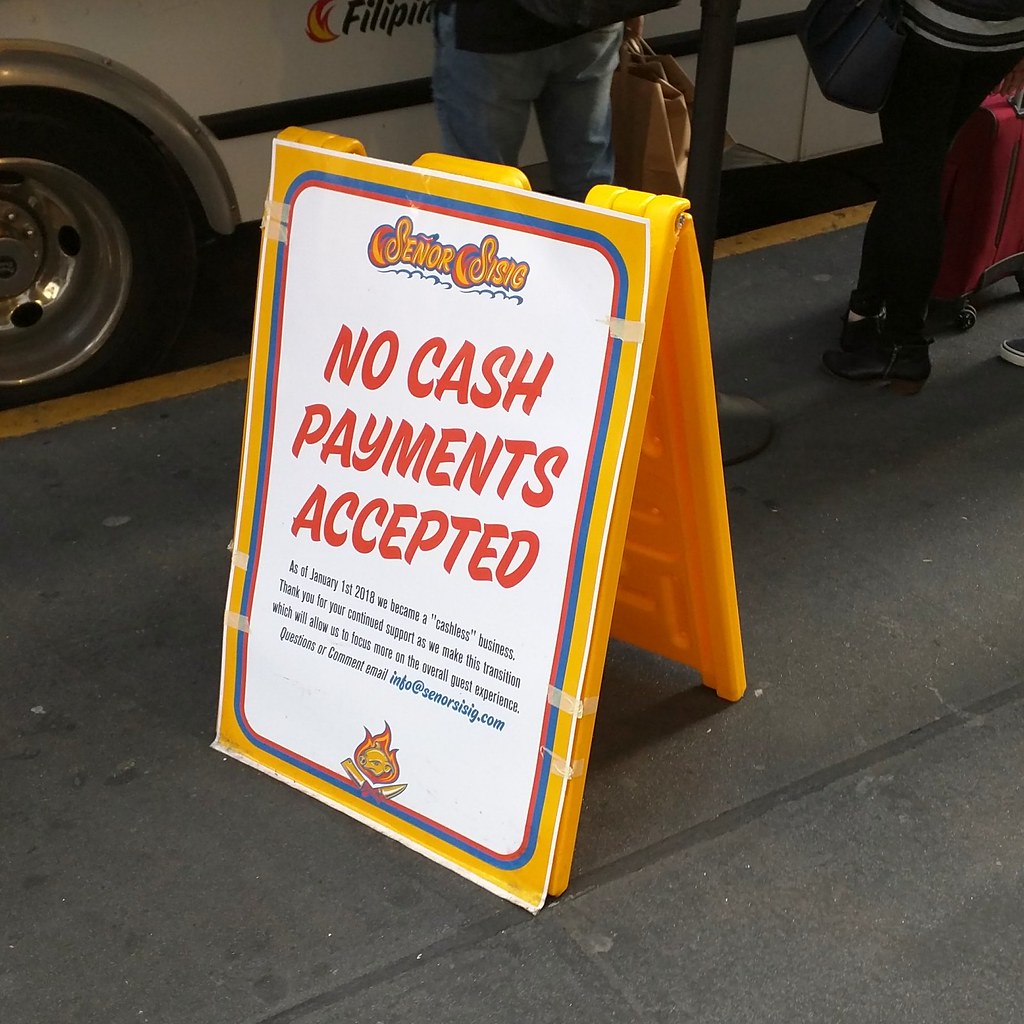
The bottom line is that not all of us see being controlled as a good thing and replacing currencies with their digital brethren is another tightening of that control. This again reinforces the idea that governments prefer big businesses over many smaller ones because they are easier to regulate and control. The best way to resist the war on cash is to insist on using cash, especially when doing small transactions with local businesses.


(Republishing of this article welcomed with reference to Bruce Wilds/AdvancingTime Blog)
 

Saturday, July 1, 2023

Advancing Time: Do Not Forget 1980, Inflation Is Not Gone

Advancing Time: Do Not Forget 1980, Inflation Is Not Gone: The economic and financial puzzle has far more pieces to it than many people think. It is difficult to understand the market short-term let ...

Do Not Forget 1980, Inflation Is Not Gone

The economic and financial puzzle has far more pieces to it than many people think. It is difficult to understand the market short-term let alone get any kind of picture of the long-term market. The market has been going up despite a number of formidable problems forming that we will have to face in the near future. Any one of these could derail both financial markets and economic growth.  

It is important to remember that inflation is not gone. In fact, it may be difficult to control several of the factors feeding into it. The debasement of currencies due to huge government deficits, a surge in energy prices, or a fall in food production could all push inflation much higher. This is why forgetting 1980 could be a big mistake. Higher interest rates are a key tool or shall we say weapon in controlling inflation. If needed to fight inflation, they will be used.

NASDAQ is at lofty levels. The New York Fed is now pricing in a 70.8% chance of a recession, the highest since 1982. This recession may be the "worst in our lifetime," says Mike McGlone, Macro Strategist at Bloomberg Intelligence. McGlone is looking for more than a minor correction and he is not alone. 

We tend to give the central banks far more credit than they deserve as to how much they control. Over the years the "Fed put" has skewed true price discovery by coming in and saving the stock market whenever it gets into trouble. Yes, central banks heavily influence markets and interest rates but to say they control them may be an overstatement.

Adding to the current false Alice in Wonderland landscape is a whole lot of financial engineering and tax laws that have directed investment money into stocks and away from hard assets. The financial system is not a well-oiled machine, instead, it closely resembles a cobbled-together mess. How long the divergence in various markets can continue before assets revert to more historic valuations is questionable. The one thing that is certain is this can occur rather rapidly and catch many people off guard.

The case can be made that much of the financial markets are no more than a mirage. It is an illusion generated by hope, government spending, easy money, leverage, and hype. It has been created by those that benefit from convincing people with money that investing in such schemes will bring them more wealth. The problem is that this is a cycle that has played out time and time throughout history. Sooner or later true price discovery reasserts itself and reality raises its ugly head.

This becomes apparent when economic watchers trying to compare today with other periods in the past are stymied by the fact many comparisons have become "obsolete." For example some point to proof of less liquidity due to a dropping M2 but fail to note the M2 does not include money that is still relatively accessible such as money funds. Today a great deal of money has not "gone away" but has merely been transferred to other places. 

An Exploded Bomb Gets Few Buyers
It is a bit simplistic to think the value of all assets moves in lockstep or last. Over time the growth in both credit and debt has outpaced the growth in hard assets. Also, many hard assets have a shorter lifespan than the debt supporting them. Please consider the possibility many of the important adjustments the economy must make are lagging far behind our current "financial culture" or that the economy has evolved in a way that simply no longer works.

It could be argued we are walking on thin ice. Like many market and economic skeptics, I contend we should prepare for a major shift in asset values. Hard assets may soar in value and at the same time many intangible investments fall in value. This view of the future can be difficult to wrap your head around. Most people tend to think of things going in one direction or the other and not in both.

If indeed inflation is not gone, this means that government bonds as an investment are still problematic with long-term bonds being the worse. Usually, such bonds do not yield a "positive return" over inflation. In the short term, they may bring you about even but in the long term it is very likely bondholders will be raped and plundered by the forces of inflation. 

When people called inflation peaking last June they did it using the base effect argument. Year-over-year comparisons are a big reason inflation appears to be ebbing. In short, it simply is not going up as fast. This system also promises less favorable comparisons in coming months which will reverse the impression inflation is no longer an issue.

Regardless of what some experts claim, the inflation, stagflation, or deflation debate is not over. It would be wise to remember this game does not end and it is impossible to escape. Decades of poor-quality growth have metastasized into an economic system that is unsustainable. It has also resulted in inequality that is eating away at society. Retiring with money does not guarantee a person a happy, healthy, and carefree life. When is all said and done, the final stage of any country's fiat money system has proven to be inflationary.


 Republishing this article is permitted with reference to Bruce Wilds/AdvancingTime Blog