Sunday, April 17, 2022

Is Trade Becoming A Drag On The American Economy?

The world may have already hit peak globalization, much of which was promoted on the idea trade was good for all parties concerned. Today it has become clear that many supply chain problems revealed themselves due to Covid-19. Supply problems are now being exacerbated by a slew of Geo-political issues. In short, it is time to honestly look at the role of trade in the American economy. It has also caused a review of the importance of having dual suppliers and not becoming dependent on factors beyond your control. 

The reasoning that we are trading worthless dollars, currency, or paper for goods is a bit misleading. It might be more accurate to say we are trading away jobs, wealth, and even our future. Making your rivals stronger at your expense has always proven to be a mistake in the long run. The question we should ask is whether free trade is really a win-win?

The answer probably falls into a grey area based on the terms on which transactions are based. While the idea behind trade has a great deal of merit it is often given far more credit for economic growth than it should. There is a lot to be said for being self-sufficient. a strong case can also be made for favoring trade with nearby friendly neighbors rather than distant countries in that it improves the neighborhood. 

When economists talk about labor cost they tend to minimize other factors that affect the productivity of an area and its ability to produce products at competitive prices. The tax structure, work rules, energy supplies, and healthcare cost a country places upon a business also play into the cost of goods. The fact is, we can build it here and America is big enough to be its own market. This case is strengthened by the monetary cost of shipping and the toll it takes on the environment.

An example of knowing where your money is going was explored in an AdvancingTime post years ago. The money our neighbor to the south receives by way of trading with America quickly passes through Mexico and flows to Asia. It could be argued that when all is said and done we are still transferring our wealth to the far east only by the scenic route. The numbers indicate that in addition to the United States being a huge importer of goods from China, Mexico also ran a trade deficit with China in 2017 of around 64 billion dollars.

This does not mean all trade is bad. The very fact the dollar is the world's reserve currency means countries will want to sell goods to America to get dollars. Some people argue that a trade deficit should have virtually nothing to do with trade policy because it represents only part of the flow of investment funds into or out of the country. I beg to differ because it directly plays into the bigger issue of how much the people of a nation save and invest. This is strongly linked to incomes and the standard of living. This all has an impact on the value of our currency and our balance of payments which is the broadest accounting of a nation’s international transactions. While the link is tenuous at best it is best we should not underestimate its importance over the long run.

But Where Does The Money Go From There?
When you start thinking about all the money and jobs we shift into Mexico each year you would think by now Mexico would be rolling in cash. Interesting trade deficit data concerning Mexico reveal a fact most people miss. A bit of research quickly confirms that the money Mexico receives by way of trading with America quickly passes through its lands and flows to Asia. It could be argued that when all is said and done we are still transferring our wealth to the far east only by the scenic route.
 
The true size of our trade deficit with Mexico is difficult to get a handle on, some figures show it as around 102 billion dollars in 2019. What really stands out is where Mexico sends this trade income. The following numbers show that when it comes to trade in 2019 exports of goods and services made up about 39% of Mexico's GDP but even with a huge trade surplus with the United States, Mexico still ran an overall trade deficit. This is the reasoning behind substantially strengthening NAFTA but in a way that gives a great deal more value to the United States.
Once Wealth flows To Asia, It Stays There
 
For years the overspending of consumers here in the United States has allowed countries like China, South Korea, and Japan to sell as far more than we export. We have enriched them through what often seems like rather lopsided trade arrangements, and during that time we have watched them grow stronger as we have weakened.
 
 Those preaching the virtues of globalism and free trade point out that American consumers pay far lower prices because of this but overlook the fact that in the long run such an unbalance will not end well. The bottom-line is the United States not only directly but even indirectly is shipping wealth off to Asia, this means such trade poses a far bigger issue than what is seen as the imbalance with our NAFTA partners.

This article ties in with several others published on AdvancingTime. One delves into how China has not been fair in trading with America and how a very strong strategic dimension exists for NAFTA and a powerful regional trade bloc to compete in a changing global economy. The second explores the strong business relationship between Japan and China that has grown stronger since Japan imploded decades ago. This tight relationship is apparent each time trouble surfaces in China. It seems, the yen jumps in value as wealth in a stealth move flees China through business back-channels. This should not be misinterpreted as the yen strengthening, but rather a temporary bump before the wealth moves on to an even safer place. 
 
It is likely the controversy over just how much trade contributes to America's economic growth will be ramped up as growth slows. Trade between countries is given far too much credit for being a big driver of our economy. It pales next to factors such as government spending and credit expansion. The fact is if John needs to buy a wheelbarrow for work it does not matter where it is built. John needs and will buy a wheelbarrow. Where trade does fit into this has to do with what country employs workers to make that wheelbarrow and how much it will cost. While John may save money if the wheelbarrow was produced in a low-wage country trade has more to do with who benefits from commerce rather than a force driving our economy forward.

Trade Is Not A Big Driver (click to enlarge)
In many ways, trade should be seen as a way to increase access to a greater variety of goods at a better price but this only works over a long period of time if it is balanced. A county that constantly enjoys a trade surplus at the expense of its trade partners often reaches a position to exploit the weaker countries and generally does so. 
 
Throughout history, trade policies have had massive long-term ramifications on the strength of a nation's economy. The recent promise by politicians that increased trade will create new jobs has turned out to be largely a myth. Still, we hear the narrative spun by politicians playing the "fear card" with statements such as "We can’t let countries like China write the rules of the global economy.” This implies we will lose the power to control our own fate if we stand firm and protect what is ours.
 
The big driver for free trade has always been big companies wanting to expand their markets and exploit ways to reduce labor costs. This is where it is important to remember it is not all about human labor but technology is playing a greater role in production. If factories filled with mostly robot workers are the future then we should do all that we can to see that they are located in America. While they would not necessarily be a massive creator of jobs they would at least allow us to have control of our own manufacturing and reduce America's trade deficit. Fortunately, several events that have taken place since then have fed into an awareness of the vulnerabilities created by allowing control of production to flow into foreign hands.
 

Footnote; For more on this subject see the link below.
  http://Nafta And Regional Trade Better than Buying From China.html
                                                                              

(Republishing of this article welcomed with reference to Bruce Wilds/AdvancingTime Blog)

Friday, April 15, 2022

Censorship And Propaganda Threatens Our Freedom

Censorship is in many ways a reverse form of propaganda. It is not a mistake or oversight that many mainstream media outlets give their audience little ability to give feedback. They go out of their way to avoid anything that might dispute their narrative. While it could be argued the lack of a comment area or feature linked to an online format is often just an omission it could be something more and far more sinister. The lack of debate on whether America should be involved in the current dispute in Ukraine highlights how propaganda can dictate policy.

They Don't Want Your Opinion

Propaganda tends to become a self-feeding loop that plays a huge role in shaping public opinions. The lack of a feedback loop is a tool to reinforce the idea there is no objection or criticism of the article or statement and everyone accepts its conclusions. I contend the subtle omission of a comment section online is often to quell dissenting voices and not because it simplifies the format.

The definition of censorship is the suppression of speech, public communication, or other information, on the basis that such views or material have been deemed objectionable, harmful, sensitive, or "inconvenient". Censorship can be conducted by governments, private institutions, or corporations. This does include mainstream media. 

Censorship has a huge role in driving the fear of speaking out. By its nature censorship often implies those being silenced are trying to say something very wrong. I consider censorship and mainstream media's role in it as part of the self-feeding propaganda loop that plays such a huge role in shaping public opinion.  This tends to result in those in the leadership positions that control the media slowly hacking away at the constitutional rights of the individual by furthering the idea it is all "for the greater good."

The idea of having a press that is free to cover the news is linked to the idea it will be fair and such a freedom comes with a degree of responsibility. A common example is how freedom of speech should give someone the right to speak their mind but not scream fire in a crowded theater. This can slip into an argument as to the duty of the media in presenting as unbiased a view of events as possible. This is complicated by the fact many news outlets have moved more towards an entertainment format rather than presenting the cold hard facts and in that regard, sensationalism draws viewers.

Propaganda Shapes Public Opinion!

Call it what you want, propaganda or fake news, it is more or less the same thing and we are bombarded with it on a daily basis. This will continue to expand in the future considering the many new tools at the disposal of those wishing to both control and deceive us. Already fake news and false flags have left many of us having a difficult time deciding what is real. To make matters worse the rapidly growing ability of computers to generate human images is about to take this to a whole new level as this deceptive and potentially dangerous area of technology starts to become horribly abused. 

It could be argued, that mainstream media has become a polarizing force that stirs the pot of social unrest. By promoting polarization America's media has made it impossible for the people to unite and regain any control over Washington. I would not be surprised if those in control are not giddy over this and the problems Facebook has created by playing fast and loose with data from its followers. Facebook by crossing the line and abusing the trust of those with accounts and information posted on  its platform has taken a great deal of pressure off of the mainstream media to do a better job.  

The sad reality is that "Power To The People" is dead because we, as a people are so divided and unable to agree on anything. Still, even more unsettling is the relationship so many large companies have made with the government. Anyone who doesn't believe that countries use psychological warfare and propaganda to sway the opinions of people both in and outside of their country is naive. Sadly, this is a huge factor in our deployment of the military and the endless wars that benefit those building the weapons of death.

An Example Of The Lies We Are Fed

Propaganda is a powerful tool that has resulted in many wars that enrich those who make weapons at the expense of those called upon to give their blood. The fact that behemoth Amazon has intertwined business interests with the CIA, NSA, and several other "Deep State" government agencies is a monument to our having lost control of the massive part of our government that spies on us and spins the narratives to which we dance. The fact Amazon's former CEO, Jeff Bezos, also owns the Washington Post, America's most influential newspaper, should send shivers down the back of those believing in freedom and limited government. Simply put, this has taken propaganda to a whole new level and unleashed a force that none of our institutions can resist.

Today many people get the majority of their news over the internet. While this has made a huge difference in how news is distributed and how we receive the news, the reality is that much of the content remains controlled by a few strong players that are driven by an agenda of self-interest. It could be argued that the media has a moral obligation to provide more of a "public forum" if they want the right to call themselves "free and balanced" but if anything the noose is slowly tightening around those wishing for such a voice. Banning certain ideas and speech only tightens governments' ability to control the masses.

Many of us out beyond the beltway in the backwaters and wilds of America have grown to feel the media has a casual relationship with the truth. In many ways, the media controlled by a few power brokers has become viewed more as a tool of the establishment than the protector of the people and defender of our rights. America's forefathers never intended such unholy forces to guide our opinions. This could explain why the press is often held in such low esteem by the very public that relies on them for information. Coverage filled with subtle digs or comments and even subliminal messages taints the premise media is fair. During interviews, we often get an opportunity to witness examples of just how badly you can treat a guest invited to answer questions when they resist the narrative being pushed. 

This often results in over-the-top efforts to put words in someone's mouth and take statements out of context. These words are then spun in the most harmful ways. If the guest represents views differing from the interviewer what we often see is an ambush. If a guest is favored or their views are endorsed it is often as though they had written the softball questions asked of them or as if they had been given the questions in advance or controlled the interview. All this can then be backed up by a series of scripted statements that all loop back around to support a hard or subliminal message.

With the biased coverage of current events being very common, it is little wonder that Americans question the honesty of the media whose ranks appear to have become filled with opportunists and bums dressed as a journalist. The fact is we often don't agree with everything we view or read so "implied agreement" is not valid. Even including a simple thumbs up or down box at the end of an article would at least give readers a place to weigh in. Next time you are boiling mad or disagree with how an article is characterizing an event I urge you to take the time to see if the source has provided you with an opportunity to present your view. I would not be surprised if they have not.


                                                                                 This blog is not written for money
                                                                                 or profit but as a way to share ideas
                                                                                 and thoughts. If you liked this post
                                                                                 feel free  to E-mail it to a friend.
                                                                                 

(Republishing of this article welcomed with reference to Bruce Wilds/AdvancingTime Blog)

Saturday, April 9, 2022

The Broken Supply Chain, Russia And China Will Continue To Cause Chaos

Those hoping the broken supply chain would rapidly begin to repair itself should prepare to be disappointed. In our complex interdependent world, we have found a broken link in a supply chain can have a major impact on both prices and the flow of goods. It now seems that for several reasons, the international supply chain crisis that impacted U.S. logistics firms, retailers, and consumers could intensify this summer.

The only good thing about the supply chain mess is that it gives politicians another thing to blame soaring inflation on. Of the several supply line factors now about to descend upon America is the possibility of a strike by the West Coast union dockworkers. Their contract is set to expire at the end of June. This means the 22000-union-workers at-29-west-coast-ports have a great deal of leverage.

The last time the union and shipping companies negotiated a contract was in 2014. At the time, a labor slowdown nearly brought activity at the Pacific ports to a standstill. A strike at this time would be devastating. With inflation currently soaring, they most likely will hold the feet of marine terminals to the fire when it comes to replacing their existing contract. 

On a recent podcast, Tom Luongo the voice behind the Gold, Goat’s ’n’ Guns blog and podcast put out the astute observation that China's shutdown of cities due to a few Covid cases could be another way for China to  support Russia without stirring America's outrage. Luongo also does an excellent job of verbalizing a few of the thoughts I have that spill over into the propaganda war now being waged upon America. 

An example he used is how the media is now referring to the cities in Ukraine by their Ukrainian names rather than the way we have always pronounced them. It could be argued this is to give more substance to Ukraine than it deserves and whitewashes over the fact Ukraine has always been a failed state. As for his view of the Biden Administration, he uses the term, "purposely incompetent." Here is the link to that podcast which is particularly interesting at the 48-minute area, https://kunstler.com/podcast/kunstlercast-356-ton-luongo-lays-it-all-out/

So far the lockdown in China imposed by CCP bureaucrats late last month has failed to halt the worst Covid outbreak in two years from spreading. The rise in cases has resulted in authorities expanding the scope of what was supposed to be a short-lived staggered freeze to cover entire cities. With the resurfacing of these lockdowns which last week were again massively expanded we should expect to see more stress on supply chains. 


The claim our so-called leaders are acting purposely incompetent could be based on the crazy and possibly hard-to-follow notion that the real goal of sanctions placed on Russia is to drive prices even higher. An article Authored by Kit Knightly via Off-Guardian.org, delves into this idea being floated by some tinfoil hat conspiracy theorist. This is where the question of whether the real target of soaring oil prices, energy, and food crises is us. It is easy to argue even higher prices are on the horizon and we are in a full-blown economic war with currencies and trade being used as weapons. This signals a wild ride ahead, today, even the Russian ruble has already started recovering from the steep dip created by Western sanctions and has returned to almost pre-war levels.

Beneath the surface of geopolitical issues that continue to simmer we see the inflation blame game now in full play while the Fed is raising interest rates. While most people think the world elite, politicians, and such, are simply steering us forward, it is possible to make a case that this is all part of a bigger scheme to get the masses to agree to more control. As the masses get poorer from inflation they will be more inclined to go along with any half-baked scheme floated before them that promises any kind of relief.

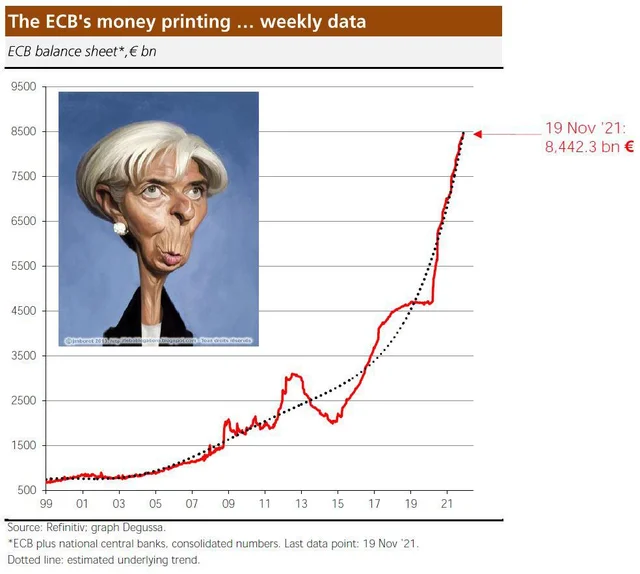
It should be noted even before the war in Ukraine, the ECB had started to admit Europe has a serious inflation problem. After years of the central bankers claiming they wanted more inflation and flooding the economy and financial markets with credit, we now see them busy using covid and Putin as scapegoats for inflation. Historically, not just over the last decade but over the last fifty to a hundred years or so, it seems the bigger the role of government in the economy, the bigger the problems. Now it is becoming clear that too many bankers in the kitchen of global finance is also bad for us. 


Footnote: Peter Schiff goes off on an interesting inflation rant about 18:30 minutes into his podcast. The link of which is, https://www.youtube.com/watch?v=Xm3puxneKtM    

                                                                                 This blog is not written for money
                                                                                 or profit but as a way to share ideas
                                                                                 and thoughts. If you liked this post
                                                                                 feel free to E-mail it to a friend
                                                                                 or join to receive future articles.

 (Republishing of this article welcomed with reference to Bruce Wilds/AdvancingTime Blog)

Wednesday, April 6, 2022

Biden's War, A Slow-Motion Train Wreck We Cannot Stop!

A great deal has been written about what is occurring in Ukraine, some of it true, much of it not. Unfortunately, two sides exist to most stories, and to those of us skeptical of the path Biden is hellbent on pursuing, it feels like we are watching a slow-motion train wreck. This is something that has taken on a life of its own and we are powerless to stop it. With each passing day we hear more about billions and billions of American taxpayer dollars being shipped off to the failed state known as Ukraine. Yes, we are talking billions!

Picture Of A Fool Playing With Fire
Antiwar.com recently reported, that instead of supporting negotiations between Ukraine and Russia that could lead to a ceasefire and an end to the bloodshed, Biden and the US government are actually escalating the situation. A prime example of Biden pushing forward the military conflict was evident during a key speech in Poland where he called for regime change in Russia with the words "this man cannot remain in power". 

Biden's words were not some off-the-cuff “gaffe,” it was part of, and the high note of a carefully choreographed, “legacy-defining” speech. Biden's comment caused such a violent reaction from across the world that the White House had to swoop in to clarify that Biden was condemning Russia's efforts to control the region and not altering the power structure within Russia itself. Even Secretary of State Antony Blinken had to step in and calm things down by clarifying "we do not have a strategy of regime change in Russia."

All this was the second time in just a few days that Biden "let it slip" he wanted regime change in Russia thus creating speculation about whether he would be willing to let American boots on the ground become part of NATO's strategy. In short, this is Biden's war. It often appears everything the Biden administration does is geared at taking our eyes off the nightmare forming here in America from his disastrous inept leadership. How quickly he tries to forget the awful mess his incompetent administration made exiting Afghanistan. 

With the current full-fledged media assault Biden and mainstream Western media has unleashed upon Putin it is little wonder why Russia is slow to respond or so far has declined to engage in talks. Media coverage has become so one-sided and biased that it is impossible to know what the situation within Ukraine really is. Through all this, one thing is crystal clear, and that is the warmongers are coming out of the woodwork to bash Putin for finally saying enough is enough and finally taking action.

Well, they got what they wanted and that is another proxy war in an area of the world where most of the people just wanted to live in peace. It would be wise to remember that warfare has proven to be a pathetic option to bring about positive change. War may change things, but to what degree and for how long.  In this case, the signs of censorship and calling those skeptical of national policy traitors, all point to ushering in a world where few of us would want to live. A place ruled by the so-called New World Order, a place where our rights and wishes are ignored even more than they are today. 

The fact is, beauty is in the eye of the beholder. Whether you consider Putin a thug and a bully may depend on if he agrees with you. Putin's biggest crime is that with blunt rhetoric he has refused to accept for Russia a subservient role in an American-run world under a system drawn up by our politicians and business leaders. It could be argued that Biden is following Obama's playbook when it comes to Putin and America has adopted a foreign policy so stupid that it results in driving our chief adversaries into each other's arms. 

Many people consider the policy Obama employed to isolate Putin backfired and only enhanced his image. It also caused Putin to turn Eastward and expand economic ties with China. This pivot has resulted in a major shift in the world power structure. Demonizing Russia has been reinforced by a national security apparatus so entrenched in a cold war mindset they have lost all appearance of objectivity. Those with this bias are always pounding on the drums of fear and touting Russia, which is far from an economic power, as a major threat to America and our way of life.

This has made the world a far more dangerous place. By increasing tensions to an unnecessary level, we have increased the possibility of nuclear war. Like many people, I do not find what is known as the concept of Mutual Assured Destruction, or MAD to be reassuring. What the world would look like following a nuclear war is very murky, yet today it seems many people consider nuclear weapons as just another tool or option for us to use in our defense if we are attacked.

History has time and time established that the loss of an individual life is often insignificant except to their loved ones. Also, one of the harsh realities of modern war is that it  has become a less personal way to die. In truth, the nuclear deterrent we hold is a hundred times larger than needed to stop anyone sane or rational from attacking America, and for anyone else, an arsenal of any size will be insufficient. 

Sadly, over the years, as nuclear proliferation increased, the threshold for using nuclear weapons seems to have fallen. Those of us growing up during the Cold War and the Cuban missile crisis most likely remember the U.S. government’s civil defense film titled,  "Duck and Cover." Sadly, if enough nuclear bombs explode, dropping to the ground and covering your head will not prove a life-saving maneuver.  

                                                                                 This blog is not written for money
                                                                                 or profit but as a way to share ideas
                                                                                 and thoughts. If you liked this post
                                                                                 feel free to E-mail it to a friend
                                                                                 or join to receive future articles.

 (Republishing of this article welcomed with reference to Bruce Wilds/AdvancingTime Blog)

Sunday, March 27, 2022

Which Major Currency Will Be The First To Fall? - Could The Euro Beat The Yen In Race To Graveyard?

Before saying anything else, it is important to note, when it comes to the major currencies, it is safe to assume they are manipulated by central banks. It is in the best interest of Central Bankers to keep them trading in a rather tight pattern as so not to rock the foundation of the global financial system. On top of the stress being placed upon economies due to the war in Ukraine, the one thing bankers don't want to deal with is the growing fear the fiat monetary system is about to fail. 

The destruction of the myth that a major currency cannot fail could create a situation where we would see skittish investors dumping currencies in mass. As wealth rushed from currencies into tangible assets inflation would soar. When a currency implodes it fosters a transfer of wealth from those holding the now worthless paper to those holding other currencies or tangible assets. The group-think of all the major central banks until just recently has been concreted into a global monetary policy favoring inflation in order to support economic growth. This monetary policy is now being challenged by rising prices at the same time economies are slowing.

It is important to remember that fiat currency systems depend on the faith of its users and participants to survive. The emergence of a slew of new cryptocurrencies is an indication faith in the current fiat currencies is beginning to wane. These digital currencies that have flooded the market are disconnected from central banks. Also adding to the perception we are about to see a major shakeup in the global financial system are efforts by countries such as China and Russia to move more trade away from the dollar. This is happening at the same time we see the cost of living for the 16 nations that share the euro currency rose to 5.1% in January, a  new record high, few interest rate increases expected in 2022, and a time the German PPI is 18% and Spain’s 31%.
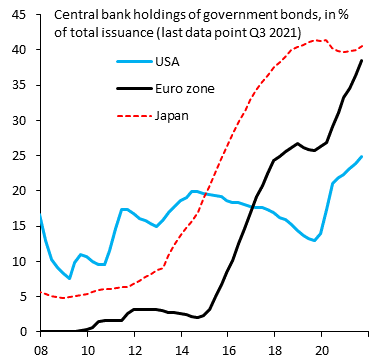
Recently, Zoltan Poz­sar, an In­vest­ment Strategist at Credit Suisse and is based in New York, has appeared all over the media touting a theory that would affect us all. He is touting the idea Russian sanctions combined with its relationship with China and a crisis in some commodities are threatening the dollar’s reserve status. He claims this will bring about a Bretton Woods III event where commodity collateral may repave the road to hard money

While Pozar may not be completely right, if we are moving in that direction, the effect has broad implications for all of us. It would substantially redefine the relationship between fiat currency and tangible assets. A strong argument can be made that even though the BOJ is the top dog when it comes to monetizing debt it may not be for long. The ECB is catching up in the percentage of central bank holdings of government bonds in percent of total issuance. Considering all of Europe's problems the big issue is envisioning a scenario from which an economic renaissance might flow.

To say the Euro-zone banking system deception which has been going on for many years is continuing understates the size of the fraud occurring before our eyes. A program known as "Target 2" has been the salvation of the euro and is responsible for preventing countries from collapsing. Since 2015 when Draghi started QE, the Bundesbank has been buying bonds on the market. The Italian central bank is dependent on the ECB which buys Italian government bonds. Germany then sends euros to Italy transferring the debt via Target 2 to their German bank. The growing differences in the Target 2 balance sheet are the result of the Germans taking these bonds. Italians have also added to the capital flight by liquidating their bonds and sending their money abroad. 
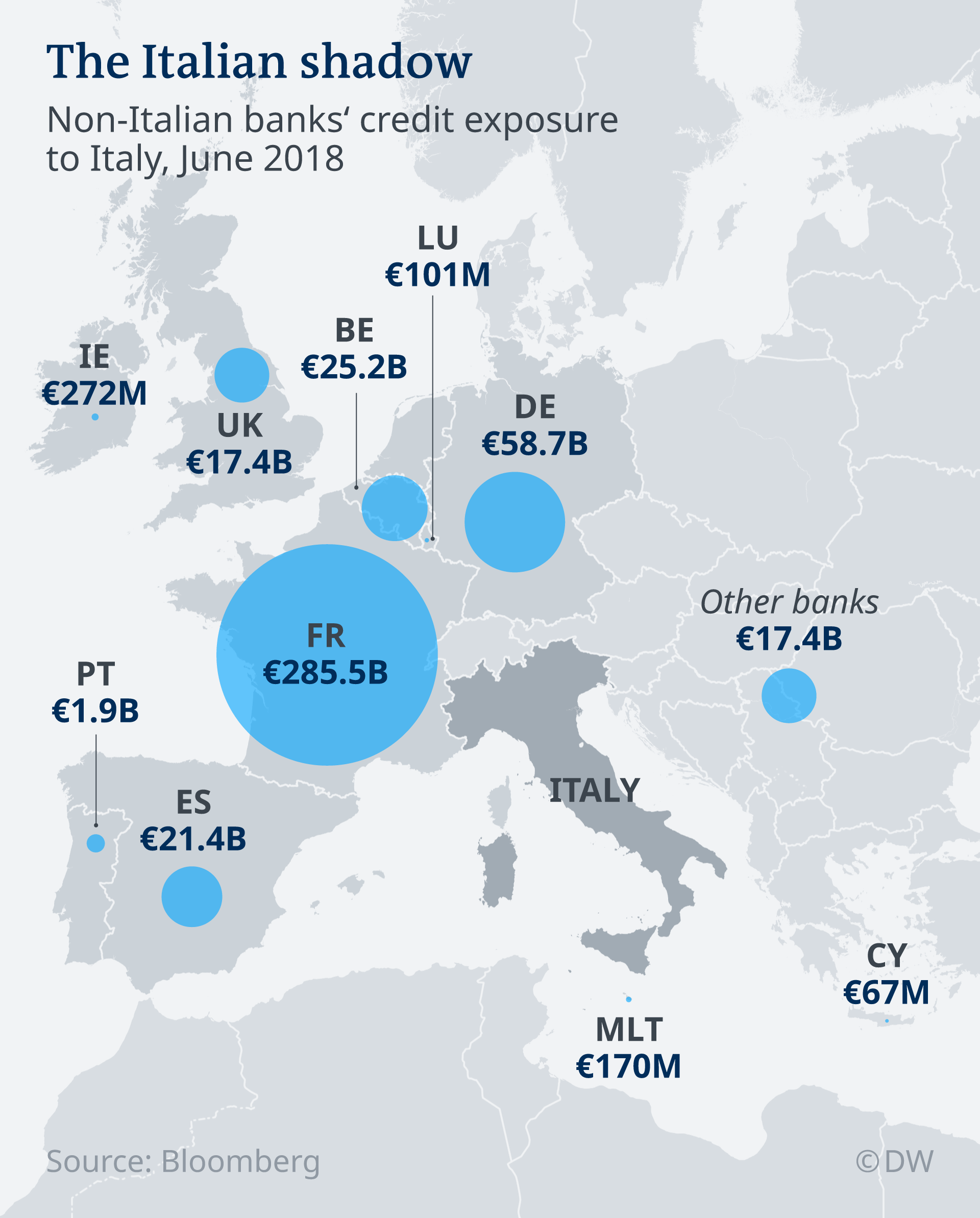
 Italy Is Far Worse Post Covid-19
Target 2 translates into enormously huge debt claims on the Germans that are not covered by any securities. In short, if Italy (or even Spain) would withdraw from the Euro-zone, the Germans would be left holding worthless paper. The bottom-line is Brussels and Germany must continue buying what could be considered, "bad debt" to keep the system afloat. All this raises the question of when the value of the euro will begin to reflect the stress which has been masked over and greatly ignored. In short, the choice of Europe has been whether to put a lot of bad debt on the balance sheet of the European Central Bank or deal with defaults and the contagion that flows from them. To be clear, many German economists criticize Target 2 and see it as a check that cannot be cashed.

As for the yen, for a long time, many investors have viewed it as a safe-haven currency, so much in fact that it has been called a "widowmaker" trade for those betting on its decline. For years Japan has been the poster child and living proof that low-interest rates do not guarantee economic growth and prosperity. Going unnoticed by many investors is that the BOJ  has been pumping up Japan's stock market by buying into the ETF market. This has morphed into a program that seems akin to Mario Draghi's fraud of doing "whatever it takes" to give the appearance their economy is moving forward. Following along the line of thought that while there is no way of avoiding the final collapse of a boom brought about by credit expansion years ago, Ludwig Von Mises wrote; "The alternative is only whether the crisis should come sooner as the result of a voluntary abandonment of further credit expansion, or later as a final and total catastrophe of the currency system involved." In short, the BOJ now has little choice but to go all-in which strips away any illusion all is well.

Japan Led The Way In This Experiment

Before the "Bernanke has all the answers" era, many of us criticized Japan for failing to own its problems. At the time the idea was that only by letting its zombie banks and industries fail could Japan clean out the system and move forward. Instead, the Government of Japan ran huge deficits and ran up massive debt. For decades Japan languished and avoided disaster only by the fact that it enjoyed a large trade surplus year after year and was able to pigtail onto the rapid growth occurring in China. Today much of that trade surplus has vanished but Japan's massive debt remains.

After 2008 Japan decided to put itself on the leading edge of an experiment to propel its economy forward. This includes the BOJ not only expanding its balance sheet but pumping up the market by jumping into the ETF market, what the country is not doing is taking big steps toward economic reform. All this has morphed into a program that seems to share a key focus on doing "whatever it takes" to keep the economy moving forward. The problem in pursuing the flawed policy of never allowing the market to slip but putting it on a path ever upward until everyone doubting the strength of the market finally capitulates is that it thwarts true price discovery.

Recently articles have surfaced exploring how the central banks and governments have distorted true price discovery in stock markets across the world. By buying stocks they are taking or transferring branches of industry or commerce from the private sector to state ownership or control. The keyword here is "ownership." This is because the state may choose to abdicate control over decisions leaving them in the hands of management. It has been estimated the BOJ holds around 35 trillion yen, accounting for roughly 80% of Japan’s ETF market. In some ways, the actions of Japan's central bank could be considered nothing more than a new model of "stealth nationalization." 

This is a course filled with moral hazard since it destroys true price discovery the bedrock of free markets. We cannot underestimate the importance between assets prices and the feedback signals they send. These are critical in determining value, especially when it comes to assets such as stocks, bonds, currencies, or paper promises which carry no utility value and can perform no useful task. When true price discovery is lost or impaired management teams no longer get market feedback as to whether an executive decision is good or bad, this dilutes the market's ability to reward and punish companies no matter how disastrous their decisions.

To keep the illusion of a viable economy alive central banks must continue expanding credit and debt so the wheels do not come off the economy. It is hard to create the illusion all is well if unemployment soars and defaults skyrocket. This means the central banks remain trapped in a box Ben Bernanke built, Janet Yellen reinforced, and Jerome Powell has not tried to escape from. It is easy to see how central bank policy, right or wrong, falsely accomplishes two things, it bolsters and supports current holdings while reinforcing the image markets are climbing higher because our economic future is getting brighter which is a narrative mainstream media is glad to provide.

This may have started as a "short-term solution" but Ben Bernanke upped the ante by setting the money printing machines on high and flooding America and the world with QE. When other central bankers embraced this solution the world embarked on a grand experiment. The big problem is momentum seems to ebb shortly after each new wave of stimulus and another fix seems to constantly be needed. Current policies are not creating true growth in productivity or real wealth but simply driving up the value of certain markets and assets. This benefits those who own or have assets but does little or even hurts the poor or those who have nothing. It also increases economic inequality and social unrest. The harsh reality central bankers, politicians, and the world must face is the medicine for curing high inflation is high-interest rates. This will not go down well and to some an unacceptable solution.

For years, Japan and Italy, both mired in debt, have been on artificial support. Not only the size of the debt, but the quality of the debt, suggest a huge drop in the values of their currencies must occur. Weakness in the euro or even the yen almost certainly will result in a stronger dollar which could be the catalyst for a crisis in currencies issued by emerging market economies. In short, there is the potential to see such an incident over to the rest of the developed world and evolve into a global deleveraging event. This will most likely be seen as part of the great reset many of us have come to expect will occur at some point. Meaning, promises will be broken and rules will be rewritten as we go through the wash. If I'm correct this reset will involve a massive transfer of wealth with many people having their assets rinsed away as society gets put through the wringer.

                                                                                 This blog is not written for money
                                                                                 or profit but as a way to share ideas
                                                                                 and thoughts. If you liked this post
                                                                                 feel free to E-mail it to a friend
                                                                                 or join to receive future articles.


Footnote; For more on this subject, see the articles below.

https://brucewilds.blogspot.com/2019/03/euro-zone-banking-deception-continues.html https://commodity.com/data/italy/debt-clock/                                                       https://www.youtube.com/watch?v=pNIE7qUePq8                                  https://brucewilds.blogspot.com/2019/09/eu-trade-deficit-with-china-destined-to.html  

 (Republishing of this article welcomed with reference to Bruce Wilds/AdvancingTime Blog)

Saturday, March 19, 2022

The “Wealth Effect,” Is Failing As A Key Fed Policy Driver

In a world where optimism and hope have dominated the investment landscape for over a decade, we should be prepared for reality to raise its ugly head. This time is not different and debt does matter. As pointed out by many economists over the years, low-interest rates and easy money, do not always result in a strong vibrant economy. Japan's failure to recover from its bubble bursting decades ago remains proof of this.

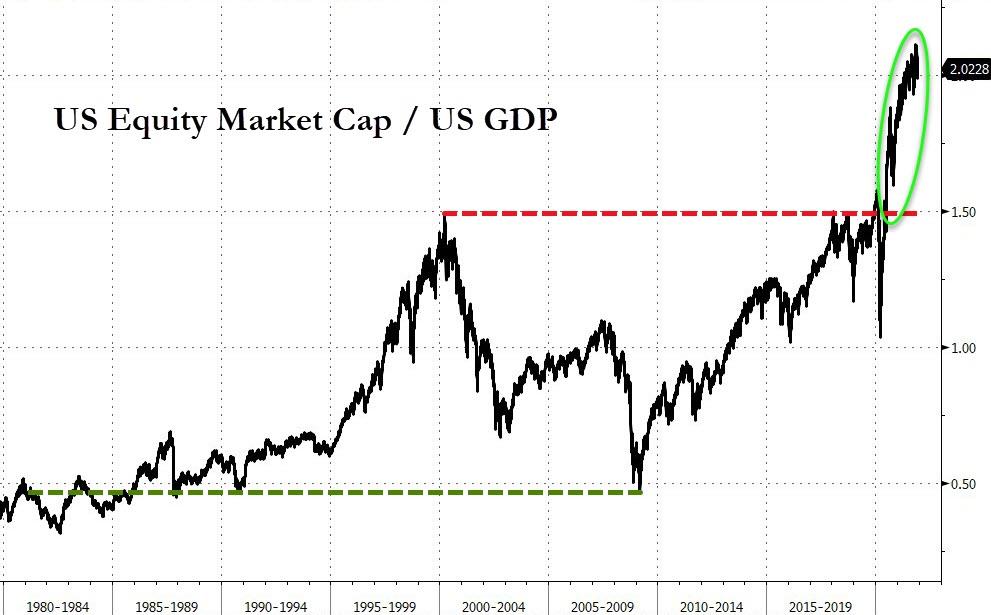
Much of the rationale behind QE has been that it creates what the Fed calls a “Wealth Effect.” For years this has been a key driver of central bank policy. This view is firmly embedded in the macro-econometric models used by the Fed. The notion, widely adopted by central bankers, is that by inflating asset prices to make the wealthy (the asset holders) even wealthier, these people will spend more of what they see as free money from asset price inflation. The premise is that this additional spending will create additional demand for goods and services thus providing jobs for the masses. 

Sadly, several times over the years the wealth effect formula has slid off the tracks and most likely will again. Consumption does not create wealth, it creates debt. The example that stands out in the minds of most people is from back in 2008. By loaning money against homes with little scrutiny as to the borrower's ability to repay them the Fed created a financial bubble with broad implications. It could be argued that since 2008, Fed policy has never really addressed that mess but attempted to paper over it by printing money and expanding debt through quantitative easing.

Wealth Effect Policies Have Failed To Generate Enough Growth

Looking back at how pursuing policies that breed the Wealth Effect can slide off track or lose their effectiveness, we see it always centers on the risk they create. At some point, the combination of easy-to-borrow money at low-interest rates tends to morph into a high-risk environment of increased speculation and leverage. In short, savers and investors seeking a return on their savings are forced out of traditional accounts because such investments get ravaged by inflation.

Many Consumers Bought Into This
The 2008 financial crisis resulted in the worst economic disasters in modern times and caused the biggest recession since the great depression of 1930. It is also referred to as the global financial crisis (GFC). Over the last several years, the Fed has been getting a great deal of well-deserved bad press for driving inequality and fracturing society. Since 2008 it has become apparent the Fed has created an unfair system that is broken, unfair, and corrupt. This has affected different generations in rather specific ways.

It is again becoming very apparent the wealth effect policies are failing. Not only have they failed to create a healthy economy but they have brought the financial system to the brink of collapse. Following the GFC the Federal Reserve and the Bush administration spent hundreds of billions of dollars to add liquidity to the financial markets. They worked hard to avoid a complete collapse. They almost didn't succeed. Today we are spending not billions, but trillions of dollars to keep the same corrupt policy moving forward. 

History shows investors should treat the wealth effect with caution because it is susceptible to reversals. Since the GFC, attempt after attempt has been put forth to change the tide, but still, we have watched the middle class shrink. The elephant in the room when it comes to growing the economy is how "the broken window theory" is spun and interpreted. The gist of this theory is that if a window is broken, the subsequent repair expenditure will have no net benefits for the economy. Still, it is not uncommon to see destruction touted as a good thing because it promotes spending. In truth, the idea destruction is good discounts several facts. 

One has to do with where the money is coming from but whether it is from an insurance company or someplace else, it still means the money is diverted from being used on another purchase. Repairing a broken window is maintenance spending which doesn’t improve growth because it doesn’t improve productivity. This expenditure would have occurred anyway. The only thing a broken window does is  cause maintenance spending to occur earlier and lower the useful life of the window. Maintenance spending may keep the economy going it doesn’t provide a boost. Instead, it is better to invest the money in something which creates wealth by increasing productivity.

Many people and even economists have real misconceptions as to how the economy works. Where money flows and who it enriches is a key component of economics. The failure to consider this is a blind spot many people have. Years of being told everything revolves around spending has diminished the important role savings plays in the scheme of a balanced economy. Fans of Keynesian economics that encourage government spending to stabilize the economy during a downturn tend to discount the importance that where and how money is spent matters a great deal. 

Wealth Effect Policy Has A Poor Record
In the end, this all comes back to the fact current policies are presenting us with diminishing returns while increasing risk. Sadly, financial corruption has played a huge role in getting us here. Never before in our history have Presidents, Fed Chairs, and politicians in general been able to exploit their power and gained massive wealth following their time as so-called public servants. A big part of our current problems is the elite top-down efforts to control our society has created a permanent government. Today an army of government workers, most un-elected have been empowered to nibble away at our rights.  

Bubbling up to the surface is the recognition the Fed has to shoulder a huge responsibility in pushing inequality higher. Powell has even gone so far as to claim there was little demand for loans below $1 million. Sadly, the same policies that dump huge money into larger businesses because it is an easier and faster way to bolster the economy give these concerns a huge advantage over their smaller competitors.

The long-term ramifications of destroying smaller businesses will hurt America in the long run. It eliminates competition, reduces opportunity, and over time fuels inflation. This drives my angst directed at companies such as Amazon and big tech. The policy of making people feel better so they spend more than they can afford is part of voodoo economics.  So is sending jobs abroad and increasing our consumption of imported goods which has resulted in a massive trade deficit. Good economic policy encourages personal responsibility and is rooted in saving not spending. 


(Republishing of this article welcomed with reference to Bruce Wilds/AdvancingTime Blog)

Wednesday, March 9, 2022

Turning The Wealth Pyramid Upside Down

When we look at upside down wealth pyramid at the left, I have a big problem with the picture it promotes. It is clearly based on someone's opinion of what investments are safe. The one thing it does well is to scream that some investments have a high degree of risk and it is best not to put all our eggs in the same basket. 

Another issue is how a 401 or pension will fare during hard times or if we do see a huge number of defaults. Consider this an indication that placing your wealth into paper promises means it has the potential to vanish or be converted into something to would never agree to. Again, the devil is in the small print or the fact "they" can change the rules at any time.

While a great deal of speculation has been showered upon us concerning inflation turning to deflation, we will not know the true direction of things until they occur. One thing to keep in mind is that government employs a tremendous number of people that will never accept a cut in pay. This will put a solid net under falling prices. Combined with the refusal of many workers to consider working for anything near minimum wage helps push away the notion of deflation. In fact today, my local paper announced the City Council in Fort Wayne, Indiana just approved retroactive COVID-19 hazard bonuses for all city workers.

It is important to move towards forecasting based on probability rather than predictions. Keep in mind a great deal of how we deal with the options before us is centered on how we position ourselves. This can result in a lot of study and hard work or, in the case of many people, be a duty we cast off to other people. The harsh reality is that there is no guarantee that any strategy we choose will be able to stand up to the barrage life throws at us. 

If we are indeed about to enter a body-slamming bear market that will reshape the financial landscape, what many people want to hear is how to make a million dollars overnight in a bear market. This is far more difficult to do than say. So much depends on timing and the direction the dominoes fall. Sadly, the inverted pyramid above should give us little reassurance we are in control of our own destinies. 

While overall I see investing in precious metals in a positive light, even investing in gold has a slew of drawbacks. The same holds true with bonds and cash. With bonds, there is the huge risk that they will be repaid in deflated or less valuable dollars or defaulted on. When it comes to holding cash in its truest form, not only are you bludgeoned by inflation but risk it will be stolen or lost. 

Old Chart, Derivatives Are Now Much Bigger

Interestingly, the widest and most perilous area of where to stash your wealth is that of derivatives. On occasion, it is important to revisit issues that have been swept under the rug or simply overlooked. For most people, the derivatives market falls into this category, partly because they don't understand exactly what derivatives are or why this market is so important. The problem is the derivative market has the potential to explode like a bomb.

Derivatives are financial contracts, set between two or more parties, that derive their value from an underlying asset, group of assets, or benchmark. These contracts hold the power to unleash a great deal of pain and grief during volatile markets. Years ago, Paul Wilmott who holds a doctorate in applied mathematics from Oxford University has written several books on derivatives. At the time, Wilmott estimated the derivatives market at $1.2 quadrillion, to put that in perspective it is about 20 times the size of the world economy. 

Since then, the derivative market has only grown larger. today, the world’s annual gross domestic product is around 100 trillion dollars. Trying to regulate this complex market is easier said than done. While QE was able to halt an implosion of derivatives and the resulting contagion and shock that would have spread throughout the financial system following the 2008 financial crisis this time we may not be so lucky. 

Returning to the inverted wealth pyramid, I see little to spur optimism going forward, add in geopolitical tensions and slowing economic growth across the world and it is very easy to envision risks pushing things over the edge. If history is any indication, the idea this time is different will prove to be false. Contagion seeping over from one sector of the economy to another has the potential to create a rather grim future in which we are forced to pay for our past sins of excessive greed and arrogance.

Several things are moving down a path I saw coming but like many of you, I'm shocked by the twist and speed things are moving. The one big surprise is how a little war can rapidly turn things upside down and be declared as the catalyst for our economic downfall. I have not been writing much as of late because I've been spun by much of what is happening, however, I plan to settle back in and crank out a few new articles soon. Stay safe, and remember this is not the time to take on new risks or believe the propaganda being thrown at us.


Footnote; Below are a few YouTube videos worth a quick look.

In a special update, co-founder and CEO of Real Vision Raoul Pal shares with us how he’s approaching the market amid this incredibly chaotic environment. Raoul outlines several scenarios for how the Russia-Ukraine situation could play out.    https://www.youtube.com/watch?v=klOSrrN4ETU

 (Republishing of this article welcomed with reference to Bruce Wilds/AdvancingTime Blog)