May this year bring to all more Christmas and less of the junk we have all come to know as gift giving. This time of year I find the mind-numbing barrage from stuff that peddlers are rushing to fill any need I can imagine overwhelming. These needs appear to be both real and imagined, I'm even asked to reach out and consider, and speculate, on the needs and desires that others might have. Over the years our lives have become so crammed with material goods, our drawers and closets are now chucked full of the trendy apparel of last season, exercise equipment, knick-knacks, and electronic equipment. For some people, the place where they live is about to explode unless they move to a larger house or rent a storage unit.
Many garages across America are so full of this stuff cars can no-longer be parked inside. Neurotic people with overactive pack-rat syndrome literally destroy their quality of life with clutter and junk. This stuff will often sit in one place for years while they can’t find a chair to sit in or a clean tabletop on which to eat. Ads like - "get it all" or "have it all," live on the cutting edge, buy all of these high-powered models, and "put your life in the zone." fill our lives. This new-fangled electronic gizmo does it all and more, look at the artwork, let it wash over you, surround you, and cover you up. Check out that car, is it not perfect? Wouldn’t driving it make life a zen-like experience - got to have it, no payment for 90 days.
This has resulted in consumers getting caught up in the game of finding the perfect patio furniture and buying it to use it twice. It then sits on our deck only to fade in the sun over the next three years. Never before has man had so much, but it's far from enough. The idea things will be “swell" and life downright peachy only after you fill it with the right kind of stuff is a slippery slope. The fact is for some people they will never be able to get enough. The one thing we can count on is that tomorrow the new models arrive, better and sleeker with even more options!
Great are the efforts we make to fill our needs with material objects in an effort to achieve happiness. We rush around creating video and digital images in a desire to preserve those precious moments. We capture so many images that we forget to download, view, and print them. We now have the ability to collect and store vast quantities of information and data, much of which is never processed or utilized. Poor quality or obsolete data entered into our system downgrades the output to one of, "garbage in - garbage out."
It seems the ads filling our Sunday paper and mailboxes weighs ten pounds, the ads, the ads, the ads. What store is that? Never heard of it? They are all the same, junk, junk, junk, buy me some happiness!! It is only natural to be drawn to nice things but new is merely a point in time and not a reflection on quality or utility value. We have so much junk we can’t find the item we need or want, so we are forced to buy a replacement until we find where it was placed. You know it’s true – yes, you are guilty, so are we all.
The fact there is a lot more to life than stuffing your face with to much food and running around trying to find things to buy. This is made clear by the picture appearing to the right. Life is about more than buying and spending. So many people are not as fortunate as we that have been born in America and we should count our blessings and good fortune. When all is said and done it is more likely the most precious moments in our lives will center around people rather than things. We should never forget that trying to do the right thing for our fellow man is an important part of being alive.
We have even been convinced that we should not leave our house or office without a bottle of water, if it were not for bottled water, we would all be dead. Bottled water was a three hundred billion dollar industry last year. Oh, how our needs have grown. Well, all I really need is a lamp, an ashtray and well maybe a yogurt maker. That’ all I need! Using a line by the songwriter-singer Jimmy Buffet, I want to go where the women and water are free. All this means that for many of us it is time to take a deep breath and forget about material things. This might make a lot more room for us to remember what is really important, people and family.
Merry Christmas to All!!
Republishing of this article is welcomed with reference to Bruce Wilds/AdvancingTime Blog
With all the things that are going on would it surprise you that before long the government may take away your right to drive. While this may sound absurd, please bear with me. For years in my state, a question that is on every driver's test is, Is driving a right or a privilege? Of course, the answer is, it is a privilege. If you ask the Department of
Motor Vehicles (DMV) in your state expect them to agree. Driving isn’t something just anyone can do. Not
legally anyway. It’s a privilege that’s earned by showing you have the
skills and knowledge to drive safely.
Sorry, This Car Only Comes As A Self-driver
The point they want to make it clear is that you know driving is a privilege and something they can take away from you. To most Americans who have grown up with an automobile, the idea may sound foreign or strange but within a few years, only a small percentage of us may be allowed to own or operate a vehicle. I'm not predicting this will happen overnight but it is something that
is likely to unfold over three to seven years as big tech slowly tightens the
screw and asserts more control over our lives.
After only a few months of living in a Covid-19 world, it has become clear those in charge can change the rules in a blink of an eye. The idea the world is moving in the direction of removing this so-called privilege started to emerge just a few years ago. Now several trends are rapidly coming together which makes this much more probable, a few are listed below.
* self-driving vehicle technology is rapidly improving
* People are becoming more comfortable with the idea of car sharing
* Many people cannot afford an automobile
* Central banks are rapidly moving into social engineering and fighting climate change
* Several companies have floated the idea of developing fleets of robo-taxis
Just the other day Apple threw its hat into the ring when it announced its intention to move forward with developing self-driving car technology. According to Reuters,Appleistargeting 2024 to produce a passenger vehicle. Make no mistake, this has the potential to derail Elon Musk's plan for Tesla to put out a million robotaxis. This places Apple in the position of competing with others with major
self-driving projects, including Tesla and Google/Alphabet's Waymo
project which stands for a new way forward in mobility.
Adding to the validity that Apple is serious about moving in this direction, Reuters also reported Apple's cars
might include sensors and a new "monocell designed battery" that has been developed internally at Apple. Such a battery could be a much-needed breakthrough in battery technology. The lack of better batteries isone of
the biggest problems currently facing the EV industry. A new battery design that could
"radically" reduce battery cost and increase a vehicle's range. A better battery has been seen as the holy grail of the EV industry.
And It's Gone
As to how "they" might remove your driving privileges, the answer is, slowly at first then rapidly after they reach a certain point. Simply by raising the cost of owning and operating a vehicle they can dent the number of people desiring to drive. This can be done by raising the price and requirements to get and maintain a driver's license or hiking fees and excise taxes on various types of vehicles. Making the claim this new technology is much safer we might see insurance rates for individuals skyrocket compared to those paid for autonomous vehicles.
They could also ban human-operated vehicles from entering certain areas. Another way to choke off our desire to own and operate a vehicle is to sever our ability to get fuel or parts by making them either more expensive or impossible to get. One or all of these tools would substantially reduce the desire to drive for many people. Remember this is about those in power being able to assert their power over the masses. This can be tied to a narrative that it is being done for the greater good and the claim it will massively reduce climate change by cutting waste and making society more efficient.
While some of you may have a difficult time imagining a world in which you would be totally dependent on a self-driving vehicle to get around, the writing is already on the wall. Even at the early stage of their development, some carmakers are already suggesting or claiming that self-driving vehicles will reduce accidents to nearly zero and save thousands of lives each year. The problem is many people enjoy driving and the freedom that comes with it. Some of us have absolutely no desire to own a self-driving car.
In the world I have described, only the rich and powerful would have a car and be granted the privilege to drive them. For those of you that doubt this could happen or be the goal of our new masters, I remind you few people would have ever predicted many of the Orwellian tactics governments across the world have used to squelch this pandemic that has killed far fewer people than originally predicted.
Republishing of this article is welcomed with reference to Bruce Wilds/AdvancingTime Blog
This message comes from the middle of the country. These several "odd events" I encountered during the week seemed special enough to be merited as note-worthy. If similar situations become more common we have a big problem. Together, these events may shed a bit of light on both the economy and the "State of the Union." This message comes from the middle of the country. All of these fall into the category of things we notice while going through our day.
This Doesn't Work In Middle America
In my opinion, the most mind-blowing and appalling of the three incidents I'm about to write about took place while checking on a building here in northern Indiana, I discovered a homeless person camped out in a tent on the side of it. While this is not the first time this has happened, it has nevertaken place when there was snow on the ground with temperatures in the 20s.
The building which is currently for sale or lease has drawn homeless people and transients to its grounds before because of its proximity to both the interstate and a nearby huge non-profit organization that receives a great deal of government funding. The Bowen Center is the largest Community Mental Health Center in Indiana it has the mission of strengthening our communities and improving the health
and well-being of those it is privileged to serve. How it serves this cause by sending their staff and clients off its non-smoking campus and onto my property for a cigarette break baffles me but I will save that for another time.
Circling back to my story, when I pulled around to the backside of the building I saw a person standing by a tent. I informed the person they could not be there and would have to move on or I would call the police. The person told me the police knew of the tent being there because they had come by the night before and taken away their wife. That is when the person cleared up one issue by informing me, in their words, "and I'm a female." That shocked me a bit and makes this story even more bizarre.
Now that I can refer to this person by the proper gender here is the rest of the story. This woman, a client of the nearby social agency, told me the police had indicated to her she could stay there and I would have to evict her if I wanted her gone. This is not true but is how some police deal with the "un-dealable" (my word.) Not only would it cost me several hundred dollars to file for such an eviction, but it is also a reach to think I could evict a trespasser whose name I do not know. While it is possible, how would the court even serve the papers? Maybe, tape them to the tent? In the end, I suggested she move a bit farther away from the building and she agreed.
Not only does this highlight the joy of owning private property in America, but more appalling the growing cancer growing within our borders. America is not supposed to be a third world country or war zone where people are forced to live in a snow-covered tent. Just as pathetic in the reaction of many social programs geared at fixing the problem by putting these people in expensive new housing that cost more than the homes in which many hard-working Americans currently live.
Recycling Is Good For America
The next story is centered around a trip I made to the metal or scrap yard. My company is an avid supporter of recycling, but years ago stopped putting metal out for the scrapers after an expensive fence was cut and things were stolen for the metal. What stood out about this visit was I found myself to be the only customer among the companies twenty or so employees. Consider this proof that Covid-19 is taking a much larger toll upon business than is being indicated. Never before have I found these people doing so little, this is devastating to productivity.
Last but not least, an odd event that deserves more than a little attention is how the week ended for Tesla. In an insane surge in Tesla's stock price during the final 60
seconds of trading, TSLA saw its stock jump $50 at close placing it at the
all-time high of $695 a share. Some people speculate this move was predetermined by a
specific set of algo and derivative considerations. This puts Tesla with a staggering PE ratio of over 1,388 times earnings per share. This puts the company at a market cap of over $658 billion. This makes Tesla almost 20 times more valuable than Ford. Consider this an example of markets disconnected from reality and a world moving towards even bigger problems.
Footnote; The following is the link to an article from AdvancingTime on the subject of putting the homeless in expensive housing. https://brucewilds.blogspot.com/2019/06/putting-chronic-homelessness-in.html
While you may not consider this a heart-stopping article it points to a significant cultural trend that should be noted. It seems too much of anything tends to lessen the value of that item in the human mind. In a world full of digital images family pictures and photographs have slipped into sharing the same fate. While not everyone will agree with this assessment several signs support it. I have found as people take more and more digital pictures many of them are never viewed, downloaded, or printed. For some reason, we tend to value things more when they are scarce or in short supply. In our modern society with billions upon billions of digital images being produced, pictures no longer fit into this category.
Until recently pictures and photographs tended to be expensive, this was particularly true when it came to producing quality snapshots. This is no longer true. The photographers of the past would have given their eye teeth for the
cameras available today which are loaded with options they could only
dream about. As the ability to produce new images has continued to expand and
proliferate society we have seen art displace displays of family and portraits of those we cherish. Once valued and considered a personal treasure the cultural value of such images appears to be on the decline. It's not that we don't take pictures it's just we can't seem to hang onto them. We store them away and often forget or lose the ability to retrieve them.
The role of pictures is changing with our culture and values.
The same might be said of our knowledge of the family tree. The history of our ancestors tends to take a back seat to the latest new craze or television show in our busy day to day lives. Many people have lost contact with their extended families as people move about the country and world. This has resulted in the chains being broken to where they often forget their names or those of their children. It might surprise you how over time many people have lost or simply misplaced all or most the pictures of their family and love-ones.
While we can chalk this up to laziness or a lack of self-discipline it is difficult to deny this could, in some way, simply reflect the changing values of society. Over the years I have witnessed many people moving and leaving boxes of family photos behind. With many people moving every few years they tend not to hang framed pictures and when they do limited space and the choice of contemporary options often displace pictures of mom and pop or pictures of our children when they are young.
Unfortunately, the destruction of our past is not limited to just pictures. The wholesale demolition of items created over decades is taking place, this includes buildings and whole neighborhoods. In our consumer-based economy, we have reached a place where material things are so plentiful that unless they are new and shiny people often do not want them. In the rush to dispose of these now unwanted items, regardless of how much they were cherished in the past, many people fling them into the trash or set them by the curb.
Selfies Focus On Who Is Important
What seems to have taken the place of the once cherished picture of those we love is the selfie. These self-portrait photographs are typically taken with a digital camera or
smartphone which may be held in the hand or supported by a selfie
stick. These self-portrait photos are often shared on social media, via social networking services such as Facebook, Twitter, Snapchat, and Instagram. These snapshots of ourselves in time reinforce our self-centered culture of the here and now.
One of the lessens modern society is constantly dishing out is that few things stand the test of time. Simply knowing you have
the ability to snap a shot at any time tends to lessen the value of
photos. Some people may subconsciously interpret this as meaning they can be
easily replaced, this is not the case. In our throw-away society pictures are not the only thing being tossed in the trash, with them is a bit of our soul and our humanity.People have become far less rooted to the past as they attempt to fill the voids created in their lives with more new stuff.
Pictures Losing Value As Digital Images Proliferate
When one of those so-called personal digital assistants started to babble the other day I cursed it and told it to "shut the f**k up." That is when it happened, to my surprise the damn thing told me something to the effect, "I may only be an AI but you should choose your words wisely." Whether you define this as a warning or stern rebuke, to me it highlighted the danger of AI and the whole tech industry that is slowly putting a chokehold on the freedom of the human race. A digital device being impertinent to its owner is the canary in the coal mine of something very sinister.
Rude or impertinent remarks made in reply to someone in authority is backtalk and different from talk-back. When a mechanical device has a talk-back option it is generally to provide spoken feedback to help the user. A personal digital assistant (PDA) is aportable electronic device used for personal organization and communication. Over the years these devices have expanded their ability as predictive chat-bots. They do this by utilizing advanced computer programs that simulate a conversation with the people who use it.
Each year more and more companies are using such features in robocalls and for such things as answering phones and for customers to pay a bill or get general information. On the internet, you can find companies that will design for your company a bot in minutes claiming it can start acquiring leads for you and automate several other parts of your communication needs. They tout these Bots' ability to work for you 24/7 delivering qualified leads, speeding up customer resolutions, providing faster answers, and improving customer experience.
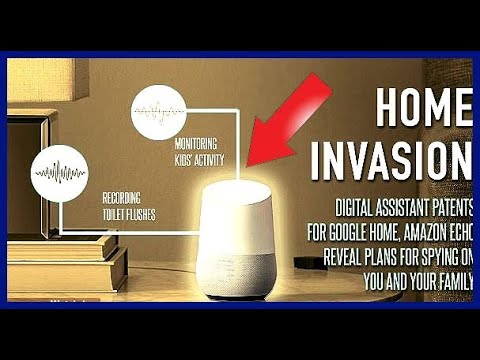
For years concern has been growing over the ability of such devices to spy on us in the privacy of our homes and offices. Most of us have read or seen stories of how they listen in on our conversations and hijack even our most private moments. The new alliance between AWS this morning and Twitter only goes to underscore my point of concentrated power. This intersects with censorship and propaganda. The whole idea that we as a society gain by allowing ourselves to be watched for the greater good throws freedom under the bus. It also opens the door the those watching us to blackmail and coerce us into doing their bidding.
The crux of this article is to clarify and point out this trend towards Orwellian totalitarianism is rapidly accelerating. This expanding surveillance of our every move is not just coming from the digital object sitting on our tables but a slew of other places as well. We are being watched by drones, cameras as we shop, and pictures are being taken of us in our vehicles as we drive. Many of these are being stored away for future reference.
If anyone reading this feels these products or the people developing them have feelings that should be respected, that person is far more politically correct than I chose to be. As far as their feeling are concerned, quoting the words of Rhett Butler in Gone With the Wind, "frankly my dear I don't give a damn." I'm not interested in being told what to do or think by a machine controlled by some entity hidden behind a curtain.
Before his death, famed physicist Stephen Hawking left us with a warning the Earth
is headed for a “catastrophic ending” in the near future as a result of
rising inequality fueled by robots that grow increasingly smarter by the day. Hawking's dire
prediction came as robots and artificial intelligence
increasingly take over human jobs.
Two years ago I wrote a five-part series focused on this important issue that impacts all our lives. The links to these articles are listed below. If you have concerns about the direction society is taking us I urge you to read one or all of them and even share the information with a friend or those you love.
The best time to kill a monster is when it is still small. Unfortunately, this monster is growing at a tremendous rate. This monster is the child of governments and technology and its goal is to grow more powerful. By convincing us that technology and robots will add quality to our lives they are seducing a weak-minded population into submission. When we surrender control of our lives to those and the forces that gain from our compliance we would be wise to remember we are at their mercy. Because of technology many factors have changed over the years, this means if and when people attempt to take back control over their lives it will be almost impossible.
The ramifications of online shopping during this holiday season while covid-19 rages across the land will be staggering. The fourth quarter is the time of year when retailers normally make the bulk of their annual profits thanks to holiday shopping. The National Retail Federation reported online shopping soared 44% over the five days, including Black Friday and Cyber Monday. This indicates a huge drop in foot traffic in brick-in-mortar-stores at a time when retailers are headed into the holidays loaded to the gills with inventory. This season is seen as a do or die situation for many of these stores which will not make it anyway because the deck is stacked against them.
This year due to the pandemic much of the world is in a semi-shutdown. This has caused online shopping to surge to the point where UPS was forced to impose shipping restrictions on major retailers. On
Cyber Monday with delivery networks stretched thin, delivery drivers were instructed not to pick up any packages from six major retailers, including
L.L. Bean Inc., Hot Topic Inc., New Egg Inc., and Macy's. A memo confirmed byWSJ sources as authentic. stated: "No exceptions." The limits imposed by UPS highlights how the influx in packages has put its shipping network under stress and its commitment to putting its regular customer base first.
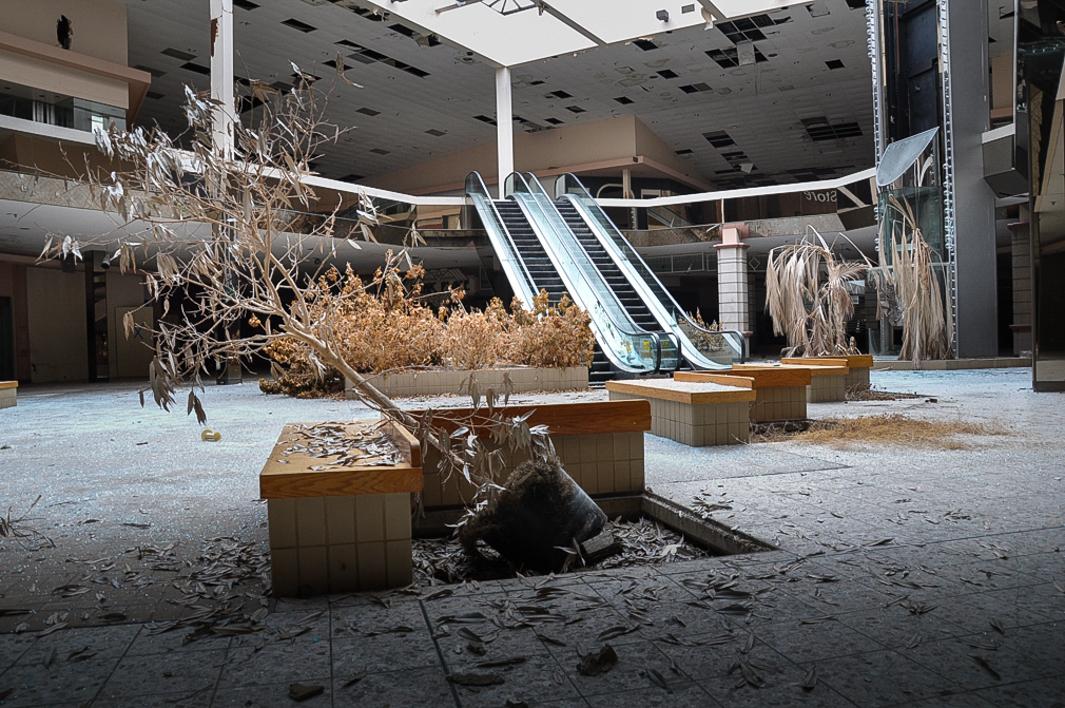
Abandoned Malls, A Canary In A Coal Mine
Circling back to the retailers. Many small stores and businesses do not have much if any online
presence, and if they do search engines intentionally bury them far
under Amazon and the other big-boys. Another thing that will be missing this year is profits. They are facing a cut-throat environment where sales and getting out the product has become as important as the price products sell for. The fear is that when all is said and done much of the inventory leftover will have to be discounted or sold at a loss. This is especially true of seasonal items. This means throughout the remainder of the holiday season expect to see
promotions based on curbside pickup to gain even more momentum as
shoppers seek to avoid crowds and potential shipping delays.
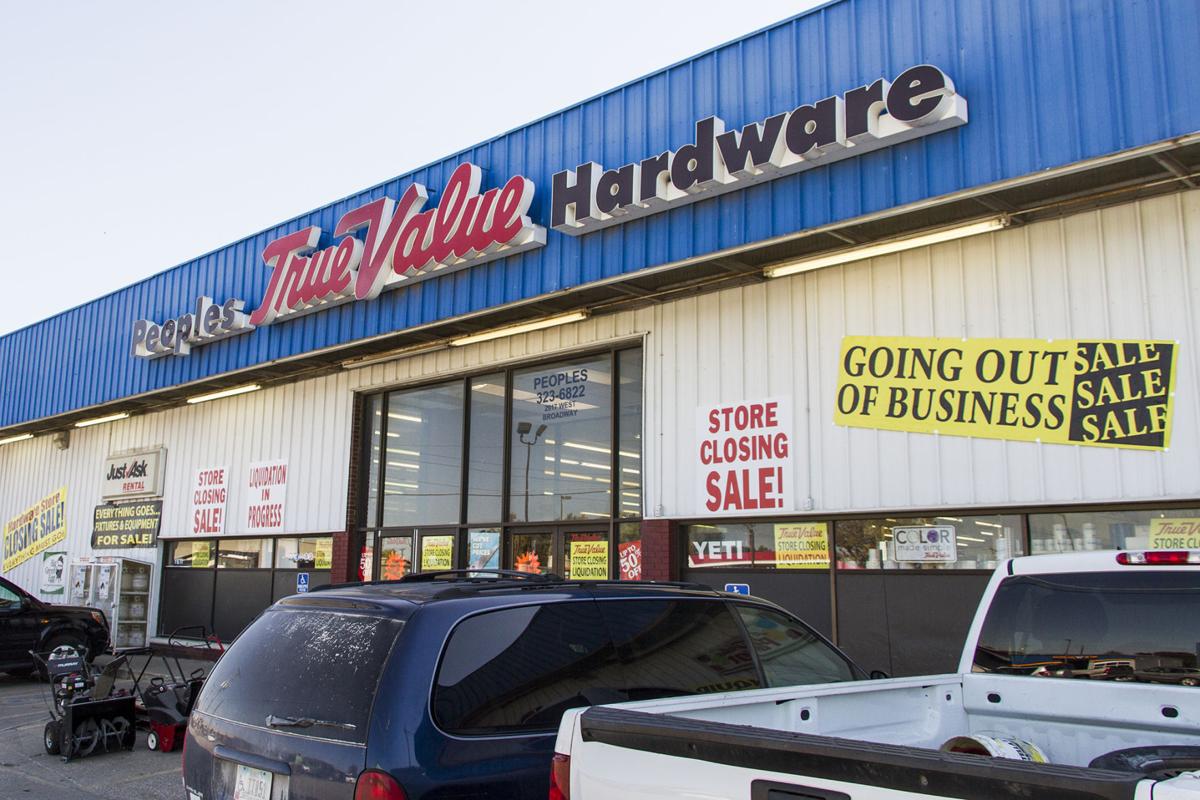
Small business is the backbone of America, it is where people work and corruption is scarce. It is the workhouse that gets things done and a place where the numbers still make sense. Unlike government that can simply cover mistakes and losses by raising taxes or expanding its deficit, small businesses get smacked square in the face by reality. For small businesses, this is crunch time. Sadly, in my area, online shopping coupled with covid-19 are forcing businesses to close that have been around for decades, this is not just destroying newly formed endeavors. The chart below indicates that when all is said and done more will be forced to close their doors.
Feeding into this year's online and holiday spending is the current bizarre economy. A surging government deficit adds to the impression the economy is not in trouble or in a recession. This is even with over 20 million people still claiming state or federal unemployment benefits. According to the Bureau of Economic Analysis, while personal income from all sources was down 6.9% from the massive stimulus-and-unemployment-money-induced spike in April, it is still up 5.5% from a year ago.
While many people consider online shopping as efficient it is
generally because they focus on just a few aspects of the process. We
should not discount the problems surrounding shopping online. The environmental impact of billions of small packages being rushed and delivered as well as the huge number of these that flow into landfills unused is staggering. It is not the efficient system many people think and the difficulty returning items that fail to meet expectations is often ignored for the illusion of convenience.
Some of the numbers we are seeing are shocking, online spending on Black Friday jumped by 21.6% to a record $9
billion, according to data from Adobe Analytics. This makes Black Friday, which was created to kick-start the brick and mortar holiday season the second-largest single day for online
shopping in U.S. history. It should be noted that Adobe recently cut its estimate for online spending this holiday
season to $184 but the
lowered estimate still marks a 30% increase from last year's total. This all underlines the idea the annual Friday
midnight pilgrimage to local malls which we have come to know as Black Friday, is
no more.
Again it appears that one online retailer, Amazon is sucking the air out of the room with its monopolistic engulf and devour strategy of weaseling into all parts of our lives. The company is claiming a 60% increase from last year. Amazon then tried to spin this news by saying an
astonishing 71,000 small- and medium-sized businesses across the world
have already surpassed $100,000 in sales so far this holiday season. The fact is this second part of their announcement when put into context is meaningless.
I can already hear the wheels spinning in the heads of those readers that disagree with my push-back over this explosion in online sales as unhealthy for the economy. The argument that expanding online sales represents progress denies the harmful ramifications of undermining small business in our society and on our culture. Small businesses and the jobs they create as well as how they bind a community and its people together are very important.
The sluggish in-person traffic reported in 2019
is expected to thin out further unless something is done. The trend is
in place, we are witnessing mall-wary shoppers
trading in their practice of rushing to stores to buy midnight
door-buster specials when they can get the same deals from the comfort
of their homes. Most small businesses have little or no online presence and the push to buy local this year will offer
only a small amount of relief. We can expect these retailers to experience a tough season and at its end fold into history leaving an empty space for lease to mark their absence.
Remember, brick and mortar stores suffer several expenses not fostered upon online companies. Whether it is the cost of maintaining landscaping, ensuring safe ingress and egress, or providing a parking lot for customers these costs rapidly add up. Staffing for longer hours for the convenience of customers often results in being open when foot traffic would indicate a store should be closed and even dealing with security and shoplifters is another expensive burden. To make matters worse, stores have also had to face a slew of dishonest shoppers trying to sneak defectives products purchased online back as exchanges and trading them for a fresh unbroken product. This costly abuse has been recommended by several online shoppers as an "easy fix" for their problems while ignoring the ethical issues it creates.
Negative
attack ads are very effective in politics, after watching a "small
businesses unite" commercial it may be time for them to put together a
few ads telling people to Boycott Amazon. While leaders on both the left and right of the political spectrum have spoken out against this company, it appears the majority of
consumers don't understand just how much harm and damaging this company
is doing to the country. It exploits America with its predatory engulf
and devour strategy. Another idea with even more merit is
instituting an online transaction fee to help level the playing field
between online and brick and mortar retailers. Like most Americans I'm not a lover of any kind of tax, it may be just
what is needed to halt the damage flowing from this shift in how
consumers shop.
An online transaction fee is a very big proposal and even raising it for discussion would help to shed a spotlight on the damage being done to our communities. The fact is, it would help many small businesses across America remain in operation. The revenue from such a fee would be sent to local governments in the area where the sale originated or goods are shipped. Rather than getting stuck on the details of an online transaction fee that will most likely never occur we should instead think about what kind of community and world we wish to live in and how best to preserve the nature and quality of life we seek. The ugly reality is that store closures are set to accelerate. This is a cancer on America. Large retailers as a group are collectively set to lock the doors for the last time at thousands of stores this year and communities will pay a heavy price.
Footnote; For more on the idea of a online transaction fee see the following article. http://Online Transaction Fee Could Blunt Amazon's Edge html
Life is full of facts we don't know or have simply forgotten. In a comment, a writer recently encouraged the curious to search "hyperinflation during the Weimar Republic." Some of the details I discovered were surprising. Germany had come out of the first World War with most of its industrial power intact, still, inflation suddenly destroyed the currency. This dovetails with some of my thoughts on currency trading today. It confirmed that inflation can stem from a
growing lack of faith in a currency, or all currencies, rather than
just a lack of available goods. As inflation takes root the goods
available for sale often contracts as sellers retreat from the market
awaiting higher prices which creates a self-feeding loop.
Hyperinflation Can Hit At Shocking Speed
It was amazing how quickly inflation
took root in Germany during the 1920s. Consider how fast it
could happen now that we live in an age of instant communication which allows ideas and expectations to rapidly spread. In today's world, many people have developed a false belief in financial
stability because of claims by central bankers they have "controlled"
inflation to where the economy will grow at a managed pace.
History shows the German currency was relatively stable at about 60
Marks per US
Dollar during the first half of 1921. By November
1921 it had dropped to approximately 330 Marks per US Dollar. The demands in May 1921 for
reparations in gold or foreign currency to be paid
in annual installments of 2 billion gold-marks plus 26
percent of the value of Germany's exports was crushing. The first
payment was paid when due in June 1921. That was the beginning of an
increasingly rapid devaluation of the Mark. The total reparations demanded
was 132 billion gold-marks which were far more than the
total German gold and foreign exchange.
The drop in the second half of 1921 was just the start of a dire trend. In August 1921, Germany began to buy foreign currency with
Marks, this increased the decline, the lower the mark sank in
international markets, the more marks were required to buy the foreign
currency demanded by
the Reparations Commission.During the first half of 1922, the Mark stabilized at about 320 Marks
per Dollar because of international reparations
conferences, including one organized by U.S. investment
banker J. P. Morgan. After these meetings produced no workable solution, the inflation
shifted to hyperinflation and the Mark fell to 8000 Marks per Dollar by
December 1922. This means the cost of living index increased more than 15 times in just six months.
This Is The Face Of Hyperinflation
An article on this site explored how the manageable inflation goal of 2%. has become the "holy grail" of central bankers but argued this target
central banks have deemed optimum is not economically valid. This target is
"based only on their opinion" of what conditions will best allow the
economy to flourish. Claims by the central
banks that deflation drives or
allows their QE policy to remain is central to their ability to
stimulate.The moment inflation begins to take root and become solidly
entrenched to where it becomes a self-feeding loop the flexibility of central bank policy is lost.
What makes this debate over future inflation very relevant is that the average American has witnessed in the last 30
years, a growing gap between
government reporting of inflation, as measured by the consumer price
index (CPI), and the actual cost of living.What the central bankers have conveniently brushed aside is that the
formula that generates the numbers governments pump out was skewed in
the 1990s when political Washington moved to change the nature of the
CPI in an effort to reduce the federal deficit so nobody in Congress would have to register a vote that would harm
the image of Social Security. For proof as to the real cost of
inflation just look at the surging replacement cost resulting from
recent storms and natural disasters. I contend that inflation would
be
much greater if more money had flowed into tangible goods rather than
paper investments and promises over the last several decades.
The move of wealth into intangible assets has masked the rate at which central banks have debased our currency. This means it might be wise not to become too trusting or complacent to the idea
that inflation can be contained at 2% especially while deficits explode,
debt builds, and central banks continue to stimulate the economy by
printing money or that the economy looks good for the next year or so.
In the past, I have
put forth the theory that inflation could rule the day even if central banks are unable to keep the wheels on the bus and the economy suddenly collapses
which is in truth beyond their control. If inflation does not become
the flavor of the day it is also very possible the future may
unleash, its sister, the powerful force known as stagflation. This is
also a threat to the average citizen and will devastate
those improperly invested for its arrival.
The mindset of investors and of the "money people" often shifts into
overdrive when
opportunities for speculation arise. The distortion caused by easy money
from
Federal Reserve policy coupled with political and social compassion for
affordable
housing, medical care, has obvious implications as debt and promises
continue to rise. Most economists agree the Central Banks are not in a position to
tighten the money supply at this time. Remember, so many of the things
we invest in such as pensions and stocks are merely paper promises but hard assets are rare. While I'm not predicting hyperinflation the threat of inflation or stagflation is being understated. A word
of caution, while hyperinflation does not often occur, when it hits,
and the speed at which it can hit is a massive game-changer that can make bonds and many other investments nearly worthless.