Saturday, August 6, 2022

The Smartphone's Role In Dumbing Down America

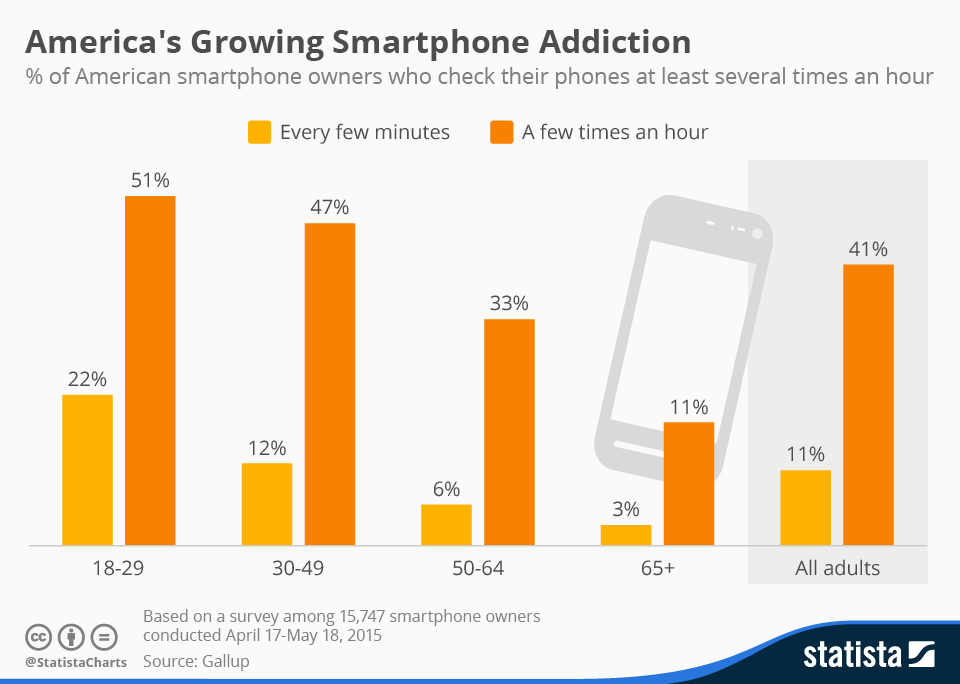
The smartphone has begun to play a huge role In dumbing down America. Rather than being a source to move us forward, it has become an albatross around the necks of many weak-minded souls that depend on them. People turn to these devices for all kinds of unneeded updates including performing simple math problems so they don't have to think. 

Originated in 1933, the term "dumbing down" was movie-business slang, used by screenplay writers, meaning: "to revise to appeal to those of little education or intelligence." For those with little drive or purpose, the tendency to seek distraction and relief from unpleasant realities, especially by seeking entertainment or engaging in fantasy find great comfort in the constant flow of dribble a cell phone can provide. In short, dumbing down is the deliberate oversimplification of intellectual content in education, literature, cinema, news, video games, and culture.

It should be noted this is being written just as the world is on the cusp of being offered a whole new recipe that may lead to more social dysfunction. That comes in the form of "virtual reality" which offers an even stronger form of escapism that may result in damaging the ability of people to relate to each other in the real world. Especially worrisome is the effect it might have on children that experience and embrace it. Their ability to separate this fake virtual world from reality could become impaired.

A great deal of the problems with smartphones are rooted in the idea everyone deserves one. Yes, I said deserves, not needs. Smartphones are now considered by many people as an extension of their being. A government program started years ago has mushroomed in size and transfers a huge amount of wealth down the social ladder. Years ago I wrote an article that outlined a government program supplying free phones to people with low incomes or that have been declared needy. At that time these phones have become known as "Obama Phones." Below I give some of the details about the program including who qualifies. If you want to be popular with the voters give them free stuff and let them know that they should not bite the hand that feeds them.

The term "Obama phone" is not a myth as an online search rapidly confirms. This popular government program explains why we see so many people that would appear to not have a dime in their pockets walking along or driving down the street talking on a cell phone. What exactly is the free Obama phone? It is a program that is meant to help the financially unstable who cannot afford access to a cell phone. It seems that communication should not be limited to people based on what they can afford. The Lifeline program started decades ago to help low-income families have access to landlines has been expanded. Over the years the cost of cell phones and cellular service has decreased and the program has been extended to cover cell phones.

So who qualifies? It appears little has changed over the years, it seems that if you or members of your household are, receiving the following benefits you automatically qualify for the Lifeline program. The best way to know if you qualify is by filling out an application for a Lifeline provider in your state. Those interested in the program must have an income of less than 135% of the Federal Poverty Guidelines or about $22,350 per year for a family of four.

  • Food Stamps or Supplemental Nutrition Assistance Program (SNAP)
  • Medicaid
  • Supplemental Security Income – commonly known as SSI
  • Health Benefit Coverage under Child Health Insurance Plan (CHIP)
  • The National School Lunch Program’s Free Lunch Program.
  • Low-Income Energy Assistance Program – LIHEAP
  • Federal Public Housing Assistance ( Section 8 )
  • If you are a low-income Eligible Resident of Tribal Lands
  • Temporary Assistance to Needy Families – TANF

Lifeline is a government-sponsored program, but who is paying for it? Some people claim that the government is using taxpayers’ money to run this program, however, the claim is false. The clever clowns we have sent to Washington found a backhanded under-the-table sort of way to make it appear it is not taxpayer money. Universal Service Fund (USF) which is administered by the Federal Communication Commission along with the Universal Service Administration Company (USAC), pays for the Lifeline phone assistance program. The Universal Service Fund (USF) was created back in 1997 by Federal Communication Commission to achieve the goals set by Congress under the Telecommunication Act of 1996. According to the Act, service providers are obliged to contribute a portion of their interstate and international telecommunications revenues. In short, paying phone customers are paying for it.

It is written that if you are one of those people who have lost their jobs due to the recession, then probably you’re having a hard time with your daily expenses. On top of that, paying telephone bills is just another pressure. You can get rid of this burden by applying to the "Lifeline Assistance Program" run by the government. To get a phone contact the provider of this service. The government has approved many companies at the national and regional levels to provide this service to eligible people.
 
Just how much might one of these free government cell phones change your life?
  • An employer can more easily reach you with a job offer if you have a free government cell phone.
  • You can stay in touch with your doctor and other emergency medical professionals more easily with a free government cell phone.
  • A free government cell phone can help you keep in touch with family and other loved ones.

And the good news is that while a government-assisted cell phone provides you with up to 250 monthly minutes to go with your free cell phone. While that’s a generous contribution from the government, it’s barely enough airtime to last many people a month. But good news is they can easily buy more minutes for the phone from each of the major Lifeline cell phone companies. You can see this is what has happened when it has gotten to the point where people carry their phone in their hand as they go about their business. Apparently, if you use a promotion code, you can get some very good deals.
 
Smartphone Have Become A Major Distraction
 
A great deal of attention has been given to some of the ideas and visions the World Economic Forum has floated. A powerful and very visible glimpse was contained in the public relations video entitled: “8 Predictions for the World in 2030. Its 2030 agenda promotes the idea that  by 2030, "You will own nothing. And you'll be happy." Smartphones dovetail with edging the general population towards such an existence. With the government transferring the costs for millions of customers to those that pay full price, another face of corporate welfare is exposed.

Over The Years This Addiction Has Only Grown Stronger

Interestingly while many people admit they are addicted to these phones that seem to offer a form of escapism from the real world, some users are moving back to dumbphones. A video by ColdFusion (https://www.youtube.com/watch?v=02mIRnPJm6g), an Australian-based online media company, looks into this "Anti-Smartphone Revolution." It points out how the dumbphone or what is sometimes called a brick is far less intrusive in our lives. Surprisingly, it is those users between the age of 25-35 that are leading this charge.

 
Are Smartphones Making Children Slaves To Big Tech?
 
We should never underestimate the role of the smartphone in dumbing down America. We can only hope people will begin to take a closer look at these society-changing devices. When a phone will provide the answer to simple math problems many people no longer feel compelled to learn or memorize the things which give us perspective and help us to understand the world around us. It has become apparent, that smartphones change more than society. They change people, too. Being able to push a few buttons does not necessarily make you smarter.

                                                                                    This blog is not written for money
                                                                                    or profit but as a way to share ideas
                                                                                    and thoughts. If you liked this post
                                                                                    feel free  to E-mail it to a friend
                                                                                  

Republishing this article is welcomed with reference to Bruce Wilds/AdvancingTime Blog

Tuesday, August 2, 2022

Biden's Complicated Decision To Drop China Trade Tariffs

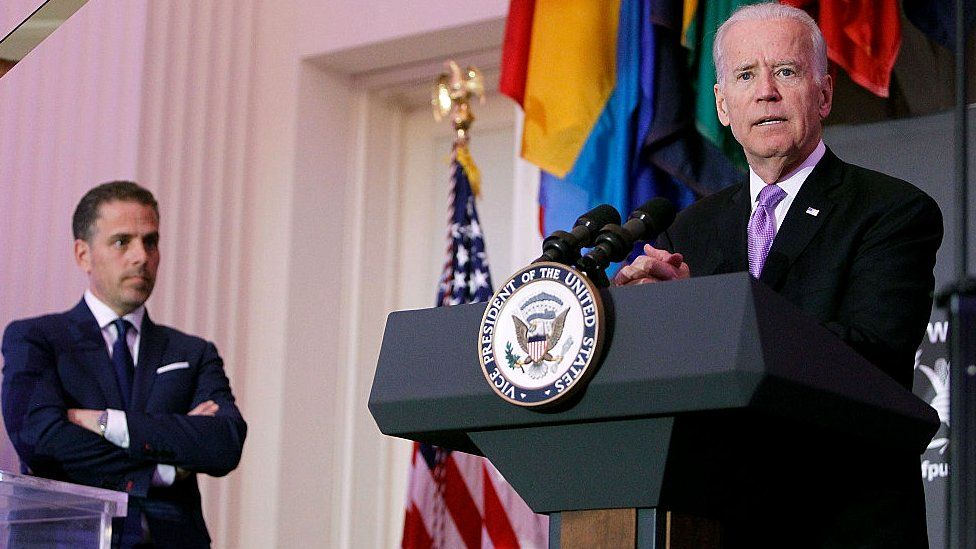
The irony of it all. America has a President whose motives must be questioned when it comes to our country's biggest rival. We have seen a slew of stories about how Hunter Biden has made what many Americans consider a fortune from China by using his father's political position. This has become complicated for the big guy. It doesn't help that questions of corruption and misuse of influence extend to other Biden family members and also into other countries.

For the President, the decision to lower tariffs has become complicated. It may shed light upon personal issues he would rather keep buried. A story CNBC published on Monday, August 1, 2022 states scores of companies sued the Trump administration in September 2020, arguing the process of implementing a third and fourth tranche of tariffs on roughly $350 billion in goods was overly broad and hastily implemented. The Biden administration is now in court defending the Trump tariffs at the same time the White House, meaning President Joe Biden, is considering scaling them back.

Two things are important here. First, our government may be forced to re-evaluate tens of thousands of public comments on the tax penalties or reimburse the parties for what they’ve paid. Alex Schaefer, an international trade partner at Crowell, who represents some of the importers claims the government lacks the manpower to process the volume of  comments, and refunding importers could cost $80 billion. 

Hunter's Name Came Up Again On Oil Deal

The second and possibly even more troubling issue is if and how the Biden family has benefited from our President's position. Of great concern is his seemingly cozy relationship with China's leader Xi Jinping and other higher-ups in the Chinese government. Remember many Americans were recently angered to find some of the millions of barrels of oil from America's Strategic Petroleum Reserve (SPR) that was supposed to be used to lower prices for American consumers were sold to China. 

At criminal.findlaw.com, FindLaw's team of legal writers and editors detail what constitutes bribery. It is offering or accepting anything of value in exchange to influence a government/public official or employee. Bribes can take many forms of gifts or payments of money in exchange for favorable treatment, such as awards of government contracts. Other forms of bribes may include property, various goods, privileges, services, and favors. Bribes are always intended to influence or alter the action of various individuals and are linked to both political and public corruption. In most situations, both the person offering the bribe and the person accepting can be charged. 

Was Influence Peddled Or Bribes Taken?
Both giving and receiving bribes are usually a felony with significant legal ramifications. Influence peddling, the illegal practice of using one's influence in government or connections with persons in authority to obtain favors or preferential treatment falls into this category. One thing is clear, whenever we are talking about the involvement of huge sums of money, foreign players, officials holding high public office, or family members of politicians a few eyebrows should get raised. With this in mind, the Biden problem extends well past Hunter. It appears other family members have profited from Joe's time in office, his brother was involved in a huge government contract in Iraq.

Dropping or lowering tariffs remains controversial. John Kirby, the National Security Council’s spokesman, recently called the tariffs “poorly designed,” “a shoddy deal” and claimed they have “increased costs for American families.” On the other hand, Ambassador Katherine Tai, who as U.S. Trade Representative holds the leading role on the tariffs, has suggested the Trump tariffs have strategic value in maintaining leverage in negotiations with China. 

Considering China's rising hostility towards Taiwan, it may be a poor time to grant them favors. Over the last few days, China has been ratcheting up the rhetoric over Nancy Pelosi's planned ng Taiwan visit and threatened her safety. This has made a bad situation worse. These tariffs were originally placed on imports with the goal of leveling the playing field with China when it comes to trade. Sadly, they have had little effect on bringing down the trade deficit. In fact, after the covid lockdowns, it widened to hit new records. 

China's state-run economy to be based on a business model that is geared to expand by crushing the competition. China is determined to move into high-tech products. China's plan centers around both state-owned and private firms investing in and acquiring foreign companies to steal their technological innovations. Subsidizing those companies working within its system in a multitude of ways helps China achieve this goal. By exporting goods at slightly below cost in exchange for manufacturing jobs the Chinese are not stupid they are predatory. It will be interesting to see how this plays out. 

The link to the CNBC story is:  https://www.cnbc.com/2022/08/01/biden-administration-faces-midnight-court-deadline-to-defend-350-billion-of-trumps-china-tariffs.html

                                                                                    This blog is not written for money
                                                                                    or profit but as a way to share ideas
                                                                                    and thoughts. If you liked this post
                                                                                    feel free  to E-mail it to a friend
                                                                                  

Republishing this article is welcomed with reference to Bruce Wilds/AdvancingTime Blog

Friday, July 29, 2022

Fed Chairman Paul Volcker's Thoughts On Goverance

For many people, former Fed Chairman Paul Volcker's relevance today is rooted in how he broke the back of surging inflation in 1980. He is widely credited with employing the harsh policies that ended the high levels of inflation seen in the United States during the 1970s and early 1980s. back then few people realized his brave and bold move would shape the economic system for decades.

Paul Volcker served two terms as the 12th Chair of the Federal Reserve from 1979 to 1987. He was nominated to the position by President Jimmy Carter and renominated by President Ronald Reagan. Paul Volcker died on December 8, 2019. Before his death, Volcker participated in an interview with Ray Dalio. I recently stumbled upon this video from February 2019 on YouTube. (https://www.youtube.com/watch?v=mMN17uBzCw4)

Paul Volcker was a firm believer in good governance and felt it is a key factor in keeping the nation healthy. Even back in early 2019, Volcker was unhappy with the efficiency of government management. Since then it could be argued the government has performed even more poorly. He voiced concern over how it seems today that working in government has become a revolving door where people go into a job just long enough to make contacts they can exploit when they return to the private sector.


If Volcker were alive today, it is likely he would be appalled at the current state of affairs considering the role he felt government should play in our lives.
One similarity the late 70s and early 80s have in common with today is that many special situations exist that scream huge risk ahead. When we look closely at current trends, it is difficult to ignore the numbers simply do not work going forward.

In the intro to the video, Dalio wrote; I sat down with one of my greatest heroes, Paul Volcker, to talk about the state of the economy and U.S. government as well as learn about the principles that guided his incredible career. We also discuss the decline of civil service and how Paul hopes to revitalize the field with The Volcker Alliance by working with universities and the government to train people effectively and efficiently and minimize the bureaucratic hurdles that deter people from pursuing government jobs.

While I don't hold much hope for The Volcker Alliance to have a significant impact, I do applaud its noble goal. I'm fond of the insight that some of the older more conservative economists express and their basic appreciation of numbers. The financialization of America and globalization have made many of the comparisons with the past obsolete. The big question remains will we revert to many of the old standards and whether the current trend is sustainable?

I remain in the group that feels things are not different this time and we will soon pay a massive price for thinking we can outwit the natural laws of economics. Today's financial world is nothing like it was in 2008. Since then the top has been blown away due to massive money creation. The financial system has entered uncharted waters and it would be wise to take nothing for granted.

While Paul Volcker was one of Ray Dalio's greatest heroes, another man that stands tall in my mind is Professor Allan Meltzer. He specialized in studying monetary policy and the US Federal Reserve System, Meltzer also authored several academic papers and books on the development and applications of monetary policy, and about the history of central banking in the US. Together with Karl Brunner, Meltzer created the Shadow Open Market Committee: a monetarist council that deeply criticized the Federal Open Market Committee.

Meltzer died in 2017, he was an "old school" economist that knew numbers mattered. Way back in 2013 he saw we were on the wrong path, “We’re in the biggest mess we’ve been in since the 1930s,” he has been quoted as saying “We’ve never had a more problematic future.” In a Wall Street Journal opinion piece on June 30, 2010, titled "Why Obamanomics Has Failed" Meltzer wrote about how uncertainty about future taxes and regulations was the biggest enemy facing future economic growth. Most economic watchers will agree that little has changed since then.

In the article he went on to say that the administration's stimulus program has failed. Growth is slow and unemployment remains high. The president, his friends, and advisers talk endlessly about the circumstances they inherited as a way of avoiding responsibility. Two overreaching reasons explain the failure of Obamanomics. First, administration economists and their outside supporters neglected the longer-term costs and consequences of their actions. Second, the administration and Congress have through their deeds and words heightened uncertainty about the economic future.

Meltzer went on to say that most of the earlier spending was a very short-term response to long-term problems. Part of the money financed temporary tax cuts and these seldom work because they ignore the role of expectations in the economy. Meltzer's thoughts on the direction of recent economic policy dovetails with those expressed in the prior article appearing on this blog and noted in the footnote below. Simply put, more attention must be given to the fact all economic growth is created equal. If you spend money but afterward have little to show for it, you have wasted it. 


Footnote; Below is the link to the article titled, "The Fed Has Created The Wrong Kind Of Growth" https://brucewilds.blogspot.com/2022/07/the-fed-has-created-wrong-kind-of-growth.html


                                                                                    This blog is not written for money
                                                                                    or profit but as a way to share ideas
                                                                                    and thoughts. If you liked this post
                                                                                    feel free  to E-mail it to a friend
                                                                                  

Republishing this article is welcomed with reference to Bruce Wilds/AdvancingTime Blog
Wednesday, July 27, 2022

The Fed Has Created The Wrong Kind Of Growth

While looking for an article about how governments were back-dooring their way into real estate I stumbled upon something from years ago which is still very appropriate. It was a piece that focused on how all economic growth is not equal. This is something many economists, politicians, and those in the media seem unable to grasp. This dovetails with some more recent articles detailing what and where we buy things is important as well as how trade may no longer be much of an economic driver. 

For over a decade, central banks across the world, have followed our Fed in allowing unproductive debt to explode. The combination of low-interest rates and quantitative easing has created a one-time boost to the economies but then remains on the books drawing interest. At some point this becomes unsustainable. More attention must be given to the fact all economic growth is created equal. If you spend money but afterward have little to show for it, you have wasted it. 

In the late 1970s, during a period of high unemployment and high inflation, Congress directed the Fed “to increase production by pursuing and promoting the goals of":

  • Maximum employment
  • Stable prices
  • Moderate long-term interest rates

This is generally what people are talking about when it comes to the Fed's mandate, the focus usually is placed on maximum employment and price stability. The Fed has greatly overstepped and overreached twisting policy in a self-serving way which resulted in it taking on the role of the great enabler. This made possible the 2008 financial crisis where several interrelated factors came together while a clueless Fed claimed all was well. History now shows low-interest rates, low lending standards, and deregulation all contributed to that perfect storm. 

Years ago President Eisenhower warned the American people about the Industrial Military Complex, but nobody warned us of an even more evil alliance, that of the "Financial-Political Complex." Following the 2008 global crisis, the Fed adopted the role of propping up governments and the economy by bringing big banks deeper into the fold. The Fed is also guilty of casting away its role to check and balance government spending. Under its shelter, it has allowed politicians to expand and engage in massive deficit spending. 

The unholy alliance of the Federal Reserve, the government, and the too big to fail has created an economic nightmare and put the economy in a precarious position. Adding to this is that our government tax system has incentivized people to buy stocks. This coupled with stock buybacks has aided in corrupting true price discovery. Ironically, the huge investment institutions and investors place in intangible assets and "paper promises" each year has up until recently helped keep inflation in check. 

Circling back to the idea America is suffering from the wrong kind of growth, people must understand much of the money America claims to "invest in itself" each year through government spending and programs is simply wasted. Countries need to create policies that generate the right kind of economic growth, growth that is sustainable, with a purpose, well directed, and that has long-lasting benefits. It should be in harmony with the environment and at the same time make economic sense. Proper planning often allows for rebuilding and improving rather than replacing and destroying everything currently on the ground. 

Many of the worse examples of poorly directed growth can be contributed to poorly crafted government programs. An old example that still stands out is the cash for clunkers problem following the 2008 financial crisis. Many of the cars destroyed were not the nation's worse "clunkers", but instead cars swept into the group because they qualified as a trade-in. 

Another example is how America handled the move from analog to digital television which caused the premature death of literally hundreds of millions of functional televisions. Most hit the curb for trash pickup and found their way into the nation's landfills. Little effort was made to collect and recycle these units. Adding insult to injury, few of the replacement units were made in America so the money spent on them quickly left our shores adding to our trade deficit and providing few jobs for Americans.


 Place into the poorly directed growth much of the government money spent on hospitals and colleges that many Americans can no longer afford to visit or attend. While two totally different animals, both have been propelled into the future using tax dollars. This has influenced where they are built and the priorities of their design. Colleges have spent billions on theater-style classrooms, massive parking garages, spacious student union buildings, and student housing that compete with the private sector. Hospitals often flee the city and construct whole communities on the edge of town leaving a hole in the neighborhood they left, this often results in the closing of local businesses and urban blight. 


 In truth, growth need not be ugly and destructive, but when using huge amounts of other people's money common sense often is the first thing to go as planners seek to create a clean slate where those in power can construct a monument for themselves. Historically the government has a poor record of spending our tax money, it seems that those making the decisions are easily swayed by self-interest or because they have no "skin in the game." Often they simply fail to demand a fair return on the money spent.

If you spend money but afterward have little to show for it, you have wasted it.


To be clear, the problem we face is that poorly spending even trillions of dollars does not necessarily create a strong economy.
This is what makes many taxpayers skeptical about claims that infrastructure spending is the silver bullet that will be able to move us forward. Infrastructure spending has great potential to slide into the area of waste and corruption driven by political motivations rather than necessity. Much of the money slated for spending generally ends up financing boondoggles. The reason infrastructure spending can sometimes be considered part of a false economy is the number of jobs created from such spending are often only temporary and overstated. 

Until now, years of quantitative easing have acted as a tailwind pushing the economy forward. As it ends expect to pay a huge price. QE carries with it huge side effects by distorting and creating a false market that encourages investors to take on more risk. Possibly the biggest flaw manifests itself in the squandering of opportunities that some see as a get-out of "problems free" card, but in reality, this money is not free. One of the biggest concerns is that the withdrawal of this program by its design in effect creates a substantial economic headwind.


 Minor changes in how the GDP is calculated have muddied the water and had the effect of making the economy appear stronger than it is by giving the impression of real growth. We should not forget that improving the GDP / National debt ratio causes our debt to seem less dramatic. If the government was interested in a more honest reflection on economic growth they could back bankruptcies out of the GDP as lost assets, the fact is many debts are not getting paid down or off but simply being written off. This is often the case with new business start-ups that propel the economy forward when created but usually leave a wake of destruction behind when they fail after a short time.


Is Powell Intentionally Incompetent?
With each of the pullbacks following the Great Depression jobs returned more slowly than the one before. This seems to be a trend as the world economy continues to change. Today larger businesses have a number of advantages over their smaller competition. Considering this, it is no surprise that many small companies are reducing their staff. This leaves the question, Does Fed chairman Powell even know what the economy is?


Today many regulations favor big business. They have the ability to raise money while many small businesses cannot. Regulations also weigh heavier on small firms. As their smaller competitors fail large firms pick up more business. This is one of the main reasons for the lack of new job creation and why this recovery will be so hard to sustain. The 1982 recession should never be used as a comparison to what we have today. That recession was self-induced when Fed Chairman Paul Volcker raised interest rates to curb inflation. The reason behind that recession is far different than what we face today making invalid any claims of similarity. Back then, dropping rates quickly brought back a surge of activity. Today, we desperately need a Fed that pursues policies that put America First.


                                                                                    This blog is not written for money
                                                                                    or profit but as a way to share ideas
                                                                                    and thoughts. If you liked this post
                                                                                    feel free  to E-mail it to a friend
                                                                                  

Republishing this article is welcomed with reference to Bruce Wilds/AdvancingTime Blog

Sunday, July 17, 2022

America Just Bailed Out A Bunch Of Pensions At The Taxpayers' Expense

Unnoticed by most taxpayers and touted as good news was the fact we the taxpayers of America have stepped up to the plate and bailed out hundreds of failing pensions. Much of this took place without the average citizen even knowing it occurred. Buried deep in the American Rescue Plan signed into law by President Biden in March 2021 was a provision mandating the government to bail out ailing multiemployer pension plans. 

The American Rescue Plan Act of 2021 was the $1.9 trillion economic stimulus package proposed by President Joe Biden to speed up the United States' recovery from COVID-19. The huge bill was passed with little time for debate or even to be read, all under the idea congress needed to take  action to address the economic and health effects of the pandemic and the ongoing recession. While how this provision to assist troubled pensions has been addressed did not get a great deal of air time it may prove to be far more costly than predicted. 

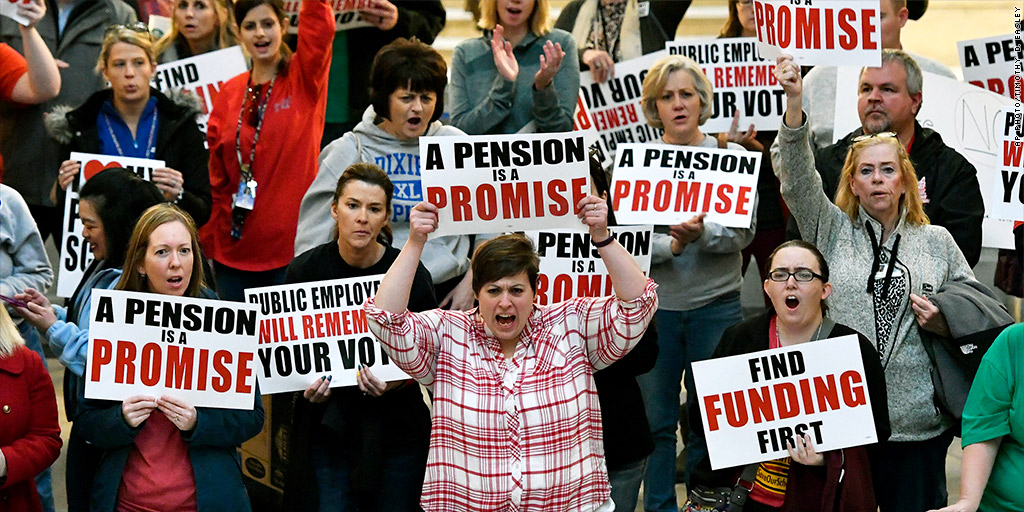
People are often led to believe pensions are a promise carved in stone, however, when the money is not there pensions and promises will be broken so pensioners should prepare for the pain. This is especially true in the public sector which has a history of granting pensions that are unheard of in the private sector. The 25 largest U.S. public pensions face trillions in unfunded liabilities. If Americans took the time to stand back and look at the bigger picture they will see the Pension Benefit Guaranty Corporation (PBGC) an independent agency of the United States government responsible for acting as the nation’s "safety net" for failed pensions is also in trouble. When a pension fails this agency is expected to take control of its assets and dole them out to its pensioners in the coming years. The ugly truth is the PBGC is not a rock but is in need of its own bailout. 

Joshua Gotbaum, former head of the PBGC from 2010 to 2014, voiced his unhappiness with Washington leaders failing to confront this reality when he said “No one wants to admit that pension benefits have to be cut, and therefore, in public, no one wants to be seen as supporting anything that cuts benefits. However, unless some benefits are cut, all are cut.” It is likely the future will prove him right. We are only beginning to see the tip of the iceberg when it comes to this growing problem and just how many of these schemes are underfunded. This is not just a problem only in America but it exists all over the world.

The Pension Myth!
Pensions are giant pools of capital responsible for paying out retirement benefits to workers. And right now many pension funds around the world simply don’t have enough assets to cover the retirement obligations they owe to millions of workers. Governments have lulled their populations into a false sense of security based on financial promises they are not going to be able to keep and most likely will exacerbate generational conflict going forward. This is not simply a political problem, it’s an arithmetic problem, for which no real answer exists.

Recently while speaking in Cleveland, Biden used the occasion to announce the agreement to implement a financial assistance program for multiemployer pension plans. In a speech where he was joined by union workers and retirees, President Joe Biden said. “We turned a promise broken into a promise kept.” Adding to the cost of this bailout, Biden bragged, “Those retirees who lost their benefits will have them restored retroactively.”

Under the American Rescue Plan, certain underfunded multiemployer plans were allowed to apply for taxpayer-funded assistance to help them stabilize their finances and restore benefits that were previously cut. It should not surprise any financially conservative person to find the interim rules for the program issued by the Pension Benefit Guaranty Corp. drew criticism from pension consultants, plan trustees, and other experts for not being generous enough to ensure the long-term survival of these troubled pensions. 

The current solution allows plans to invest a portion of their financial-assistance funds in higher-return assets. The White House claims this modification in the final rule helps create a situation that allows plans receiving assistance to remain solvent and pay full benefits through at least 2051. The rules allow plans to invest up to one-third of their financial-assistance funds in higher-return assets and stocks rather than in safer investment-grade bonds. To be clear, this is a "bailout" and it could be argued that it also allows them to mismanage the funds and get into trouble again.

Before the American Rescue Plan, over 200 of the nearly 1,400 multiemployer plans  were facing near-term insolvency. This threatened to leave 2 to 3 million participants without their full earned benefits. These multiemployer pension plans were created through agreements between unions and two or more employers and cover nearly 11 million participants, many of them in industries such as construction, trucking, and manufacturing.   

As noted many times on this blog site,
pensions are in many ways the biggest Ponzi Scheme of modern man. Many of the plans have overpromised while being hit hard by a decline in unionization, employer withdrawals from the plans, and investment losses. While a 2014 law allowed some troubled plans to slash the benefits of current retirees the idea conflicts with protections enshrined in federal pension law.

The new 33% limit on stocks and other higher-return investments is intended to allow plans to grow their financial-assistance funds increasing their ability to pay benefits through 2051. This so-called "financial assistance program" also extends to 2055 the solvency of the PBGC’s multiemployer insurance program, which was previously expected to run out of money in 2026. Of course, it is logical the troubled PBGC would do anything it can to put lipstick on the unfolding pension diabolical and halt the flow of failed pensions into its system.

We should not focus on the fact the PBGC has already approved over $6.7 billion in financial assistance for plans covering over 127,000 workers and retirees. We should instead look at the real long-term cost and ramifications of this bailout. The agency, which insures defined-benefit pension plans, expects it will ultimately distribute $74 billion to $91 billion worth of financial assistance to these plans but numbers flowing out of Washington are often wrong. I expect the real cost of pension bailouts to be far greater than anyone can imagine. 

I join those few Congressional Republicans who pointed out this is a deeply flawed bailout of a select group of privately managed retirement plans that creates perverse incentives for further mismanagement and underfunding of pensions. Not only does it pave the way for more taxpayer bailouts of pensions, but it also continues the dangerous transfer of wealth which leaves the taxpayer holding the bag. 

                                                                                    This blog is not written for money
                                                                                    or profit but as a way to share ideas
                                                                                    and thoughts. If you liked this post
                                                                                    feel free  to E-mail it to a friend
                                                                                  

Republishing this article is welcomed with reference to Bruce Wilds/AdvancingTime Blog

Sunday, July 10, 2022

Falling Commodity Prices Could Signal Falling Liquidity

Consider the possibility the recent volatility in commodity prices could be a sign of falling liquidity. With the Fed voicing its intention of reversing its easing policy and beginning to tighten it is logical that sooner or later signs of less liquidity would begin to surface. The area of commodity futures is more often based on speculation than anything concrete. It is also highly leveraged. 

If I'm correct and the huge drop in many commodity prices is related to liquidity beginning to dry up this could be the canary in the coalmine. This could also signal other markets will soon become less stable or downright wild. It is very possible, "we ain't seen nothing yet." I have observed that up until now other markets appear relatively solid but much of that could be supply-demand related. Liquidity issues bring a whole new aspect into the mix.  

Those looking for a future where deflation occurs will try to latch on to commodity price weakness as proof demand destruction has already put an end to inflation. The truth is some asset prices will fall and others will continue higher. A rebound in commodity prices will not mean liquidity has suddenly returned to the market it will only mean the current washout in prices has run its course. A temporary fall in prices is not necessarily an indication inflation is dead but more proof an investor can lose money even when they are right, it also highlights how leverage can increase an investor's risk.

Sadly, banks have a way of failing us when we need them most and that is a big part of why liquidity is generally the first casualty in a financial crisis. A huge part of the problem is rooted in the economic tool known as leverage. The same massive gains leverage brings, also showers us with huge losses that rapidly paralyze both individuals and financial institutions. When volatility hits the markets any person or group with less than stellar credit is likely to find they are unable to borrow new money.

Liquidity Deteriorates Slowly Then Suddenly

Liquidity has a way of deteriorating and evaporating slowly, then suddenly. Then liquidity falls even those with good credit may be forced to watch as existing credit lines are cut. The bottom-line is banks do not like to loan money to those that need it but prefer to line the pockets of those who dwell in their inner circle. Many of the credit lines that existed prior to 2008 have gone the way of the dinosaurs with banks claiming new government regulations are to blame for the way they do business today. 

Much of the risk investors carry is hidden away in that pesky small print that exists in all the paperwork we sign when dealing with these institutions. This is especially clear not only in commodities and stocks but in the commercial real estate market. As markets continue to bump around with no clear trend do not be surprised if those using margin money get sucked into overleveraging their position and pay a dear price for doing so. To be clear, when liquidity vanishes, those that are leveraged are the first to feel the pain. Be careful out there, and remember capital preservation is job one! 

                                                                                    This blog is not written for money
                                                                                    or profit but as a way to share ideas
                                                                                    and thoughts. If you liked this post
                                                                                    feel free  to E-mail it to a friend
                                                                                  

Republishing this article is welcomed with reference to Bruce Wilds/AdvancingTime Blog
Wednesday, July 6, 2022

China President Xi Jinping’s Worldview Revealed

On June second, a video was released where  Asia Society President and CEO Kevin Rudd examined the ideological underpinnings of China President Xi Jinping’s worldview. The event organized in collaboration with Credit Suisse and moderated by the Asia Society Switzerland Executive Director lasted just over an hour but gave us more insight into the goals China is likely to pursue.

Ten and a half minutes into the video Rudd presents 10 circles of interest that China President Xi Jinping holds dear. He refers to the Chinese President's writings that indicate he is communistic through and through. Around 27 minutes into the video Rudd claims Jinping's goal is "to use the gravitational pull" of the Chinese economy to take over and rule the world without firing a shot. In short, it means making China create a world where it is indispensable to all other countries.

Particularly telling is the President of China contends the reason the Soviet Union collapsed is that it went soft on its communist ideology. With that in mind, it is essential we understand what China wants and how it plans to achieve its goals in order to thwart them. The circles of interest below are prioritized in the way China's President would most likely list them.

  1.   Keep the Leninist party in power, and remain President at all costs.
  2.   National Unity
  3.   Grow the economy so it can fund the other objectives
  4.   Do the above in a sustainable fashion. This will allow things to continue.
  5.   Modernize the military so it can fight and win wars
  6.   Build friendly relationships with neighbors to create a barrier around the country
  7.   Roll back America's naval influence in the area and gain power over the seas. 
  8.   Build on the One Road One Belt initiative to expand influence. This includes Europe.
  9.   Expand into the rest of the world so they will side with China on important votes
  10.  Change the world's view of human rights and move attitudes to parallel China's idea of the future.

Rudd contends the China of 2022 is far different than the China of 2014 when Xi Jinping came to power. Today the Chinese economy is far less friendly towards the private sector. With this in mind, should we view China as an enemy or rival? Rudd agrees with me that nothing will change in China until after the coming party congress this fall. He also thinks it is likely Xi Jinping will remain in power despite recent problems in China. 

Remember, this is all about control, and nowhere in the world are people under more control than in China. Rudd also points out that in our modern world, cyber war has diminished geography and this is another area where China has significant capabilities. His opinion and strategic advice on how other countries should engage with China to maximize their efforts have a fair amount of value. The link to this interview is; https://www.youtube.com/watch?v=szAChpVvQuk 

Not only is Rudd president and CEO of Asia Society but he has also served  for many years as Australia's Prime Minister. In another video At MIT in mid-April,  Rudd delves into the dangers of a catastrophic conflict between the US and Xi Jinping's China." The possibility America will be pulled into a war with China is a subject he covers in his recent book titled; The Avoidable War. That link is https://www.youtube.com/watch?v=Os0KGt81IGU.

All in all, Rudd's views dovetail with many of the ideas put forth on the AdvancingTime blog and can be found in the archives. To be clear, China is determined to move into producing more high-tech products. China's plan centers around both state-owned and private firms investing in and acquiring foreign companies to steal their technological innovations. Subsidizing those companies working within its system in a multitude of ways helps China achieve this goal. 

Countries that export goods at slightly below cost in exchange for manufacturing jobs are not stupid they are predatory and America and the rest of the world are their prey. Overall, China President Xi Jinping’s view of China's role in the world to go does not bode well for mankind. It reeks of control and much of that control comes from increasing "group think" advancing machines into spyware and increasing their ability to alter the way people live.


Republishing this article is welcomed with reference to Bruce Wilds/AdvancingTime Blog