Tuesday, May 16, 2023

How Does A Castrated Society React When Betrayed?

How does a castrated society act when betrayed by its government? For an answer need only look to China. There the people bend under the weight of an oppressive government that has used propaganda to destroy free thought. In short, the people moan and then accept the transgression. On May 8, Shenzhen citizens woke up to find a significant reduction in their social security pension balances. Some of these accounts shrunk by as much as a third. Yes, a wave of public outcry ensued but fell far short of the outrage necessary to change anything. 

The controversy grew to where the balance inquiry function of the Shenzhen social security system was promptly suspended but that changes nothing. Shenzhen is not the first city in China to execute a "social security coordination." While you could say they have robbed the people of their money, they say this was done to integrate into Guangdong Province's system, thereby linking to the National Pension Insurance Coordinated Information System for Enterprise Employees. Still, a considerable number of Shenzhen residents were shocked to find that their social security account balances suddenly decreased, with some accounts seeing a drastic 30-40% plunge. 

The China Observer https://www.youtube.com/watch?v=O6aj8o73mCg reports the whereabouts of these diverted funds remain a mystery and at the same time highlights the precarious state of the existing pension and medical insurance funds. It also underscored the severe challenges confronting China. While the government's actions prompted sharp rebuke and some criticism for appropriating funds without prior consent or notification there has been a lack of true outrage.

This is an indication of China's inability to honor the promises it has made to its people. It underscored the severe challenges confronting the nation. To mitigate this crisis, the Chinese Communist Party (CCP) is reportedly exploring various reform measures. This could be considered doublespeak meaning you can go stand in line to file a complaint that will never be addressed. 

This post is a continued effort to chip away at the notion and false narrative that China is hitting on all cylinders and is about to become the most powerful nation in the world. A post that appeared on AdvancingTime on March 6 of this year titled; China's Pension System Screams Corruption And Failure warned of the problems in China's social safety net. Tomorrow the message will center on the growing anger people across the world are about to unleash toward a governing class that puts its priorities first. Yes, they always get their pensions.


(Republishing of this article welcomed with reference to Bruce Wilds/AdvancingTime Blog)


Wednesday, May 10, 2023

The Economy Is Beginning To Shudder - The Lag Effect

Shudder is an interesting word, in this case, when talking about the economy, it is being used as a verb that means to wobble or shake in not a good way. While the verdict is not yet in, recently there has been more talk about the lag effect coming home to roost. The lag effect suggests that it sometimes takes a while before we witness the effect of an action. When you poison a plant, or tree there is a time lag before the damage you have inflicted upon it becomes obvious. 

This subject was focused on in two previous articles here on AdvancingTime. The first piece was titled "Mind The Gap." The second looked at how the policy of promoting the "Wealth Effect" has started to shift into reverse. It highlighted the fact that when people see their wealth decline or feel poor they tend to cut spending. Today we must add into the economic mix the toll inflation is taking on consumers. This is a difficult situation to correct.

The reversal in liquidity coupled with higher interest bodes poorly for the economy going forward. The full impact of this has until now been ignored by the market. Today all the preconditions of a major pullback exist. Not only are some of us looking at a hard landing, many of us are expecting a doozy of a crash. Ironically, much of the market's strength now seems rooted in squeezing shorts out of their positions.

Through injecting a huge amount of liquidity and credit into the financial system central banks have sidestepped or lessened recessions since 2008. History indicates the probability of a major recession or worse is nearly unavoidable. Likely this time will not prove to be different and making matters worse is the high level of debt currently outstanding has the potential to create the mother of financial storms.

 As for the lag effect, roughly a year ago the Fed embarked upon one of the sharpest-ever reversals in interest policy in history. Most of the impact from that has yet to be fully felt and will take many months to ripple through the economy. The financial system is not the economy even though many people do not recognize the distinction. The important issue here is that much of Main Street has not yet recovered from the damage fostered upon it during the Covid-19 diabolical and the damage from soaring inflation and now it faces a slowing consumer spending. This is a recipe for disaster.

Most programs unleashed by the "Financial-Political Complex," due to Covid resulted in much of the money spent flowing rapidly into the pockets of those atop the wealth pyramid. Large businesses such as Amazon and major hospitals have been the winners while the big losers have been the middle-class, small businesses, and social mobility. For years the Financial-Political Complex ignored the growing weakness on Main Street and focused on rising GDP numbers that were driven by government deficit spending. Addressing this now is like trying to turn a battleship around in a lake the size of a bathtub, nearly impossible. 

No matter how much money they throw at this the economy will not turn around on a dime or spring back.  We are in the early inning of a long game, we have yet to feel the full power of the lag-time effect. Anyone that thinks next month will be a return to business as usual and fails to mind the gap between expectations and reality is primed for disappointment. Too Big To Fail has become deeply embedded in our crony capitalist society and a key part of the Financial-Political Complex that now runs the show.

Much of the rationale behind QE has been that it creates what the Fed calls a “Wealth Effect.” For years this has been a key driver of central bank policy. This view is firmly embedded in the macroeconometric models used by the Fed. The idea is that by inflating asset prices to make the wealthy (the asset holders) even wealthier, these people will spend more of what they see as free money from asset price inflation. The premise is that this additional spending will create additional demand for goods and services thus providing jobs for the masses. 

Sadly, several times over the years the wealth effect formula has slid off the tracks and most likely will again. Consumption does not create wealth, it creates debt. The example that stands out in the minds of most people is from back in 2008. By loaning money against homes with little scrutiny as to the borrower's ability to repay them the Fed created a financial bubble with broad implications. It could be argued that since 2008, Fed policy has never really addressed that mess but attempted to paper over it by printing money and expanding debt through quantitative easing.
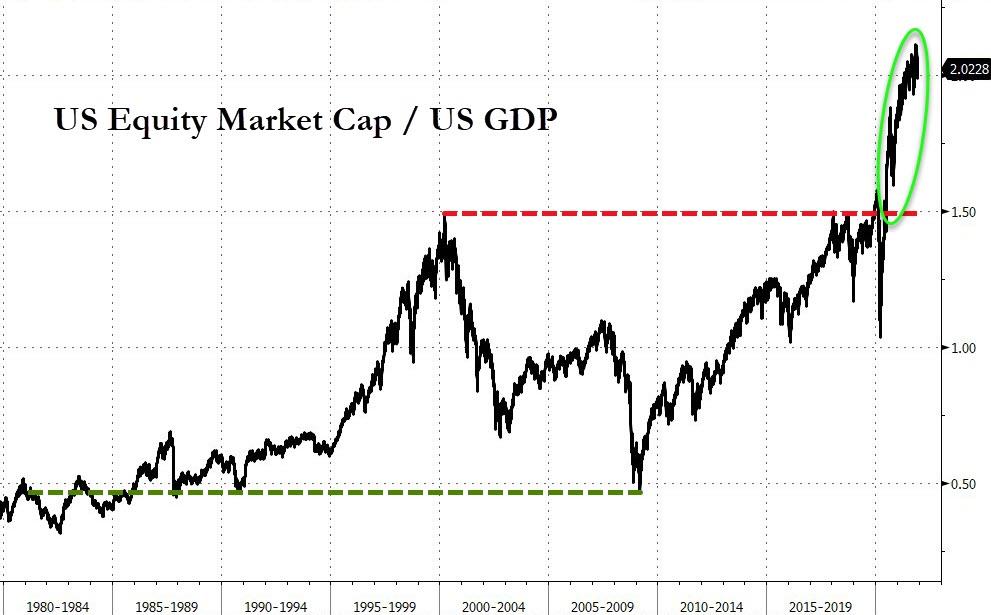
Wealth Effect Policies Have Failed To Generate Enough Growth

Looking back at how pursuing policies that breed the Wealth Effect can slide off track or lose their effectiveness, we see it always centers on the risk they create. At some point, the combination of easy-to-borrow money at low-interest rates tends to morph into a high-risk environment of increased speculation and leverage. In short, savers and investors seeking a return on their savings are forced out of traditional accounts because such investments get ravaged by inflation.
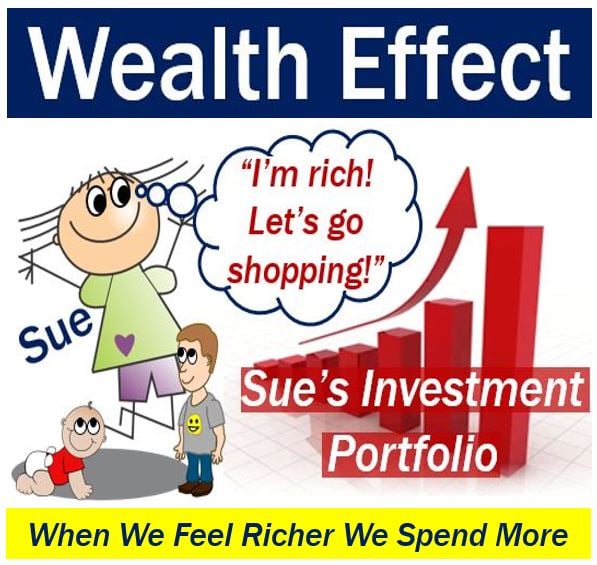
Many Consumers Bought Into This
The 2008 financial crisis caused the biggest recession since the great depression of 1930. It is also referred to as the global financial crisis (GFC). Over the last several years, the Fed has been getting a great deal of well-deserved bad press for driving inequality and fracturing society. Since 2008 it has become apparent the Fed has created an unfair system that is broken, unfair, and corrupt. This has affected different generations in rather specific ways.

Following the GFC the Federal Reserve and the Bush administration spent hundreds of billions of dollars to add liquidity to the financial markets. They worked hard to avoid a complete collapse. They almost didn't succeed. Today we are spending not billions, but trillions of dollars to keep the same corrupt policy moving forward. 

History shows investors should treat the wealth effect with caution because it is susceptible to reversals. One elephant in the room when it comes to growing the economy is how "the broken window theory" is spun and interpreted. The gist of this theory is that if a window is broken, the subsequent repair expenditure will have no net benefits for the economy. Still, it is not uncommon to see destruction touted as a good thing because it promotes spending. In truth, the idea destruction is good discounts several facts. 

One has to do with where the money is coming from but whether it is from an insurance company or someplace else, it still means the money is diverted from being used on another purchase. Repairing a broken window is maintenance spending which doesn’t improve growth because it doesn’t improve productivity. This expenditure would have occurred anyway. The only thing a broken window does is  cause maintenance spending to occur earlier and lower the useful life of the window. Maintenance spending may keep the economy going it doesn’t provide a boost. Instead, it is better to invest the money in something which creates wealth by increasing productivity.

Many people and even economists have real misconceptions as to how the economy works. Where money flows and who it enriches is a key component of economics. The failure to consider this is a blind spot many people have. Years of being told everything revolves around spending has diminished the important role savings play in the scheme of a balanced economy. Fans of Keynesian economics that encourage government spending to stabilize the economy during a downturn tend to discount the importance that where and how money is spent matters a great deal. 

Wealth Effect Policy Has A Poor Record
In the end, the nightmare we face all comes back to the fact current policies are presenting us with diminishing returns while increasing risk. Sadly, financial corruption has played a huge role in getting us here. Never before in our history have Presidents, Fed Chairs, and politicians in general been able to exploit their power and gained massive wealth following their time as so-called public servants. A big part of our current problems is the elite top-down efforts to control our society has created an army of government workers, most un-elected that have been empowered to nibble away at our rights.  

Bubbling up to the surface is the recognition the Fed has to shoulder a huge responsibility in pushing inequality higher. Powell has even gone so far as to claim there was little demand for loans below $1 million. Sadly, the same policies that dump huge money into larger businesses because it is an easier and faster way to bolster the economy give these concerns a huge advantage over their smaller competitors.

The long-term ramifications of destroying smaller businesses will hurt America in the long run. It eliminates competition, reduces opportunity, and over time fuels inflation. This drives my angst directed at companies such as Amazon and big tech. The policy of making people feel better so they spend more than they can afford is part of voodoo economics.  So is sending jobs abroad and increasing our consumption of imported goods which has resulted in a massive trade deficit. Good economic policy encourages personal responsibility and is rooted in saving not spending. 


(Republishing of this article welcomed with reference to Bruce Wilds/AdvancingTime Blog)


Advancing Time: The Economy Is Beginning To Shudder - The Lag Effect

Advancing Time: The Economy Is Beginning To Shudder - The Lag Effect: Shudder is an interesting word, in this case, when talking about the economy, it is being used as a verb that means to wobble or shake in n...

Saturday, May 6, 2023

Advancing Time: Great American Presidents Are As Rare As Hen's Teeth

Advancing Time: Great American Presidents Are As Rare As Hen's Teeth: A recent article caused me to reflect on how long it has been since America has had a really good leader. While some people see Trump as th...

Friday, May 5, 2023

Advancing Time: Amazon, A Predatory Monster Unleashed Upon America

Advancing Time: Amazon, A Predatory Monster Unleashed Upon America: The news that Amazon is on track to become the largest U.S. delivery service by early 2022, should be troubling to the American people. The ...

Wednesday, May 3, 2023

Advancing Time: De-dollarization Message Is Mostly Chinese Propaganda

Advancing Time: De-dollarization Message Is Mostly Chinese Propaganda: The idea the dollar is doomed is being floated everywhere. It is likely it is rooted in a propaganda campaign flowing from China and that de...

De-dollarization Message Is Mostly Chinese Propaganda

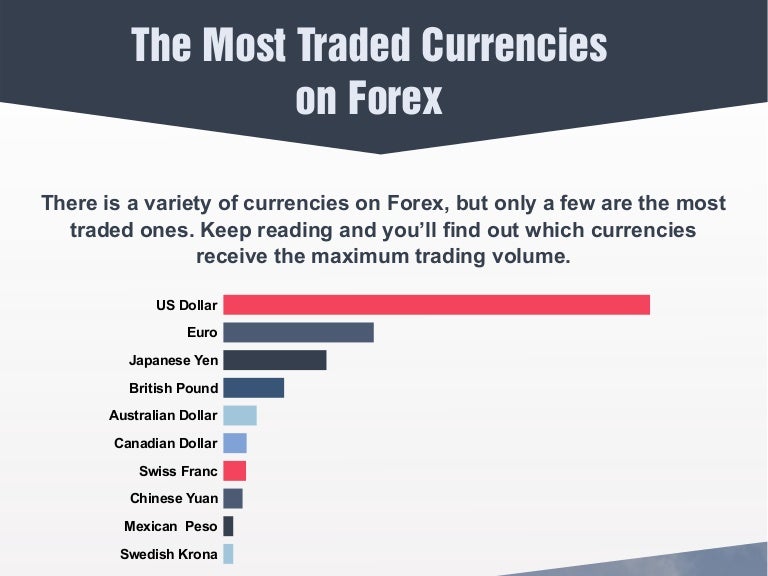
The idea the dollar is doomed is being floated everywhere. It is likely it is rooted in a propaganda campaign flowing from China and that deserves a bit more attention. Considering all this noise about de-dollarization it could be argued this is largely a Chinese operation aimed at raising China's standing and weakening America. When looked at objectively the notion the yuan could rival the dollar lacks truth and merit.

A big part of the problem is that many people believe what they hear without questioning or filtering it. The idea of a psychological operation (PSYOP) is to persuade, change and influence audiences. Such operations convey selected information and indicators to audiences to influence their emotions, motives, and objective reasoning, and ultimately the behavior of governments, organizations, groups, and individuals. This is a basic part of "brainwashing."

In short, full-fledged propaganda campaigns are not an accident. If told something enough people begin to believe it. Never forget the Chinese Communist Party (CCP) pays influencers and people writing articles to spread its narrative! It is possible that those adopting the dollars death as fact or a fait accompli may suffer by being scammed into making poor investment decisions based on the idea they should flee the dollar. This is happening in China even as this is being written. In China, some people are converting dollars into yuan. 

The actions to weaponize the dollar certainly reflect poorly on the United States as does our inability to control our spending. As the country given the privilege to have its currency granted the world's reserve currency it would seem America has some responsibility to conduct its affairs in an orderly fashion. Yet, even with all these flaws the dollar remains the cleanest of the dirty paper fiat currencies. It is unbelievable and totally unrealistic to think the weak Chinese yuan which is used so little outside China's domestic market will gain stature.

The notion the dollar is rapidly moving toward the dustbin of worthless currencies is fueled by China is a subject taken on by a fella in a video that raises some good points. Around 15:20 minutes in https://www.youtube.com/watch?v=EWcJVRznD5E he also points out that people trade metals on several exchanges across the world and how important they are is linked to both volume and liquidity. This coupled with the questionable numbers and China's history of rampant corruption tends to support the validity of the claim China is a self-promoter that can't be trusted. 

The Chinese Yuan Is A Very Small Player
Economies run on trust. China may have the world's second-largest economy but there is a reason only around 2.6 percent of world trade is being conducted in the Chinese yuan. That is because China can't be trusted. Those countries lured into China's web through promises of win-win situations often come to regret it. Its history of stealing trade secrets, exploiting relationships, and breaking promises make China a poor business partner.

While this subject of China being a country of poor character has been covered several times here at AdvancingTime, this is a little different spin on it. Still, the key points continue to be the same. A key issue here is that we should never underestimate the desire and ability of the CCP to control and shape a narrative to suit its purpose. The author of this video lived in China for years and has a perspective most of us lack.

China has been moving away from its dependence on America but it will be more difficult than people imagine. China has huge problems that make this planned decoupling a risky gambit. This move has started and it is unlikely to change. China is not springing out of its lockdown but is staying afloat by flooding its markets with cash. In short, it could be argued that China has enjoyed a growth bubble similar to what Japan went through during the 1980s and that it is now over.

To my delight, he also points out that China's so-called President, Xi Jinping is not elected by the people but is more of a Dictator if judged by the standards most of us have been taught. Through an epic power grab, he has turned the position into one he will most likely hold for the rest of his life. The BBC reports that as China's leader, he has overhauled the Communist Party placing himself at the core and nobody else has even a remote chance of challenging him. He is elected by a rubber-stamp session of nearly 3,000 delegates rather than the Chinese people.

When it comes to China keeping things in perspective is very difficult for many Americans. This is even before considering the intentional lies being thrown into the mix by its government. The actions of those with an agenda tend to overwhelm the unaware. China's repressive control of freedom should not be overlooked but rather put under a spotlight so the trend does not extend far across its borders. This is why it is so important we question all the messages China spews forth and the motivation behind them. 


Footnote: Brent Johnson of Santiago Capital is credited with coining the term the "Dollar Milkshake Theory." It explains how our debt-based monetary system can cause the US Dollar to rise despite the increasing liquidity injections around the world. Whether this was a "grand master plan" or a situation that just developed over time, it is something that may bode well for the dollar. More on his views in the following article. https://brucewilds.blogspot.com/2023/01/a-country-can't-save-both-its-currency.html


(Republishing of this article welcomed with reference to Bruce Wilds/AdvancingTime Blog)