Friday, May 13, 2022

If Success Has Many Fathers, Inflation is An Orphan

The proverb "success has many fathers" means there is no shortage of people willing to claim they contributed to a successful enterprise. If success has many fathers, inflation is an orphan. When it comes to inflation not only does nobody take credit for it, but instead they rush to blame others for its very existence. An example of this is how President Biden and his anti-fossil fuel administration has come out swinging and blamed Russia for higher gas prices in America. 

Inflation is generally viewed as a general increase in the prices of goods and services in an economy because of or coupled with a fall in the purchasing value of money. This is where the peanut gallery and purest generally go berserk and argue fiat currency is not money. The most common reason given for rising prices is that demand is stronger than supply. Still, a lot more factors feed into creating inflation than supply and demand making price stability more than a delicate balancing act. 

The "inflation puzzle" is highly complex and includes a slew of related confounding variables. The role productivity and savings play in inflation are often overlooked. Most people, even many economists make the mistake of throwing spending into one big pile with little consideration to the fact not all spending is equal. Please note the following;

  1. The spending of government often is far different than that of the individual. Unproductive government spending tends to be inflationary.
  2. Inflation can stem from a growing lack of faith in a currency, or all currencies, rather than just a lack of available goods. Governments that waste and spend do not generate long-term confidence in their currency.
  3. As inflation takes root the goods available for sale often contract as sellers retreat from the market awaiting higher prices, this can be followed by workers then demanding higher wages which creates a self-feeding loop.
  4. Also, the velocity of money plays into inflation. When money moves faster it tends to increase demand. What many people fail to consider is why money moves rapidly through the economy or the reason it gets parked in one place. 
  5. The ever-changing economic rules by which we play, include taxation and incentives for saving or not saving. Any "incentive" that steers money into intangible assets may feed the wealth effect but often dampens demand for the things we need that are included in the consumer price index. In short, it can lessen inflation but increase investments that may be risky.

What people spend their money on and where impacts inflation. So does whether they pay cash or charge the purchase and have to pay interest on the goods. When people buy American goods and invest in their community the money moves from business to business creating jobs. When people buy goods made in Asia from a company like Amazon, their money takes the fast track out of the country and weakens our country. 

Productivity is another huge part of the inflation puzzle. An example of an institution that has not been able to adjust and stay relevant in our changing world is the United States Postal service. It is an example of poor spending on the part of our government and could not exist if it were not for continued financial infusions. Years ago the USPS delivered important materials and correspondence, today it delivers the junk mail that fills our landfills. The main reason the USPS exists today is to employ people. It employs not only carriers but those that build and maintain its vehicles as well as those that create and send the junk mail we hate to get.
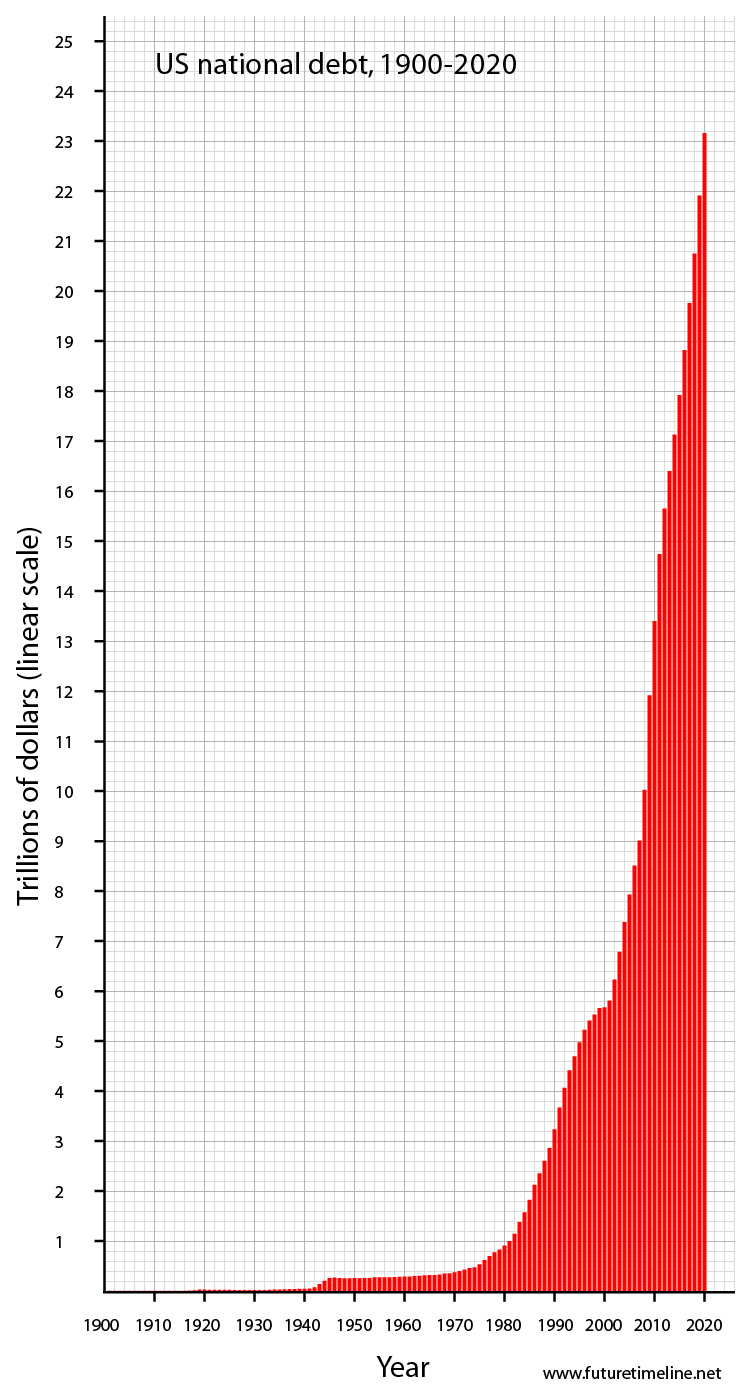
Now Over 30 Trillion And growing
While it is easy to point to supply chain disruptions as the reason for much of our inflation, it could be argued inflation has been brewing for a long time. The chart to the right shows bat shit crazy spending has soared. It is only logical to think the consequences would catch up with us at some point. This is why, as we look into the future many of us have arrived at the conclusion inflation has not peaked and more inflation remains a certainty. 

It seems our government is out of control and simply cannot stop spending. With the Secretary of the Treasury having been the former head of the Fed, and the current Fed chairman both hellbent on spending to boost the economy, our government has embarked on an unsustainable spending spree. This has enabled the global financial system to do the same with few ramifications.

Circling back to the idea inflation is an orphan, this means when inflation hits the average consumer they yell out in pain. When that happens it seems none of the players that helped create the situation want to take credit for their actions. Inflation tends to hammer away at most people eroding their wealth. It acts as a stealth transferer of wealth moving it from the masses and into the hands of the few positioned to benefit  

We should not forget what we were told by central bankers until recently. In late 2018 Jean-Claude Trichet, who served as President of the European Central Bank from 2003 to 2011, opined about his outlook for the global economy and monetary policy by repeating the line declaring 2% inflation the desirable goal of intelligent central bankers.  

Yes, the central bankers were fast to tell us we needed some inflation and everything is "data-dependent." This translates into the idea central banks have the ability to, and will squash inflation if it begins to run too hot. Well, they better start squashing. The only other option is that we as a society get a great deal more productive or inflation is here to stay. With so many people choosing not to work or unable to find jobs that add substance to the economic pie, that is unlikely.  


 (Republishing of this article welcomed with reference to Bruce Wilds/AdvancingTime Blog)

Tuesday, May 10, 2022

The Six Most Common Financial Myths People Believe

It is time to revisit six of the most common financial myths we have come to believe. Accepting any of these as a reflection of reality could lead us down the path to ruin. Unfortunately, belief in them is so widespread most people no longer even question them and are putting their economic future in peril. A myth is often defined as any invented story, idea, concept, or false collective belief that is used to justify a social institution. With this in mind, it is understandable those in the government and financial systems would crank out such yarns to keep us docile.

The six favorite financial myths are easier to believe when financial fears are low and times  are good. Over the last few years, a slug of freshly printed liquidity being pumped into the global financial system and stock markets has caused many asset bubbles to expand sending the wealth effect into overdrive. An increase in liquidity results in people feeling comfortable to take on more risk and this tends to cause people to "leverage up." During such a time true price discovery has a way of being greatly diminished.

Changes made to the rules and financial engineering have made many comparisons to the past obsolete. Sometimes, it is a question of people just being too lazy to question what they see, at other times, it is because they simply can't face the truth. It should be noted that the entertainment industry has flourished as society seeks any diversion to pull our attention away from the sharp edges of reality and into the soft comfort of escape. In some ways, it could be said that our culture has become obsessed with avoiding what is real. Regardless of the reason why people fail to view the myths below as lies the point is they will result in the financial ruin of those counting on them in time of need.


Over the years,
extraordinary efforts have been made to keep the economy afloat. The most noticeable is the massive amount of new money and credit released into the financial system by central banks. This has been interpreted by many people as confirmation the current trend of never-ending growth will continue. Rather than considering it is time for a reality check it is both easier and more comforting to adopt an "all is well" attitude and ignore the signs of danger lurking around the corner. 

The crux of this article is about some of society's favorite myths. These feed directly into the economy and our feelings about our financial security. While it could be argued the myths below have more to do with how we feel about life than about money, it cannot be denied that most people make many of their financial decisions based on the assumption the below statements are true. As a society, we rapidly choose to embrace and often choose not to question them because of the discomfort it would undoubtedly create. The six below permeate society and should be enough to remind you and even shed a bit of light upon the fact we as  individuals are vulnerable at any time if reality raises its' ugly head.

Believing Myths Is A Head In Sand Approach

#1 Government is for the people and by the people - Seriously? After the dog and pony show we experienced during the last presidential primary all illusions of that should have been erased. After often being forced to choose between the least of two evils it is difficult to praise our political system. After all the talk about "we the people," the fact is the average "person" is far removed from the power to decide important issues.

#2 Financial planning means you only have to start saving a little money each year to guarantee an easy retirement.  - The fact is life is a casino where our future is tenuous at best. Much of our circumstances and lives revolve around money and the number of options it gives us when we possess it. I intentionally used the term "casino" to conjure up the image of financial fortune. Which you can lose in a blink of an eye if things go against you. This myth extends deeply into the promises made by the government and others such as pension plans and financial institutions. Many of these promises will not be honored.

#3 You have rights and that we are not slaves - I defer to a few lines from a blog by Gerry Spence who has spent his lifetime representing and protecting victims of the legal system from what he calls The New Slave Master: big corporations and big government. In his blog, Spence wrote; The Moneyed Master has closed its doors against the people and sits on its money like an old hen on rotten eggs. The people will not prevail. With its endless propaganda, the Moneyed Master has caused its slaves to believe they are free.

#4 Your life will progress and move along pretty much as you have planned - When you think back over the years of your life if you are like most people things have not unfolded as you had planned. You may not be in the occupation you trained for or with your true love. Throughout our life watershed events occur that we have little control over, this holds true when it comes to your finances as well. Having an investment or pension plan go south can completely alter your life.

#5 Those in charge or above you care about you and will make an effort to protect you - Sadly, more than one person has been sliced and diced by the people and institutions he or she trusted most. History shows when push comes to shove it is not uncommon for a person to look out for the person they treasure the most and that is often him or herself. Politicians and those in power have a long history of throwing the populace under the bus rather than taking responsibility for the problems they create. 

#6 It could be argued the biggest myth of all is the idea that inflation is reflected in the Consumer Price Index. Those making financial decisions have masked their failings. This is done by heavily skewing the CPI to give the impression there is little inflation. This dovetails with a theory I continue to expound on, that inflation would be much higher if people were not willing to invest in intangible assets such as stocks and Bitcoin. This removes a lot of demand for tangible items people use in their everyday life. 

The fact is inflation is soaring and acts as a wealth transfer mechanism that hurts far more people than it helps. My apologies if this post has been a downer or seems overly negative, however, it is what it is and it was written for a reason. Best stated by a comment I read on another site; These myths add up to where "This is not a can of worms but a warehouse stacked with pallets of cans of worms."  

Believing the above myths will impact your life, that is why it is important to recognize them for what they are, lies. This is not to say that by making good and reasonable choices we cannot eliminate some of the risks we encounter when we get out of bed each morning. Developing the habit of being skeptical while pressing on to reach solid and reasonable goals is the best medicine to combat a deck that is often stacked against us. Be careful out there!


Footnote; Mentioned above is the fact economists and analysts seem oblivious to the point that so many people willing to invest in intangible assets have helped to minimize inflation. This is a very important part of the inflation puzzle. This is a very important part of the inflation puzzle. The link below is to an article that delves deeper into why this is true.

https://brucewilds.blogspot.com/2021/06/investments-in-intangible-assets-have.html

 (Republishing of this article welcomed with reference to Bruce Wilds/AdvancingTime Blog)

Tuesday, May 3, 2022

Higher Energy Prices Are A Reality We Must Face (Part 2)

Years ago several countries that were major exporters of oil, such as Venezuela, Columbia, and Mexico devised plans to take the money flowing in from oil and invest it in a way they could live off the income stream flowing from it in the future. Sadly, because of poor governance, most of it was simply pissed away. In a perfect world, things would be different. Ironically, in a blind leading the blind way, this has allowed the big central banks across the world to step into the breach and claim that by twisting the financial landscape they will be able to play a much larger role in steering environmental and energy policy.

Part of the human condition seems to be the desire to seek consensus so we can promote our agendas while at the same time many of us tend to nitpick at the views of others if they are not absolutely and totally in sync. This becomes a huge barrier to moving forward on such a major life-altering plan as to the best way to approach long-term energy strategy. This spills over into attitudes over global warming, climate change, social fairness, and whether mankind will eventually run out of needed resources or simply expand into the universe. 

The Price Of Oil Has Taken Some Wild Swings

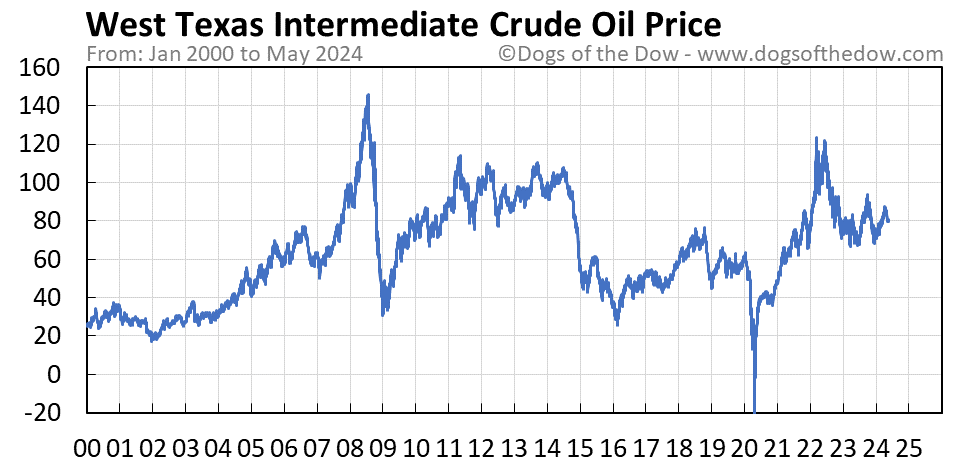
Over the years the price of oil has taken some wild moves both up and down. These have generally been due to supply or demand changes. Today the world should get ready to face the possibility, that when it comes to oil, much of the low-hanging fruit has been picked and we should consider the possibility these countries have been lying for years about just how much oil they really have left. Clearly, the recent price shocks in the energy sector have made the current inflationary surge and slowdown in the growth of the global economy more acute, unfortunately, other problems exist.  

The highly productive “sweet spots” where oil flows from the ground sometimes mentioned on the news make up only a small percentage of potential drilling areas. Outside those core areas, production rates and recoveries are substantially lower. Impressive gains in well productivity have come as a result of technology that allows one tight oil well to access three times the reservoir volume of one drilled in 2012 and a shale gas well can now access 2.2 times the reservoir volume of a well drilled in 2012.  Still, technology cannot overcome “poorer quality geology” and this challenge will become evident as drilling moves into lower quality areas. 

Engineering limits appear to have been reached for increased lateral lengths and the increased yields from hydraulic fracturing or "fracking." While technology has increased well productivity and temporarily improved the economy it has also rapidly reduced available drilling locations must faster. Now as the rate of technological improvements slows the EIA is failing to consider that better technology will no longer offset the deteriorating geology as new drilling moves outside of sweet spots. In short, declining yields will inevitably overcome increased drilling rates and production will fall.

To get a sense of what the future holds for U.S. tight oil and shale gas it is suggested we look at where the shale revolution began. The Barnett Shale is where ‘fracking’ was developed by [George] Mitchell in the 1990s. First, they drilled the sweet spots and then spread out to the less promising areas. Already production has declined 60 percent since the play peaked in 2011. The fact is energy companies always exploit the most productive areas of a reservoir first. Failure to recognize this practice mistakes exploitation of the most productive areas for technological progress. Hughes thinks we are rapidly towards the same scenario we saw unfold at Barnett Shale much sooner than the EIA  or policymakers are willing to admit.

As for nuclear power, here in America, we have a slew of old plants still online. Most have already had their license to operate extended past what was initially considered their useful life. With few people wanting a nuclear plant constructed near them and these expensive monsters taking many years to build, it is unlikely nuclear power will come to our rescue anytime soon. If nuclear energy had proven in its totality to be the answer many people envisioned decades ago, we would not be in this situation.

Another puzzling policy is that society is promoting Electric Vehicles as our salvation knowing that most of the time they are charged using electricity generated by fossil fuels. Even if charged in off-peak hours, that does not change. Anyone with even the slightest mechanical knowledge will tell you that solar panels, windmills, and such take a lot of energy to build and often are maintenance intense. Both these complicated systems have a short lifespan and require a great deal of energy to be expended in just keeping them up and running. This includes all the BTUs being burned in producing parts that need to be constantly replaced. This was one of my arguments years ago when I expressed concern the optimism surrounding ethanol was being over-hyped.

Still, whether ethanol is good for the environment has not stopped Biden from proposing increasing the amount of ethanol added to gasoline. With corn prices at record highs and people talking about food shortages some people think this is incredibly stupid. When you do not create enough "net gain" in energy from the total energy produced minus energy expended to produce it, you have a problem. If we cannot claim a major victory in resolving our energy problem, the energy we produce in the future will very likely be very expensive.

Carry no illusions the days of cheap energy are behind us, the low-hanging fruit has been picked and eaten. Sadly, if we look back we see much of this energy was simply wasted. America has adopted the same attitude towards its buildings. In our fast-changing world, we have made everything disposable.  America's remove and replace mentality tends not to maximize gains or resources and creates a huge amount of waste. Often there is no way to reclaim much of this and even recycling is inefficient. This has extended down to the point where most consumer goods are now unrepairable. Fast growth that lacks quality runs rampant in modern society. 

The pathetic reality is that those making energy policy often ignore waste because it is good for the GDP. Simply put, this is about money, cutting back on waste would lower the GDP and hurt the profit of many companies. It is time voters demand politicians put cutting waste as a priority before their desire to serve big business and the lobbyists that shower Washington with money. With this in mind, it could be argued we don't need a "new green deal" as much as a little common sense. The dreaded "C" word, conserve, is seldom used by politicians because cutting waste will crush the GDP. 

Simply conserving our resources and cutting down on waste has been thrown under the bus and to speak of it is taboo. When people conserve it cuts GDP. Energy use soaring during extremely hot or cold months adds to overall consumption and the GDP. Over the last several years I have entered many large empty buildings and offices in the evenings or during weekends. Often the thermostats on these empty buildings are not set-back and these buildings are at seventy degrees while extreme temperatures exist outside. Instead of mentioning such things, the ideas being forth from those promoting "go green" are proposing solutions to our woes that appear to be pie-in-the-sky visions that make little sense.

A couple of final thoughts, while few people look at it this way, it could be argued that even the Biden Administration's open border policies are adding to America's energy problems. Last year it is estimated the illegal immigrant population in the United States increased by one million in President Joe Biden’s first year in office, according to a new report. Each of these people use energy and have a carbon footprint. Simply put, more people equal more energy used. To top this off we hear of our government putting these people on planes to fly them north, if you want to move them around busing them would be far more environmentally friendly.

If this is all being directed from behind the curtain by those with an agenda we are all screwed. If this is all being done by design, we have a problem. It means this goes past stupidity and incompetence, it falls into an area that is much darker. If we are looking at a planned energy squeeze the general population or call us the unsanctioned masses are in for a world where we will be powerless. An example of what we might face is a cashless society where all cars are driverless, a society where you could buy nothing unless it was approved, you could go nowhere unless it was approved, and you would find yourself in the dark unless you behave. 


The link to (Part 1) of this article is; https://brucewilds.blogspot.com/2022/04/oil-and-energy-shortages-may-just-be.html

(Republishing of this article welcomed with reference to Bruce Wilds/AdvancingTime Blog)

Saturday, April 30, 2022

Oil And Energy Shortages May Just Be Starting (Part 1)

When it comes to rising prices people tend to focus on what is in their face. This translates into gas prices taking focus away from the more important fact that all forms of energy are likely to take big price jumps during the next few years. For a mental exercise, assume estimates of how much oil remains under the ground here in America are wrong. If it is not there, we are in for a rude awakening. 

Recently Kurt Cobb of Resource Insights, wrote an article noting a new skeptical report on the future of U.S. shale oil and gas. In the article, he keys in on a report by J. David Hughes that questions the U.S. Government's forecast for shale gas and tight oil production. Shale gas refers to natural gas that is trapped within dense shale formations and tight oil is the crude oil contained in these rock formations. 

Earth scientist David Hughes contends the data behind the U.S. Energy Information Administration’s latest projections for shale oil and gas output is massively flawed and its long-term outlook is so biased, that it borders on fibbing. If Hughes is correct America's path forward when it comes to energy is about to become much more challenging.

Already, the new global energy crisis is directly responsible for a tremendous amount of pain at the pump for millions of average Americans. Since virtually everything that we buy has to be transported it is also a major contributing factor to the current surge in inflation. The staggering rise in fertilizer prices that we are currently witnessing also is signaling future food prices are going to be drastically higher and may even result in food shortages.

 OH No! Problems Ahead
Economist contends the politics of bashing fossil fuels and demanding aggressive decarbonization has led to under-investment in carbon-based capacity before renewable energy sources have reached a scale sufficient to smooth the transition. He goes on to predict this will feed into more sharp energy-price spikes. Roubini expects that as the price of energy rises, “greenflation” will hit prices for the raw materials used in solar panels, batteries, electric vehicles, and other clean technologies. 

Roubini is not alone in thinking physics and geology are against us on this one, even if can make some improvements in technology. Wind and solar won’t save us either, it would require a larger investment of materials and energy than we have. It doesn't take an expert to predict this will result in us soon paying much more to heat our homes. It also means that we are going to be paying much more to fill up our vehicles at the gas station as well as paying a lot more for food.

Circling back to Hughes, his take on the current situation contradicts the broadly accepted consensus and was put forth only after painstaking research. In a previous report on the U.S. shale oil and gas industry entitled “Shale Reality Check 2021” Hughes assesses and seriously undermines rosy long-term forecasts of the U.S. Energy Information Administration’s (EIA) shale forecasts in its Annual Energy Outlook 2021, these are widely used by policymakers, industry, and investors to make long-term plans. His detailed analysis finds that the EIA’s forecasts of tight oil and shale gas production through 2050 are “highly to extremely optimistic.”

The cost of energy permeates through the economy making the EIA’s forecasts extremely important. America is counting on shale for 69 percent of all U.S. oil production from 2020 to 2050 and 77 percent of all U.S. natural gas production in the same period. And, it matters to the world because between 2008 and 2018, growth in U.S. oil production accounted for 73 percent of the entire growth in global supplies. Since oil and gas constitute 71 percent of the current U.S. energy supply, if future oil and gas production disappoints, as Hughes expects, it will create a situation with huge ramifications for our future. 

Hughes assessed Canada’s coal and unconventional natural gas resources during his previous 32-year tenure at the Geological Survey of Canada. During this time, he analyzed data for thousands of individual tight oil and shale gas wells to see how the U.S. industry has been doing. Hughes bases his belief the EIA has greatly overestimated recoverable U.S. tight oil and shale gas on several things.

His conclusions based on commercially available drilling and production data indicate future production in America will likely be much lower than the EIA projects. He thinks we will be hard hit particularly in the latter part of the 2020 to 2050 period as the "sweet spots" responsible for most of today’s production give up the ghost. Considering U.S. energy policy and planning in such key industries as transportation, utilities and chemicals are based on the EIA’s forecasts. If they are wrong, we will all pay for this mistake.

Government forecasts often prove unreliable, years ago Hughes released a damning and prescient analysis of the Monterey Shale, an underground formation in California that the EIA touted as containing 15.4 billion barrels of recoverable oil. The following year the EIA stunned the industry, investors, and California officials with a 96 percent reduction in estimated tight oil resources for Monterey. Before the downgrade, Monterey comprised 60 percent of all U.S. tight oil resources.

The Future Of Oil And Energy is also being greatly affected by what many of us consider misguided government and central bank policies pushing a new green agenda geared at addressing political and environmental concerns about global warming and climate change. Several examples of this exist. While the Biden administration is panicking in an attempt to keep energy prices down, the House has slapped a "fee" on methane that is being called a "stealth tax" on natural gas. It results in an "escalating tax on methane emissions by oil and gas producers."

An op-ed in the Wall Street Journal pointed out the tax will hit $1,500 per ton by 2025. This fee will get passed along to the consumer and result in even higher energy prices for consumers and industries that are already struggling. The Energy Information Administration (EIA) claims that half of U.S. households that heat with natural gas will pay 30% more this winter than they did last year and this methane tax could add another 17% to an average bill.

Another example of a misdirected policy that might add to our future energy woes is reflected in a recent New York City Council vote to ban the use of natural gas in new buildings as a way to reduce the city's carbon footprint. Once it goes into effect in 2027 all new buildings will be heated by fossil fuel alternatives, most likely electricity. Opponents to this plan point out that eliminating the direct use of natural gas in homes and businesses would simply shift the use of natural gas from inside the home to powering an already overburdened electric grid through natural gas and coal-fired power plants.

The crux of this article is that we should not rule out the possibility the U.S. Government's view of how much oil remains is far too optimistic. When this article became a bit long for my liking I divided it into two parts. The second part will expand on why Hughes may be right and the intrusions we are seeing on the energy complex by virtue signalers for what they call the greater good. The concern over such regulations flows more from unintended consequences and the agenda of those creating such policies. If those touting reform and re-configuring world global energy policies were sincere you would think they would occasionally utter the word conserve. 

The reality we face is that production from tight oil and shale gas wells falls quickly. Production from individual wells falls 75–90% in the first three years. This trend indicates a far different tale than the one the industry and the government are forecasting. This is not a prediction of doom but a warning of hard times and higher prices ahead. 


 (Republishing of this article welcomed with reference to Bruce Wilds/AdvancingTime Blog)

Saturday, April 23, 2022

Living With An Older Parent Suffering From Dementia

Living with an older parent suffering from dementia is no cakewalk. It also will make a person rapidly aware of the fact these people need constant supervision and attention. While this is off topic from the economic issues I usually write about it is important, Today, dealing with the declining health of a parent is happening to a lot of people just as they are looking forward to retirement. To be clear, dementia is not a specific disease but is rather a general term for the loss of cognitive functioning, thinking, remembering, and reasoning to such an extent that it interferes with a person's daily life and activities. In short, often a person with dementia will not know where they are or much of anything else. At other times they may seem rational and sound.

This doesn't mean all dementia suffers are always sad or completely out of it but it does mean they can come across as bat-shit crazy and appear delusional, mistaking those around them as being someone other than who they are. This can lead to them becoming agitated or even combative. Convincing someone suffering from dementia they are home at 2 AM when they think otherwise is no easy task. 

When you add in the issue of fragility that comes from old age and how even a fall can be disastrous the problems are compounded. This means "child-proofing" your house and then doing it again. Everything becomes a potential danger point. Caring for a person with dementia or Alzheimer's disease is akin to full-time babysitting without the luxury of being able to put them in a crib where they are contained. A side bonus to all this is that you can expect to hear the same story time and time again when they slip into their "halfway out of it" grove.  

Recently my ninety-three-year-old mother-in-law came to live with us and to say it has been challenging is an understatement. This happened after the man she married about ten years ago died. He had been taking care of her even though he was sick, this worked for them in that it seemed to give them both purpose. Near the end of his life, she had to have a so-called caregiver brought in at $26 an hour which is considered very reasonable for such care. What some people forget is that this is not for just during the day but 24/7. 

If you are looking for someone to come into the home and watch over them, the math becomes very ugly very fast. An hourly rate comes to around $625 a day, $4,375 a week, or round it off at about $13,500 a month. Also, you still have all the other living expenses that most of us have such as food utilities, and more. Another huge concern is the quality of care, it is difficult to convince me that all the people sent to her home were hard-working compassionate souls that made her their top priority. 

It is easy to envision them sitting on their asses playing games on their phone or pigging out on the food you have purchased. You must remember the agency hiring them takes a big chunk of that $26 fee and often hires people for as little as possible. Dementia suffers with multiple caregivers passing through their doors are open to all kinds of abuse. Just like the elderly placed in a home, it is not uncommon for their possessions to be pilfered through and valuables to come up missing. 

Cases Of Alzheimer And Dementia Expected To Rise  As for any help from government programs designed to help care for people with memory issues, don't expect much, most are so wrapped up in bureaucracy they are more of a nuisance than a help.
In a nutshell, no easy answer exists as to how society can make a person whole again after they have lost such a huge part of themself. Sadly, this affliction is a growing problem in modern society and one of the reasons I feel people should have the right to request ending their life with dignity rather than moving forward mentally impaired. This is particularly a problem for those with no love ones or family, many of these people end up living on the street. In the future expect the issue of euthanasia to be discussed and argued in great depth.

Circling back to the focus of this article, anyone having a parent suffering from dementia brought into their home should expect their life to be totally disrupted and a massive loss of freedom. They will most likely find the huge majority of family members bailing out of taking any responsibility for the care of their parents.

Expect the excuses of I'm too busy or not trained for such care to role forth. (spill out of their mouth) Still, even more annoying is their pathetic suggestion they slide by for a short visit thinking it might be fun and as a bonus eliminate their guilt. Yes, coming by for a "party" and a good time may make you a hero and saint in your eyes but it is a bit like taking credit for doing nothing. They best pray that as they age they are not also afflicted by the same disease, after all, it does run in families.  


Footnote; Following is the link to an article many people may disagree with. It appeared on AdvancingTime concerning the issue of euthanasia.   https://brucewilds.blogspot.com/2017/04/euthanasia-opens-path-to-dignified-death.html

 (Republishing of this article welcomed with reference to Bruce Wilds/AdvancingTime Blog)

Thursday, April 21, 2022

Higher Interest Rates And Inflation Are Toxic For The Yen

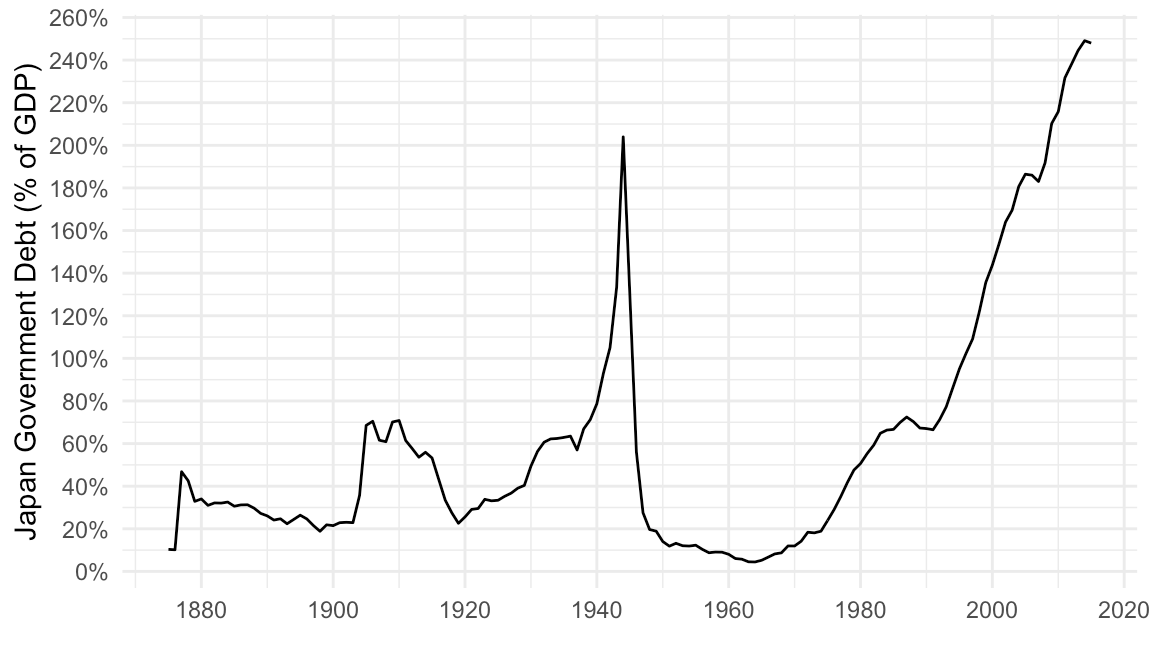
Recently the yen has been falling in value and this is gaining the attention of currency watchers. The moment the Japanese stock market fails to rise enough to offset a falling yen and inflation this will turn into a tsunami of money fleeing Japan and constitute the end of the line for those left holding both Japanese government bonds and the yen. In July of 2020, an AdvancingTime article claimed the predictions of the dollar's demise are likely premature and overblown. I contend that for several years currencies have been trading in a hyper-manipulated state. It should be noted that fiat money is often sheltered from the storm of volatility by both politics and because it exists in a rather closed system. 
 
Wealth is contained within the system of fiat money by laws and rules that discourage freedom of movement. The coordinated collusion of the major central banks have allowed this charade too exist for far to long. The fact it has not been recognized or acknowledged does not alter or guarantee the system will continue. The failure or major repricing of any of the world's four major reserve currencies will destroy the myth that major currencies are immune to the fate that has haunted fiat money throughout history. When the nations granting these currencies prove unable to control their budgets history shows their currency is destroyed and crushed under the weight of debt.
 
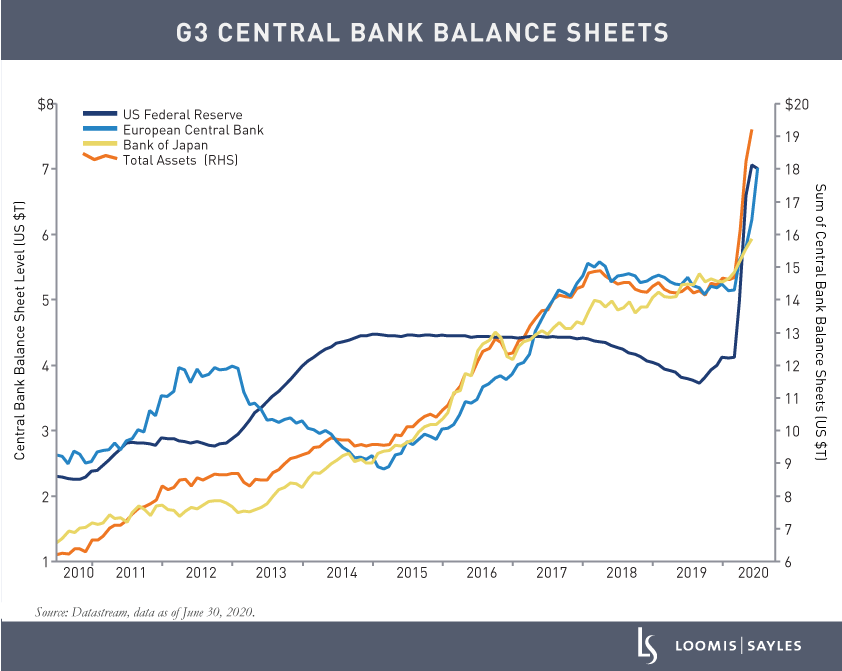
The reason central banks have played this game is because the one thing the global economy doesn't need with all the uncertainty that is currently floating around is unstable currency markets. When you consider just how destabilizing currency swings can be it is easy to see how a strong dollar could obliterate the global economy. Over the years countries have become very adept at coordinating economic policy, currency swaps are only one of the tools they use, this has now even extended to investing in stocks. When the dollar began to soar back in late 2014, fear began to rise and concerns grew about the stress it was causing in countries that owed a great deal of debt that would have to be paid back in dollars rather than their own currency. This caused Fed Chairman Powell to attempt to navigate a course that doesn't cause the dollar to strengthen and devastate emerging markets. By doing so the Fed has created a situation that allows the dollar to be used as a global prop.
 
For years, many of us have been astounded by the Japanese yen's failure to fail. To consider the Japanese yen a "safe haven" currency flies in the face of reason. For years many economists have looked at Japan's economic path and predicted an economic crisis brought on by the growing debt of its government. The myth promoted by the central banks that a major currency cannot fail is accepted as fact by many people however, the rapid demise of either the yen or the euro is all that will be needed to reveal the truth and remind people everywhere that our system of fiat money is held together only by faith in the system and a prayer.

2016 Chart Of Japan's Huge Debt - Click For Larger Chart
In mid 2016, another AdvancingTime article dove into the subject of how over recent decades because of its size in the global economy the current Bank of Japan policy has quietly and systematically distorted financial markets across the planet. With super-low interest rates, it has become a key player in the carry trade. In recent years investors and the mega-banks have drastically reduced their Japan Government Bond (JGB) holdings. 
 
Much of the risk of who gets hurt in the case of a falling yen or a default has shifted from the private sector to the Japanese public since the BOJ has continued splurging on JGBs. As Japan continues down this path it is only a matter of time before the credibility of the BOJ is lost and the yen plunges. For a long time I along with many economists have taken a dim view of the yen and its value in coming years, however, the timing as to when it will succumb to economic reality has been interfered with due to how it is insulated and intertwined in world markets.

Demographics paint a bleak picture going forward because Japan is stuck with an aging and shrinking population that is increasingly expensive for the government to provide for. Adding to its woes the Fukushima nuclear disaster shuttered its nuclear power plants and forced the country to import more expensive energy alternatives. All in all neither monetary nor fiscal policy will adequately solve Japan's problems. Continuing to run fiscal deficits only means that government debt is pushed onward and upwards. Simply put, the fundamentals for Japan are lousy.  
 

It should be noted that Japan would be sitting in far worse shape if it were not for the wealth currently shifted from America to the small island nation each year. America spends billions each year defending Japan and puts much of this money directly into the economy. Another way America supports Japan is by purchasing many of the goods the country produces. The massive trade deficit America has with Japan feeds large amounts of money into Japan, without this money, massively indebted Japan would be in even more trouble.

For years it has been noted that a key strength that Japan holds is its ability to control its own economic fate and that it cannot be held hostage to foreigners because the people and institutions of Japan hold its debt. In the past we have seen outside creditors can wield a great deal of sway over a nation that is deeply in debt. Another source of its strength is rooted in the fact Japan has strong economic ties with China, the yen has even been used as a conduit to move wealth out of China.

Unlike many other leading economies, Japan has been battling deflation or falling prices for the best part of the past two decades. At some point expect this to change as reality takes hold. To support their stock market the BOJ has even gone to buying stock. When investors in Japan's government bonds begin to believe that inflation is about to return it would be logical for owners of  JGBs to move out of low-yielding securities and buy foreign bonds or equities. This has been a long time coming and I contend the slow cross-border flow of money and wealth leaving Japan is why some other stock markets have remained so resilient in our slow global economy. When Japan crumbles it will be felt across the world and add to doubts about the whole fiat currency system.  
 
 
(Republishing of this article welcomed with reference to Bruce Wilds/AdvancingTime Blog)
Tuesday, April 19, 2022

Supply Disruptions Will Result In New High-tech Factories

As a result of recent supply chain disruptions, expect to see new high-tech manufacturing facilities popping up all across America. It can be argued the changes made during the Trump years on how we tax American companies has been a gift to the rich and added to inequality but some of them also pave the way for companies to build new facilities here in America rather than abroad. This was not the chief goal of the legislation but we should celebrate this small victory. In truth, the structural issues that haunt America's competitiveness still far outweigh the benefits of lower taxes. 

The ugly truth is American companies have little reason to bring jobs home, the logic that lowering corporate income tax will create a massive flow of jobs to our shore is flawed. The tax bill does little to level the playing field when it comes to issues such as healthcare costs and over-regulation. This means these factors continue to act as barriers to doing business in America. Still, a lot of reasons exist for American companies to locate manufacturing here. With automation and less need for human workers change is on its way. Over the last three decades, robots have become far more common in factories. In many manufacturing facilities, robots do most of the work.

Every Day We See More Robot Workers
Today, a typical factory may contain hundreds of robots working on fully automated production lines, often as it rolls by on a conveyor a product can be welded, glued, painted, and finally assembled at a sequence of robot stations. Robots have replaced humans in the assistance of performing those repetitive and dangerous tasks which humans prefer not to do or are unable to do due to size limitations. 
 
These robots can even work in places such as outer space or at the bottom of the sea where humans cannot survive the extreme environments. Industrial robots are also used extensively for placing products on pallets and packaging manufactured goods, for example for rapidly taking drink cartons from the end of a conveyor belt and placing them into boxes, or for loading and unloading machining centers. This is changing the way manufacturing is done and rapidly reducing the need for humans on the factory floor.

Capital Buys Machines To Reduce Labor
Many people blame the decline of manufacturing jobs in America and other rich countries on outsourcing and the movement of factories to countries where labor is cheaper. That has indeed been the case but with new less expensive robots entering the game even this "cheap labor" is being replaced by machines. The US like almost every other rich country on the planet manufactures more stuff than it ever has. The fact is by manufacturers replacing workers with machines they are now replacing labor with capital.

The big driver for free trade has always been big companies wanting to expand their markets and exploit ways to reduce labor costs. Factories have gotten spectacularly more efficient.  They produce more goods with fewer people, their "productivity" is rising.  Manufacturing employment is shrinking not mainly because jobs are moving "offshore", but because fewer workers are needed.  In most advanced countries, even those with strong export sectors, manufacturing's share of jobs has plummeted.  For example, from 1973 to 2010, manufacturing's proportion of employment fell from 22 percent to 10 percent in Canada.

As software and robots improve they will be able to expand the number of functions that they can perform.  It suggests that sooner rather than later, the only people working in factories in rich countries will be those who had the time and money to get college degrees.  In the past a large slice of America's middle class used to consist of people who started out working in factories, having only a high school degree and would learn on the job.  There are concerns about the increasing use of robots and their role in society.  Robots are blamed for rising unemployment as they replace workers in some functions.

What has happened in manufacturing is part of a larger paradox at the heart of the economy here in America but throughout the world. While more wealth is being, at the same time, millions of people are being left behind.  After adjusting for inflation, the median worker in the US is poorer now than in the mid-1990s. Still, not everyone is suffering, skilled workers, for example, are earning more than ever and so are the very rich. The big beneficiaries have been those who own the capital that can be put to work in the world's increasingly person-free farms, mines, and factories.

Automation Is Replacing Off-shoring!

China's largest private employer, Foxconn, which manufactures the iPhone and many other consumer electronics has been busy installing over a million manufacturing robots. This new wave of technology is leading to more automation and rapidly replacing off-shoring as the least expensive way to produce products.  Already, China is losing jobs to countries with even lower wages.  But eventually, "you run out of places to chase the (cheap) labor," says Rodney Brooks, chief technology officer of Rethink Robotics. Years ago, thanks to some very clever engineering, a robot named Baxter ran about $22,000. Today the price is falling and the Baxters of the world are getting better.

In the US, a person working full-time at a low-wage factory might make $20,000 a year. The biggest difference is that Baxter will work 24/7 whereas its human counterpart does not. Brooks argues that, in its current incarnation, Baxter isn’t capable enough to replace a human worker. “The robot is not a one-to-one replacement,” says Brooks. “We see it as a tool for ordinary workers to do better.” The goal of Rethink, says Brooks, is to bring manufacturing back to the US by replacing with automation some of the repetitive tasks that are currently shipped to China and other emerging markets. It’s not a bad thing when we get more stuff for less work, the issue is, can we reinvent and redesign our economic institutions to keep pace with this change so not all of the benefits accrue to a very small number of people?”

Simply put, this is the way of the future and the possibility of robot autonomy and potential repercussions that have been addressed in fiction are a growing concern. One thing is certain, robots are taking our jobs and learning new tricks far faster than we humans. Automation and improvements in robots are job killers, when you add in the dropping cost of replacing often unreliable human workers one must take a dim view of the employment picture going forward. Still, as a matter of policy, if robot factories are the future then let us be wise enough to try everything we can to encourage them to be located in America.   


 (Republishing of this article welcomed with reference to Bruce Wilds/AdvancingTime Blog)