Monday, June 28, 2021

By 2030 You’ll Own Nothing And You’ll Be Happy

The title of this article projects an ominous future where the masses are controlled by a few. Over the years I have written several articles covering the elite gathering in Davos. The global elites see the World Economic Forum (WEF) as an opportunity to promote their views and various causes. These people often fail to see that many of us have come to view Davos, as a notorious rendezvous for the world's elite that grant us the honor of paying for their schemes in some way or form.

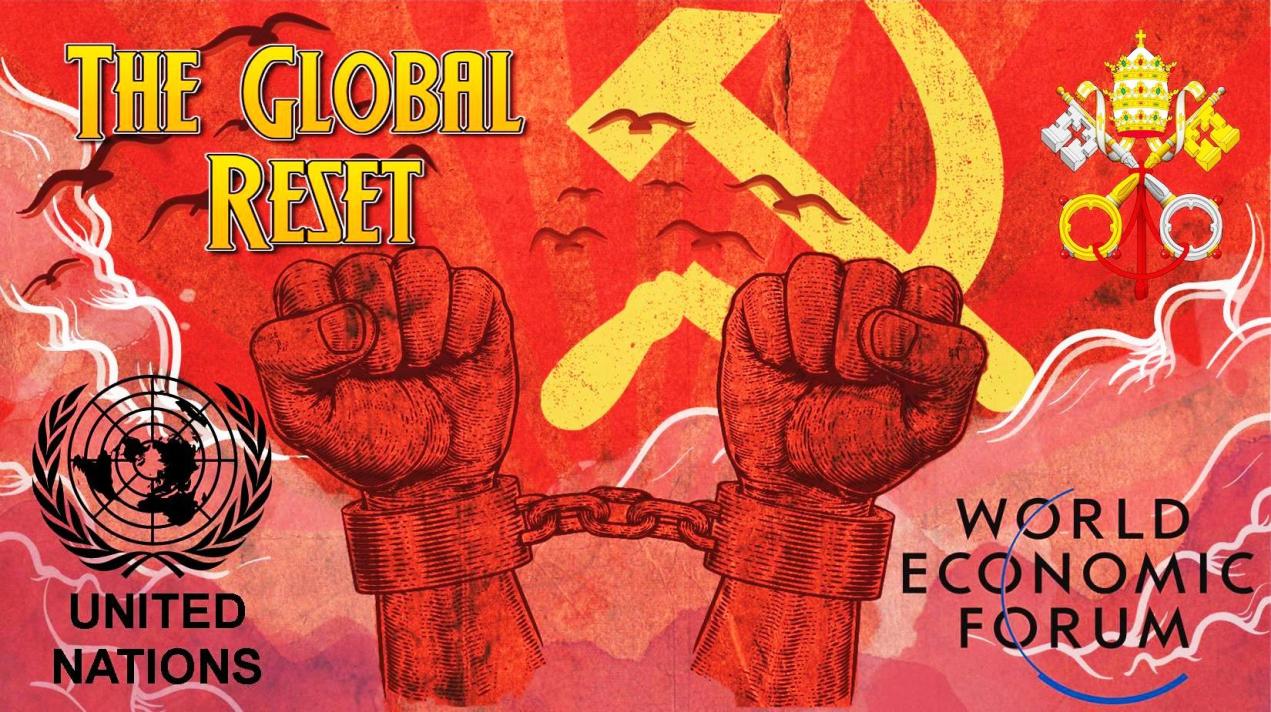
Such gatherings are not for our sake but more for the benefit of plutocrats like Facebook's Mark Zuckerberg and Amazon's Jeff Bezos. The Global Reset they are pushing often reeks of their desire to "break the world" with their ruthless corporate agendas that continue to move political power into the hands of the globalist elite. To counter this attitude reassuring words are cast out over the airwaves to us, the minions of the world, to encourage faith in their wisdom. Oh, what a tangled web those in charge of our fate have woven for us as they rush to sell and bargain away our freedom for power and wealth

When the WEF revealed its Davos 2021 Agenda, it confirmed the event this year would be digital and herald the public unveiling of its Great Reset Initiative. Angel GurrĂ­a and Klaus Schwab have outlined how governments and businesses can shape a new labor market that supports workers to thrive in the future. This underlines how the covid-19 pandemic has accelerated systemic changes that were apparent before its inception.

The Covid-19 pandemic has been used as confirmation that no institution or individual alone can address the economic, environmental, social, and technological challenges of our complex, interdependent world. It is also being touted as a reason to support the "The 2030 Agenda for Sustainable Development." One hundred and ninety-three UN member states adopted this 15-year global framework and its ambitious set of 17 Sustainable Development Goals (SDGs) in September 2015.

With 169 targets and over 230 indicators, the 2030 Agenda envisions a secure world free of poverty and hunger, with full and productive employment, access to quality education, and universal health coverage. Thrown into the mix is the achievement of gender equality and the empowerment of all women and girls, and an end to environmental degradation.

The 2030 Agenda is a global framework of action for people, the planet, prosperity, peace, and partnership. It integrates social, economic, and environmental dimensions of sustainable development, as well as peace, governance, and justice elements. It makes clear that developing and developed countries alike will implement the Agenda. This is important in ensuring that no one is left behind in the achievement of the SDGs.
https://www.bing.com/videos/search?q=wef+own+nothing&&view=detail&mid=31BF038609615C11271E31BF038609615C11271E&&FORM=VRDGAR&ru=%2Fvideos%2Fsearch%3Fq%3Dwef%2Bown%2Bnothing%26%26FORM%3DVDVVXX

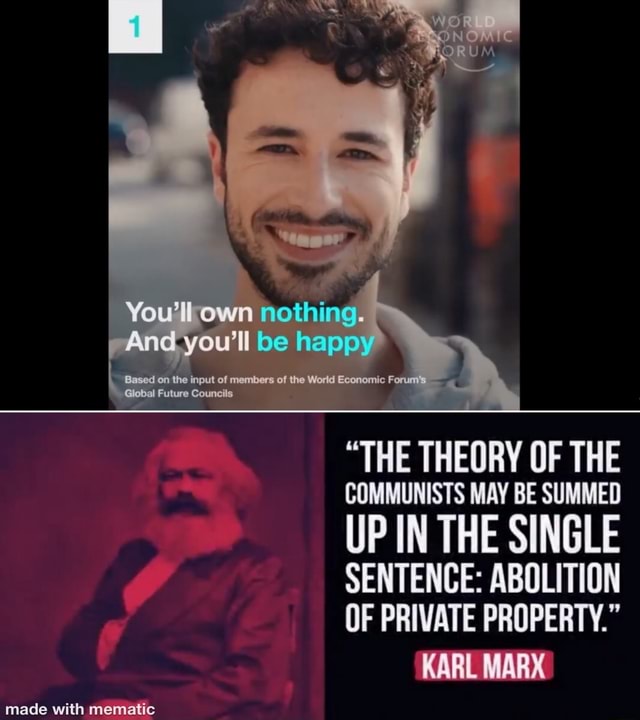
A great deal of attention has been given to some of the ideas and vision the WEF has floated. A powerful one became visible when WEF public relations released a video entitled: “8 Predictions for the World in 2030. Its 2030 agenda offers a telling glimpse into what the technocratic elite has in store for the rest of us. It promotes the idea that  by 2030 "You will own nothing. And you'll be happy. The UN’s 2030 Agenda for Sustainable Development is a comprehensive plan that outlines how we can abolish poverty and transform the world into a peaceful, sustainable environment for all. 

When persuasive speakers cloak an agenda in flowery rhetoric, it is often difficult to determine what is noble or separate something altruistic from a sinister plot. Nor, can we be certain that events will unfold more favorably if simply left to develop on their own rather than being manipulated. Still, the ideas flowing out of the World Economic Forum and those seeking a reset and a New One World Order reek of self-serving bias. 

Not all of what the world economic forum predicts will happen but events are being shaped to unfold in that way. Examining what is being called for, sheds a bit of light on how we might expect our future to look. The ideas and predictions of the WEF do not seem so farfetched when you consider,

  • Many people are already comfortable and busy renting things like cars, tools, apartments, so this has become a normal way to live. It is easy to argue that shared commodities save resources.  
  • Many people think the US will be unable to keep its position as the world leader. In fact, in many ways, the US has already abdicated this role.
  • When it comes to things such as organ printing we tend to jump the gun in predicting it is just around the corner but research is continuing and huge progress is being made.
  • The argument you simply can’t feed 10 billion people with meat and move these people into heavy consumer-based lifestyles has merit. At some point, the population must stop expanding or we will create a nightmare of food shortages and cause more damage to the planet. 
  • Down the road, billions of people will be displaced, especially at the shore, because of rising sea levels. Others because of droughts. This means we will have to learn how to deal better with migration or we will have huge cultural wars.   
  • Western values are already being tested because of globalization and migration. The fact that change and the future might scare us does not mean we can simply deny reality and call everything we don’t like or understand a conspiracy. Life is impermanent and nothing stays the way it is. We all die eventually and history shows even big civilizations vanish. 

The agenda to change the world includes things such as controlling people through things such as social credit scores. Expect these to be linked to those you associate with including family members you seldom agree with. Sadly, the people that drew up this plan forgot that what they are proposing is the abolition of private property or communism a theory that has failed to ever bring prosperity to any country. 

Another key part of this plan focuses on controlling the masses, this is also problematic and reeks of totalitarianism. While many people view big tech as the great enabler, a very dark side of it exists, surrendering to its allure gives big tech and those in charge of it the power to enslave the human race. When mankind turns its future over to technology and no longer takes responsibility for learning the most basic lessons that have brought us so far it gives up its soul. The idea we will move in the direction of creating a benevolent form of artificial intelligence that will protect and watch over us is far-fetched. It is frightening to entrust that in the future machines will value the contributions humans make to the overall scheme of things.

Intertwined and masked within the WEF plan are a lot of factors that will negatively impact people. These include a total lack of privacy, the loss of control to move about freely, or the ability to purchase anything you want with your money and controlling how that property is used. Of course, this is all for the greater good, but is it?  History shows that in a society where private ownership is banned or not encouraged people lack skin in the game. This tends to result in people failing to shoulder responsibility for much of what happens.

When society has a problem rather than rely on education, the natural impulse of totalitarians is to limit the choices or speech of others.  The instinct to compel rather than to persuade is evident in many politicians across the world. In the past, each year as the highfalutin Davos extravaganza unfolded I seem to get a pain in my stomach that some might consider envy, but having attended my share of events I consider it more of a sickening feeling related to the over the top self-importance of many attending. Much of my angst is directed at the politicians and such that have their travel expenses picked up by governments. 

How ironic that we pay the same clowns that create so many of our problems to gather in luxury to discuss how they might further their deeds. I find it so interesting that someone flying across the globe on a private aircraft can sit down and discuss their environmental concerns and how each of us must do more to save the planet. In some ways, a person might even go so far as to describe such a gathering as downright evil.

In his writings, George Orwell pointed out that when society has a problem rather than rely on education, the natural impulse of totalitarians is to limit the choices or speech of others.  The instinct to compel rather than to persuade is evident in many politicians across the world. As big businesses and big tech have grown to where the rival or control governments, it is not surprising to see their leaders adopt this attitude. While growing inequality makes the prediction you will own nothing more likely, it does little to guarantee we will be happy. 


Footnote; The three articles below are related to this post.

https://brucewilds.blogspot.com/2020/01/davos-where-elite-decide-our-fate.html

https://brucewilds.blogspot.com/2020/04/government-overreach-is-taking-away.html

https://brucewilds.blogspot.com/2020/08/the-spreading-feeling-this-is-happening_2.html

 (Republishing of this article welcomed with reference to Bruce Wilds/AdvancingTime Blog)

Sunday, June 20, 2021

Economic Evolution Turns Many Comparisons Obsolete

The financial system has entered uncharted waters and it would be wise to take nothing for granted. To assume the economy will move forward without a glitch in such an environment is  extremely optimistic. With time, things change and evolve, this transformation can be seen in both society and the economy. We are constantly bombarded with charts showing where things are going based on historical references but a question we must ask is just how relevant today's comparisons are with prior economic cycles?

Over the decades we have moved from an agricultural-based society to an industrial-centered economy where manufacturing and services have become the dominant way of making a living. Now, we are rapidly moving in the direction of technology becoming the main driver of the economy and it is creating a huge cultural change. The economy is again undergoing a metamorphosis. Over time, we tend to forget or minimize in our minds that throughout history the growing pains flowing from such a change tend to batter society from every direction. These transformations also create a great deal of noise making it difficult to understand what is happening.

Please consider the possibility the important adjustments the economy must make are lagging far behind our current "financial culture" or that the economy has evolved in a way that simply no longer works. Much of this has yet to become apparent to the masses and is masked by institutions papering over problems. A tradition of optimism has served mankind well, however, it has become clear something seems to be broken or out of kilter. It does not help that things like stock buybacks and outright fraud are creating a situation that could at any minute spin out of control. Making matters worse is that the general population is oblivious to this, and conditioned to accept whatever they are told. To many people, this is the new normal.

The Titanic Was Herald As "Unsinkable"
When we look behind the curtain it is difficult to ignore the numbers simply do not work going forward. Ignoring the warning signs on the horizon can only delay the inevitable for so long. Many of the comments I read concerning the current stock market and companies such as Tesla and Amazon remind me of the following statement, "Not even God himself could sink this ship," that an employee of the White Star Line made during the launch of the Titanic on May 31, 1911. The truth is as we move forward we are in uncharted waters and at any time a surprise event might shock us into reality.

Much of the economic distortions we are experiencing today harken back to President Richard Nixon's decision on August 15, 1971, to close the gold window. It is a factor that changed everything. While US citizens had been forbidden from owning gold or from redeeming their gold certificates for gold coins since the early 1930s, foreign governments still had the privilege of redeeming their dollars for gold. Nixon's decision untethering the dollar from gold and releasing it from the promise dollars could be redeemed in gold, this resulted in opening the floodgates and allowed credit to explode from $1.7 trillion to $65.5 trillion at the end of 2015.
total-credit-market-debt3
Exploding Credit Will Have Massive Ramifications

More recently due to Covid-19, we have built on breaking the financial system's ties with the past by casting away all budgetary and money supply restraints. A question we must ask is just how relevant today's comparisons are with prior economic cycles? The situation today is in many ways "historically unique" due to the rampant expansion of credit in recent decades. How do you even begin to compare or factor in the amount of stimulus America's "trillion-dollar-plus" deficits have added to the economy? These amounts boggle the mind and are hundreds of times larger than what we were seeing before 2008.

It could be argued that much of what we are witnessing today is rooted in Nixon's decision to close the gold window. That move unleashed many forces that are greatly responsible for the rising income inequality that has occurred in recent decades. After inflation soared in the late 70s America found the cost inflation in goods could be reduced by buying these things from low-cost producers located in other countries. This means imports soared. IT has not helped that America has adopted a de facto policy of placing no restraints on trade deficits. 

Nixon's actions coupled with America's decision decades ago to make China into a formidable ally that would act as a  counterbalance against Russia and the Kremlin have shaped the world. Back then, we offered economic incentives to help China's economy, looking back this was a watershed event that changed the way American companies conducted business. It has resulted in American companies outsourcing production and the mass exodus of manufacturing jobs from America to distant lands where labor was both cheap and abundant. 

Our free trade policy was sold to America's middle-class as a "win-win situation" and we were told the American worker would move up the economic food chain towards better-paying jobs that would be more fulfilling and require less toil. This did not happen, the large companies that shape legislation have indeed benefited to a great extent while the average American has not.

Many Comparisons With The Past Now Obsolete

Returning to the main theme of this article, the massive expansion of the financial system has rendered many comparisons with the past obsolete. It has also resulted in the economy embarking on a roller-coaster-like experience where it encountered a series of events such as the dot-com bubble, which burst in 2001. In reaction, the Greenspan Fed stepped on the gas blowing the biggest housing bubble on record. In response to that asset bubble popping, we saw the Fed bail out the banks, the asset holders, and the wealthy. 

The sorry fact is that in the end, this chain of events left the average American worse off than before. During all this time debt has grown, and to service that growing pile of debt the Fed had to keep slashing interest rates. This means that instead of allowing consumers to benefit from technological advances that tend to be inherently deflationary, the Fed has sought to increase inflation by declaring inflation in the range of  2% to be in our best interest. This has benefited the banks and those already wealthy while at the same time massively increased inequality.

Today Is "Historically Unique"
The situation today is in many ways "historically unique" due to the rampant expansion of credit in recent decades and just over the last 16 months due to the pandemic. Recently  I found myself pondering the line, "outwit and outlast" that is often used during the popular hit television show Survivor. It occurred to me the winners in both life and investing often reflect these qualities and that this game is far from over. 

While investors are often urged to be cautious the excesses of today are in many ways not as "sector" oriented as those experienced during certain periods we have seen in the past and this makes staying anchored more difficult. It seems everything is encouraging and causing both savers and investors to take far more risk than they should in the quest for higher returns and yields. The "fear of missing" out is again running rampant and with the strategy of buying the dip having proven successful over almost a decade investors have become complacent to the risk they face.

Republishing this article is permitted with reference to Bruce Wilds/AdvancingTime Blog

Tuesday, June 15, 2021

"That's Just The Way It worked out" Another Tale Of Woe

A very interesting phrase that screams true reality is, "That's Just The Way It worked out." While we often think the world is directed by those given the task to make decisions and guide our direction, in truth much of our direction is made up by stumbling along accompanied by missteps and misunderstandings.

In our individual lives, certain minor events can become watershed moments and the slightest variation in the outcome can have a massive impact on our futures. Events such as losing a job, sickness, a failed marriage, or being called upon to support a struggling family member can turn life upside down. These are just a few of the reasons so many people enter their "golden years" with little in the way of savings. This does not mean that they planned to do so only that along the way, something happened.

An older couple I know furnished me with some real-life numbers and they were not pretty.

He gets a social security check of $980 and she receives $792 that leaves them with a meager $1,772   to live on, this is not the kind of retirement income most people want to be forced to exist on. Fortunately for them they have over the years cobbled together around one hundred thousand dollars in savings to supplement this, however, today's interest rates have turned their expected 5 percent stream of interest from $5,000 a year into a mere trickle.  

Playing into this is the reality that even though they planed ahead, this is just the way things worked out. This couple reminded me that others in the same boat but without the saving from which they will have to draw upon are in a real pickle.

A Revolting Development For Her
Whether a person believes in fate or that each of us has control over their life, is something we must each decide. When asked, most people will concede life seldom plays out the way we plan it. An older friend of mine often used the term, "This is a revolting development" to describe some of the events that unfolded during the day as things slid off course. The picture of a girl in a white dress trying to push a car stuck in the mud stands as an example of this.

Still, we can look forward to when things do go our way, this is sometimes known as serendipity. This means the occurrence and development of events by chance in a happy or beneficial way: The term was coined by Horace Walpole in 1754, Serendipity means a "fortunate happenstance" or "pleasant surprise." Most people would agree we could use a lot more of these events.

The lack of total control over our lives is something all of us face. It is clear that many people feel pressured by the trade-offs we face by living in a free market-consumer-based society and it wears away at them. The fact is economic growth is accompanied by wheel-spinning, inefficiencies, and waste.  While the benefits of our system often outweigh the negatives we find society is paying a toll through increased rates of addiction, depression, and economic inequality. 

Our modern consumer-based society has made us slaves to material objects and producers of waste.  Many economists urge us to consume, even when we must borrow to do so, saying it creates more jobs. We follow Governments and leaders that we often neither like nor trust.  Today’s youth growing up besieged by marketers are now vilified for being materialistic, marred by too little perspective, they find themselves angry and disappointed. With this in mind, it is little wonder many people are not achieving the degree of being content or happy they had hoped for and are left with feelings of insecurity.

It is fair to say that on occasion, more than one of us has felt they "could have been a contender" or accomplished more had things gone just a little more the way we had wished. This can leave us wondering whether it the fickle finger of fate or something more internal and basic  that caused some of the opportunities life offered to simply slip away.

Interestingly, many people particularly those that are younger seem to think that one big or lucky break is what it takes to achieve a life of happiness and this is the way life works. Much of the responsibility for this falls on big tech and social media, they have a lot to gain by promoting such myths. The idea they empower individuals is a biggie. 

The illusion big tech can transform our lives is invaluable to many average people struggling to get through the day. The thought that at any time we might become famous or rich gives a false impression of reality that is harmful in cultivating positive work ethics and makes a mockery of those who toil to produce a better life. The simple fact is, often our choices are limited by things we cannot control so we should just try to make lemonade out of lemons when that is all your given. 

Abraham Lincoln is credited with saying, “folks are usually about as happy as they make up their minds to be.” Much of this may center around being able to accept what we cannot change or simply focusing on the good things in life. People that see themselves as victims often lack this trait.

For"He Went To Paris" On YouTube click here
In a song titled, He Went To Paris, songwriter-singer Jimmy Buffet highlights just how fast life goes by. In the song, he used the line, "the summers, and winters scattered like splinters, and four or five years slipped away." Buffet then goes on to sing about how another twenty years slipped away. In the end, the old man moved to an island to live out his days and sums up his life by saying, "Some it's magic, some of it's tragic, but I've had a good life all the way." Had Papa Hemingway heard this story, I suspect there would have been a book and a movie. 

In some ways, you could describe the world as quirky. In truth, I'm not keen on how I expect the future to unfold. While I realize that doom porn gets a lot of hits, this article has been written more in the spirit of reflection and because I enjoy pointing out some of life's idiosyncrasies. Looking across the places where I go for news, currently, I see little that makes me feel optimistic. Much of what I see bodes poorly for our children and their children. Hype and spin can only mask reality for so long. In many ways, it seems like the world is again suffering from the bad news is good news syndrome, and that is not a good thing.

 
(Republishing of this article welcomed with reference to Bruce Wilds/AdvancingTime Blog)

Monday, June 7, 2021

Investments In Intangible Assets Have Minimized Inflation

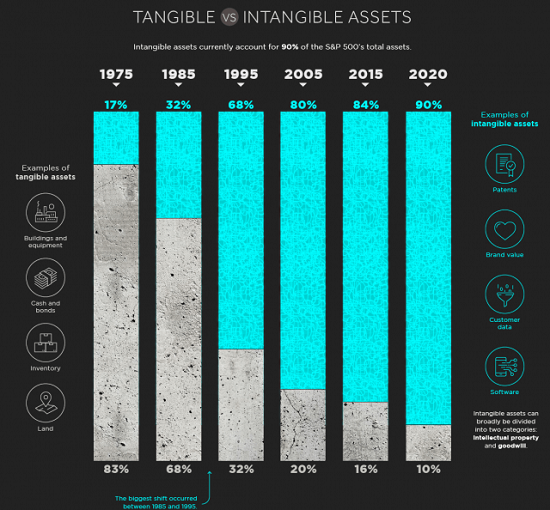
Damn near every economist and analyst seem oblivious to the point being made in this article. The Fed should be ecstatic so many people are willing to invest in intangible assets. By not buying  tangible and real items they help to minimize inflation. In our bullshit world where media outlets like Bloomberg tout the message if you are not in this rising market, you are missing out, it is understandable that people want in. With this in mind, it is no wonder the investment world has become a minefield that is often compared to a casino. 

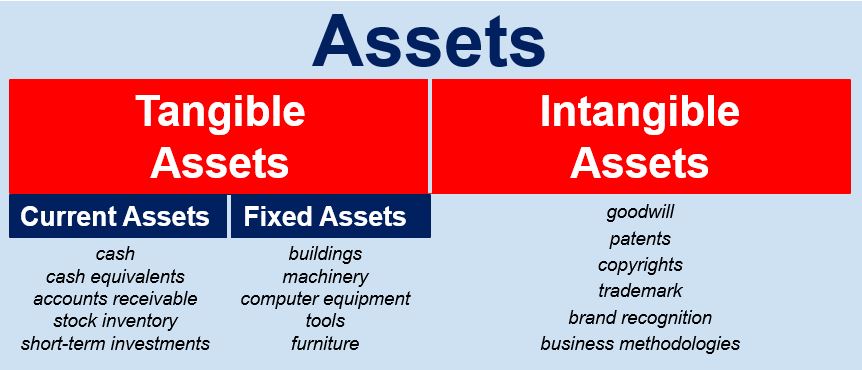
An intangible asset is a useful resource that lacks physical substance. Examples are patents, copyrights, trademarks, and goodwill. Such assets produce economic benefits but you can’t touch them and their value can be very difficult to determine. These intangible assets are often in sharp contrast to physical assets like machinery, vehicles, and buildings. 

This Does Not Tell The Whole Story
The term tangible assets, in this case, could be used to describe shorter-term assets, such as inventory since these items are intended for sale or conversion to cash. Most tangible assets can be easily converted to cash, this is why most people include as "tangible" the amount of money in a bank account. Even though money held by a bank is a paper promise, it falls into a "grey area" in that it holds the characteristic of being rapidly converted to something real like property such as cars, houses, or boats. Some of these accounts can also be used as collateral in case you want a loan. 

Another example of quasi-intangibles is stock, when you buy stock what do you really have? You no longer get a certificate as in days of old, this should send the fear of God into those that worry about hackers. What you get is a glorified memo in a computer base somewhere, good luck proving what you have if things go bad. Most likely even getting a government official to listen will be a huge task. If you do get action most likely it would be years before you get any of your money back.

This Chart Is Proof It Is All "Bullshit"!

For a long time, I have taken the view that many "financial assets" have slipped into the intangible class. Assets such as stocks, pensions, and annuities harbor many of these qualities.
These are things we can not touch and often live in the land of future promises. Today many are recorded on a computer somewhere and paper records of them are having a difficult time remaining current and in good order. Simply put, many people are not even sure where they have stored their wealth.

The theory that investments in intangible assets minimize inflation may be a chief reason government savings and wealth-building programs are centered on driving money into such assets. Over time, this has the potential to result in the collapse of the financial system. In our complex interdependent world, this would most likely hit the economy extremely hard, and the contagion from such an event could easily spill over and tear apart society. 

To divert criticism of the fact no bona fide program exists which allows people to truly protect their wealth or preserve their purchasing power from inflation the U.S. government issues a type of Treasury security known as TIPS. This stands for, Treasury inflation-protected securities, these are indexed to inflation in order to protect investors from a decline in the purchasing power of their money. Sadly, even TIPS fail to hold up under scrutiny in that they are tied to the CPI which understates the true rate of inflation. 

To be clear, I view the dollar as the best of the four fiat currencies, however, I expect all of them to come under attack in the near future. Circling back to the growing danger resulting in policies encouraging people to invest in intangibles to lessen inflation. When money is created or printed it has to go somewhere, this has been fueling the "everything bubble." This is not the key driver of inflation. The main reason this newly created money has not resulted in massive inflation is rooted in the fact it is being diverted from goods everyone needs to live and into the intangible assets described above.

When you consider the amount of interest in cryptocurrencies and other inflation hedges it is easy to argue many investors are losing faith in the central banks and fiat currencies. A monetary crisis and the chaos that comes with it may very likely be coming down the road. The fact that over the decades, growth in intangible assets and the money supply has vastly exceeded the growth in real and tangible assets is problematic.  

There has been little resistance to moving investors into intangible or quasi-intangible assets because it is easier to own intangibles than deal with taking care of "real things." This could account for part of the mismatch in growth between these two kinds of assets. Currently, the gap is so large that even if you allow for a great deal of the wealth stored in intangible assets to be washed away there will still be enough cash and credit available to create inflation. Ironically a huge washout in the value of this type of asset could be become a driver of inflation by igniting a shift into hard assets.

All this can be a difficult concept to grasp. When looking at soaring house prices, we should view the cause as more driven by inflation than because of a falling dollar. The important point is that everything is relevant and values and prices change. With this in mind, the one thing we as individuals should try to avoid is putting our wealth into something intangible that could vanish during the night.   


 (Republishing of this article welcomed with reference to Bruce Wilds/AdvancingTime Blog)

Sunday, May 30, 2021

America's Housing Future Is Not Set In Stone (Part-2)

Any way you view the situation, housing is a complex issue and its future will greatly impact all of us. People have an interesting relationship with their homes, often it is more than just a place to sleep. To many Americans owning a home is part of something great. It is considered a symbol they have achieved the American dream. Houses also speak of a person's identity, individuality, and some homeowners feel it gives them more control over their future. 

This often boils down to people wanting or having more than one house for their private use or just one or two people living in a house far larger than can be considered logical. This can be counterproductive to the creation of an orderly and efficient life. An oversized or poorly planned home tends to make far greater demands on its owner than necessary. Still, our government continues to push the untested notion that home ownership is good for everyone and it is not.

Not only have we recently witnessed soaring home prices but we are seeing major distortions in home prices in different parts of the country. Much of this may be related to the influx of new money from companies such as, American Homes 4 Rent, which owns 54,000 houses, and historically low interest rates. This combined with concerns flowing from the Covid-19 pandemic has left many people wondering how the future will unfold and wanting to be well-positioned going forward.

High Expectations, A "Hallmark" Image
Then there is also the issue of unrealistic expectations. This tends to cause people to reach out and spend more than they can afford under the idea they will "grow into" a home or they simply deserve a better home. In some ways, this is driven by modern media which often gives society the impression the world is much cleaner than it is and most people live in nice clean homes. This message is subliminally submitted to us each day when news programs or commercials show a person that has been deemed poor or needy arriving home to their clean and tidy abode. 

What might present a clearer image of reality can be found in the comments below which were submitted in reaction to another article;

I bought a short sale as part of the 2008 crash. One of the best financial decisions of my life. I wasted a ton of money on rent before that. Taking care of a house is a tremendous amount of work, though. If we had a functional economy, I'd much rather rent.

Another person wrote;

The supply is terribly mismatched to the population. I live alone in a 4 bedroom house. It's super expensive to heat and a pain to keep clean. I'd really like a 1 bedroom or 2 bedroom (something about 25% the size of what I have). But, I'm surrounded by 4-6 bedroom $750,000USD McMansions with pools and 3 car garages.

The advantages of owning your own home have been touted as a sign of success and coming of age. In reality, because of the high bar of entry and other uncertainties, buying a home is not always a great or even good investment. If every coin has two sides, the flip side of this is, a house can be an albatross around the neck of its owner. More than a few homeowners have found their homes to be a huge money pit. 

In a prior article, the idea that many first-time buyers approach the decision of buying a house in a rather nonchalant manner was explored. Too many inexperienced or first-time buyers seem to discount the importance of how, what may be the biggest purchase they ever make, will impact their life. The cost and a number of fees can make buying and selling a house a very expensive and at times a rather illiquid transaction with a huge impact on a person's net worth. 

That is why it is difficult to believe in this market some buyers are silly enough to offer well above the asking price or looking at a house for only a few minutes before rushing to place an offer. The "fear of missing out" has become such a large factor in the lives of many people that they have lost touch with reality. This means they often brush aside the cost of necessary repairs and changes needed to make a house fit their needs. All this underlines why it is stupid that our government is busy encouraging people who have no business owning a house to buy one regardless if they have any idea of how to maintain it. 

Government Mucks Up The Market
When it comes to housing for the poor government again mucks up things. Considering the way our government meddles in housing it is little wonder that roughly 80% of new apartment construction is for the high-end market. The government holds huge responsibility for a rising share of our housing problems in low-income situations because its policies avoid dealing with the growing number of people that are irresponsible or creating the type of housing that is suitable for them. If the government was truly interested in preventing homelessness they would focus on those that are always being  evicted for non-payment or breaking the rules. 

Giving simple "housing vouchers" to those unable to pay their rent would also move some of these people back to the private sector. Instead, government-subsidized housing cherry-picks the best of the low-income renters providing them with very low rents and nice apartments. This dumps the "less stellar" of those seeking shelter onto the private sector. This discourages landlords from wanting to service this challenging part of society. This creates a problem that is exacerbated by a legal and political system that often favors tenants over landlords. The rising cost of evictions and even a moratorium on them due to Covid-19 is evidence of this skewed attitude.

In a recent article published on Wolfstreet.com, the author, Wolf Richter claims this may be the most distorted and perverse housing market ever. He points out that we are currently living in a world of unprecedented Fed intervention, government stimulus, and inflation that has turned red-hot. He goes on to say, this has created a weird phenomenon of companies complaining about a labor shortage, while nearly 10 million people are deemed “unemployed” and 16 million people are claiming some sort of unemployment insurance. Adding to the confusion, 2.1 million mortgages are still in forbearance programs, investors have flooded the housing market, including individual buyers grabbing a second home in crazy bidding wars.

This underlines the issue that while the market has responded to the housing needs of higher-income households, trends suggest a growing inability or desire to supply housing that is affordable for middle and working-class people. It appears developers have little interest or simply can't afford to add anything but luxury units. Simply put, there's a huge unhealthy disparity in high-end rents versus low-end rents across the country, and with it not costing a great deal more to construct high-end versus low-income units why would anyone want to deal with the low end of the market and all the trash that comes with it.

Chart: U.S. home values Source: Zillow.com
Even with super low-interest-rate mortgages, it is difficult for me to get excited about the future of America's housing market. This topic has been subject to a great deal of debate and can be somewhat confusing. Part of the reason is that we constantly hear about the need for more "affordable housing" and are being told this means increasing the supply by building more units. Unfortunately, this is unlikely to make housing affordable. Ultimately the higher cost for taxes, local fees, utilities, insurance, maintenance cost, general labor, and just about everything flows into the housing market. 

A large part of the problems we face in housing is that it is complicated by government policies, meddling, and intervention. This has led to things such as urban sprawl with huge developers maximizing profits by working on large clean slates. Part of this is caused by governments often unintentionally make it difficult to rehab or build new in older established areas. The housing picture is also muddied because it is difficult to get real-time data which creates a "rear-view mirror" effect. While the number of permits and building starts give some indication of the market, it tells only part of the story of what is being built.

People sometimes get caught up in the idea that replacing homes lost in a natural disaster such as the wildfires in California will have a huge and instant impact on new home construction but this is often overblown. This construction is often stretched over years. More important is the fact that America is full of underutilized homes, I was talking about two thousand plus square foot houses occupied with only one or two people. On the other side when six or more people are crammed into a small one-bedroom one-bath house we have just the opposite situation. 

I contend, that people have been pushed to believe bigger and more expensive is always better. In truth, it is just, "bigger and more expensive." This means higher taxes, insurance, and higher utility bills. All these become difficult to pay during tough times. In a few months or years, we will know whether the current housing market ends in a whimper. During a time of economic and social devastation, it is difficult to imagine that all the five-bedroom five-bath homes will be well maintained. Instead, we might find that as plumbing problems occur the affected bathroom simply goes unused.  

Part of the solution to providing good housing at affordable prices is using the housing that has been built efficiently and building units that meet our future needs. Over the years our needs have changed, and they will continue to evolve. Clearly, society has done a rather poor job at getting things right when it comes to housing and the cost of building is solidly on the rise. Unless we come up with new solutions this will present a huge challenge for many Americans in the future.


Footnote: This is part two of a series of articles concerning the state of housing in America. Due to the complexity of this issue, there will be a part three. The link to part one can be found below.

https://brucewilds.blogspot.com/2021/05/americas-housing-future-remains-murky.html

(Republishing of this article welcomed with reference to Bruce Wilds/AdvancingTime Blog)

Sunday, May 23, 2021

The CPI Revisited And Its Failure To Reflect True Inflation


The cost of living numbers prepared by the Bureau of Labor Statistics are highly misleading. Currently, the government understates inflation by using a formula based on the concept of a “constant level of satisfaction” that evolved during the first half of the 20th century in academia. This extended into the BLS re-weightings sales outlets such as discount or mass merchandisers with Main Street shops. Those promoting this change claimed it was simply another way to measure inflation and it still reflected the true cost of living.  
 
The fact is, politicians and those behind this system created it as a way to reduce the cost of living adjustments for government payments to Social Security recipients, etc. By moving to a substitution-based index and weakening other constant-standard-of-living ties those reporting inflation have muddied the water as to just how much we are being impacted by inflation. The general argument used to promote this change was that changing relative costs of goods results in consumers substituting less-expensive goods for more expensive goods. 
 
Allowing for a substitution of goods within the formerly "fixed-basket" supposedly allows the consumer flexibility in obtaining a “constant level of satisfaction." This adjustment to the inflation measure was touted as more appropriate for the GDP concept in measuring shifting demand and weighting actual consumption. Other tricks were also used to give the illusion of less inflation. In cases where the quality of the product are deemed by the government to be "improved" prices in the CPI, calculations are now adjusted lower to offset the higher quality. Extending this idea the Baskin Commission Report, December 4, 1996, actually used steak and chicken for its substitution example.
 
The purpose of the consumer price index (CPI) is touted to reflect just how much inflation is eating into both our incomes and our savings. Consumer inflation has been estimated since the 1700s, by measuring price changes in a fixed-weight basket of goods. This method was seen as a way of measuring the cost of maintaining a constant standard of living. In the last 30 years, a growing gap has become obvious between government reporting of inflation, as measured by the CPI, and the perception of actual inflation held by the general public.

A clearer indication of inflation can be witnessed during a shopping trip to a grocery store or stores such as Walmart. Sadly, what we see is the type of inflation that directly impacts many of the consumers that can least afford it. Recently product manufacturers like Coca-Cola, Pepsi, and Procter & Gamble all started raising prices across the board, which means that "something has to give." Retailers can only absorb so much of these increases before being forced to pass them on to consumers. Walmart values low prices and it is a key part of their marketing strategy but higher wages, transportation costs, and e-commerce investments have all pressured Walmart to bump many prices higher.


Many smaller specialty retailers like O’Reilly Automotive and Tractor Supply Company have also been hiking prices. Many of these hikes have been blamed on the trade war, supply chain disruptions, or shortages but the economic reality for what is occurring goes much deeper. When it comes to assessing real-world inflation that is having a direct impact on consumers, the Fed has been conspicuously absent from this important conversation.
 
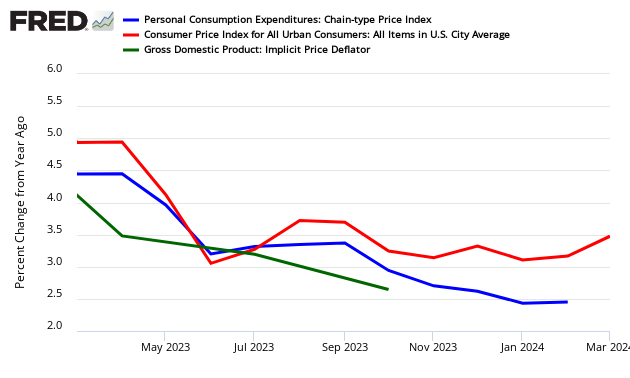
For years consumer prices have been held down by America importing goods from countries with cheap labor. This has a hidden cost which is the loss of manufacturing jobs. Another issue is that inflation varies drastically from one sector of the economy to another. Still, the day-to-day increases in prices we see add credence to the informal evidence and occasional surveys that indicate the general public believes inflation is running well above official reporting. The numbers government pumps out today are politically motivated and the result of changes made in the 1990s when Washington moved to change the nature of the CPI.

These changes were promoted under the cover of academic theories and the sinister move was masked by the contention was that the CPI overstated inflation. Katharine G. Abraham, then commissioner of the Bureau of Labor Statistics, laid out her recollections in an August 1996 paper: “Back in the early winter of 1995, Federal Reserve Board Chairman, Alan Greenspan testified before the Congress that he thought the CPI substantially overstated the rate of growth in the cost of living.  Greenspan's testimony generated a considerable amount of discussion but the general public paid little if any attention. In truth, the cuts in reported inflation were part of an effort to reduce the federal deficit without anyone in Congress having to do the politically impossible which was to register a vote that would harm the image of Social Security.

The Importance Of The CPI
While the substitution-related alterations to inflation methodologies were made beginning in the mid-1990s the introduction of major changes to concepts geared towards making us feel better about things began in the 1980s. The aggregate impact of the reporting changes since 1980 has been to reduce the reported level of annual CPI inflation by roughly seven percentage points meaning there is no question as to the understatement of inflation. If the methodological changes did not reduce CPI inflation reporting significantly, the politicians would not have pushed the changes through. The important issue is that without these changes, Social Security checks would be more than double what they are today.

A big factor in our "false cost of living" is that the purchasing consumer is not given a choice when paying out-of-pocket the full price for a product declared to have quality improvements they do not want or need. An example of this is the government-mandated use of a gasoline formulation that was to improve auto emissions. It added ten cents per gallon to gasoline costs, but that cost was excluded from CPI calculations even though the person filling his or her gas tank suffered the actual out-of-pocket expense. This is also clearly seen in new phones, computers, and televisions. New features are deemed quality improvements resulting in downside price adjustments to the CPI even when the consumer may not use or want them. Also absent from this formula is recognition of how housing prices vary so greatly across the nation. 

To understand how just how large the impact has been on the CPI it is important to note that 24.0% of the total current CPI-U (the CPI for all urban consumers) is rooted in the category of “homeowners’ equivalent rent of residences.” This means that instead of reflecting some measure of home prices, as was the case before 1983, the BLS estimates the cost of housing based on what homeowners theoretically would pay to rent their own homes from themselves. The BLS then estimates how much homeowners raise the rent on themselves each month. Starting in 1989, the BLS skewed these estimates further by beginning to adjust that imaginary series for quality adjustments that would make the consumer feel good or better enjoy their residence.

Years ago when America was experiencing what the late Allen Meltzer described as "The Great Inflation" his take was that inflation generally was not considered a major problem until it rose into the double-digit area. I maintain the manipulation of data to artificially lower the official rate of inflation feeds into the illusion of economic stability. This helps both politicians and central banks sell the idea that inflation is not and will not become a problem. This false information is then used by individuals to plan and make decisions concerning their investments and retirement needs. I further contend that inflation would be much greater if more money was flowing into tangible goods rather than paper investments and promises. For proof as to the real cost of inflation just look at the surging replacement cost resulting from recent storms and natural disasters. Beware, if you are taking the CPI numbers being reported to heart you will pay dearly in the coming years.
 
 
 (Republishing of this article welcomed with reference to Bruce Wilds/AdvancingTime Blog)

Sunday, May 16, 2021

Dollar's Demise And Doom Predictions Are "Over Hyped"

A lot of people including Americans have come to the conclusion the dollar is about to collapse. Predictions of the dollar's demise are likely premature and overblown. Recently a combination of factors has caused people to become concerned about storing their wealth in the dollar. This has created huge interest in both precious metals and cryptocurrencies. Several things are driving the trend to diminish the dollar and other fiat currencies. One is the idea governments have targeted cash and wish to move us towards a "cashless" society where they control our every move. Another is rooted in the idea inflation is about to raise its ugly head as currencies are debased. 

The Sounding Line recently ran an article about how Stanley Druckenmiller, who made his name on highly successful currency trades including ‘breaking’ the Bank of England, says that he expects the U.S. Dollar to lose reserve currency status within 15 years due to a “totally inappropriate” combination of radical monetary and fiscal stimulus. Many people agree with him, the big question is how soon a major adjustment will take place. Clearly, 15 years is not tomorrow and it is difficult to look out that far. 

I contend that currencies have been trading in a hyper-manipulated state for several years. Fiat money tends to create a shelter from volatility. This is because once wealth is placed into this rather closed system, it tends to remain there. After all, laws and rules discourage it from breaking free. It is the coordinated collusion of the major central banks that have allowed this charade to exist. The fact it has not been recognized or acknowledged does not alter or guarantee the system will continue. The failure or major repricing of any of the world's four major reserve currencies will destroy the myth that major currencies are immune to the fate that has haunted fiat money throughout history.  

Over the years countries have become very adept at coordinating economic policy, currency swaps are only one of the tools they use, another has been to invest in stocks. This means over the last few years central bankers have developed more tools to manipulate currencies and keep them trading in a narrow range that will not rock the boat. When the dollar began to soar back in late 2014, fear began to rise and concerns grew about the stress it was causing in countries that owed a great deal of debt that would have to be paid back in dollars rather than their own currency. This allowed Fed Chairman Powell to pursue a course that weakened the dollar and in doing so the Fed propped up markets across the world.

Central Bank Balances Have Exploded
The view the dollar will rapidly decline in value is based on the view that when a nation granting a fiat currency is unable to control its budgets its currency suffers. Like many Americans, I have railed against our growing debt and questioned whether it would destroy the dollar, however, when looking at the miserable alternative currencies before us the dollar is without a doubt king.

History shows huge currency fluctuations tend to destabilize markets. The one thing the global economy doesn't need right now with all the uncertainty that is currently floating around is an unstable currency market. We must remember that in our modern financial system, capital can sneak and flow out of the country faster than its government can create new ways to bolster the currency.

As far as the idea that China and its cohorts will succeed in destroying  the dollar by reducing their holdings of U.S. Treasuries in order to support the yuan, their ability to carry out such a scheme is questionable. We must remember the world currency market is a complicated place full of paths that fall away or come back on themselves and many of the tools used by markets are like a double-edged sword that cut both ways. China will find that if the dollar falls much they will hear more calls to place duties and tariffs on their exports to America in an effort to reduce the trade deficit.

Currency Swaps Creates Illusion Of Stability

Refrain from calling me Captain Obvious when declaring that currencies are trading in a false paradigm and investors should get ready for a rude awakening when currency values shift. A dam has been built to protect market stability but pressure is building and when it breaks it will wreak major damage. Part of this is constructed upon the fallacy many investors have been given, and accepted, the notion that a major currency cannot fail or collapse. This fallacy will only become more apparent as concern over the future of both the yen and the euro becomes more of an issue. Both these currencies have major problems going forward. While people point to the fact that behind the dollar America stands with a rapidly growing national debt it is nothing compared to the issues Japan and the Euro-zone face.

The fact countries and areas face different growth paths is a problem that has haunted currency unions for centuries. Competitiveness and productivity developing at different paces lead to a shifting of wealth and large imbalances in growth among the members of a currency union. When the dollar union of the U.S. threatened to fall apart during the Great Depression because of the varying economic conditions and unequal potential apparent between states, the federal government found it necessary to enact federal income transfers from prosperous states to aid ailing ones. The federal budget rapidly increased and this practice of income transfers from one state to another to bind the states together as a union became permanently embedded in the American system.

While in the United States a no-bailout policy of crisis-hit states that had been enacted decades ago remains, our "inter-system wealth transfers" has contributed that "special something" the Euro-zone lacks. Inequality has a way of growing and must be addressed early. After a certain point, it becomes too late to implement a system that transfers wealth from the most prosperous to the most needy regions of the economy because some people feel cheated and others resentful. 

The bigger a debt problem and inequality is allowed to grow the more people and institutions suffer when they become the victims of a default. Greece has fallen and continues to suffer the consequences of this while much bigger countries like Italy and Spain are teetering on the brink. During the last several years the question of how to exit the Euro-zone monetary union and the euro has become an important economic issue. Uncertainty and fear relating to its costs tend to discourage political leaders from taking the risk and decisive steps towards an exit but if one or more sizeable countries bolt from the shelter of the euro or the Euro-zone the currency could quickly unravel. 

As stated earlier in this article, the other major fiat currencies stand as miserable alternatives to the dollar. A major cause of the Euro-zone problem is growing inequality among its members. This is exacerbated by the lack of system-wide bank protection which causes money and wealth to flee the weaker countries and their failing banks. These problems give credence to the possibility that the euro is on its way to the dustbin. It could be argued that the reason the euro has fared so well recently is that investors have sold dollars and bought euros to buy assets in the EU because prices are so high in the US. Buying "cheap assets" in the EU does not translate into the idea America is rapidly falling apart or that the EU has suddenly resolved any of its many problems, it merely says American assets are way overvalued.

Japan faces an entirely different problem while its national debt is an issue for the central banks that issue both currencies. Japan's debt is massive and the country faces a demographic crisis that leaves it forced to support a population comprised of citizens far too old to work. This is a reason to think the yen will fail at some point and if they do it is very likely that in our modern era, where wealth leaps across borders at the push of a button, its death will be fast, and swift. For decades Japan has benefited greatly from China's growth but that may come to an end.

We must not underestimate the advantage the dollar has as the world's reserve currency or the size of debt floating across the globe comprised of dollar based-agreements. This means when all is said and done, people and companies must buy dollars to settle these debts. If the dollar proves victorious in the currency wars and is indeed the last major currency standing the people of America will reap the benefits of a game well played or just plain luck.


Footnote;  If you have read the above article in its entirety I urge you to not nitpick or respond with a knee-jerk reaction. To say this is a complex issue is an understatement and I would be interested in your thoughts. I recognize those interested in pursuing a New World Order will gladly throw any country under the bus if it promotes their agenda. Still, regardless of the games being played in the background, shifting currency values remain are a big deal.

(Republishing of this article welcomed with reference to Bruce Wilds/AdvancingTime Blog)